From Injury to Victory: Is Ukraine Ready for Systematic Veteran Rehabilitation Through Sports
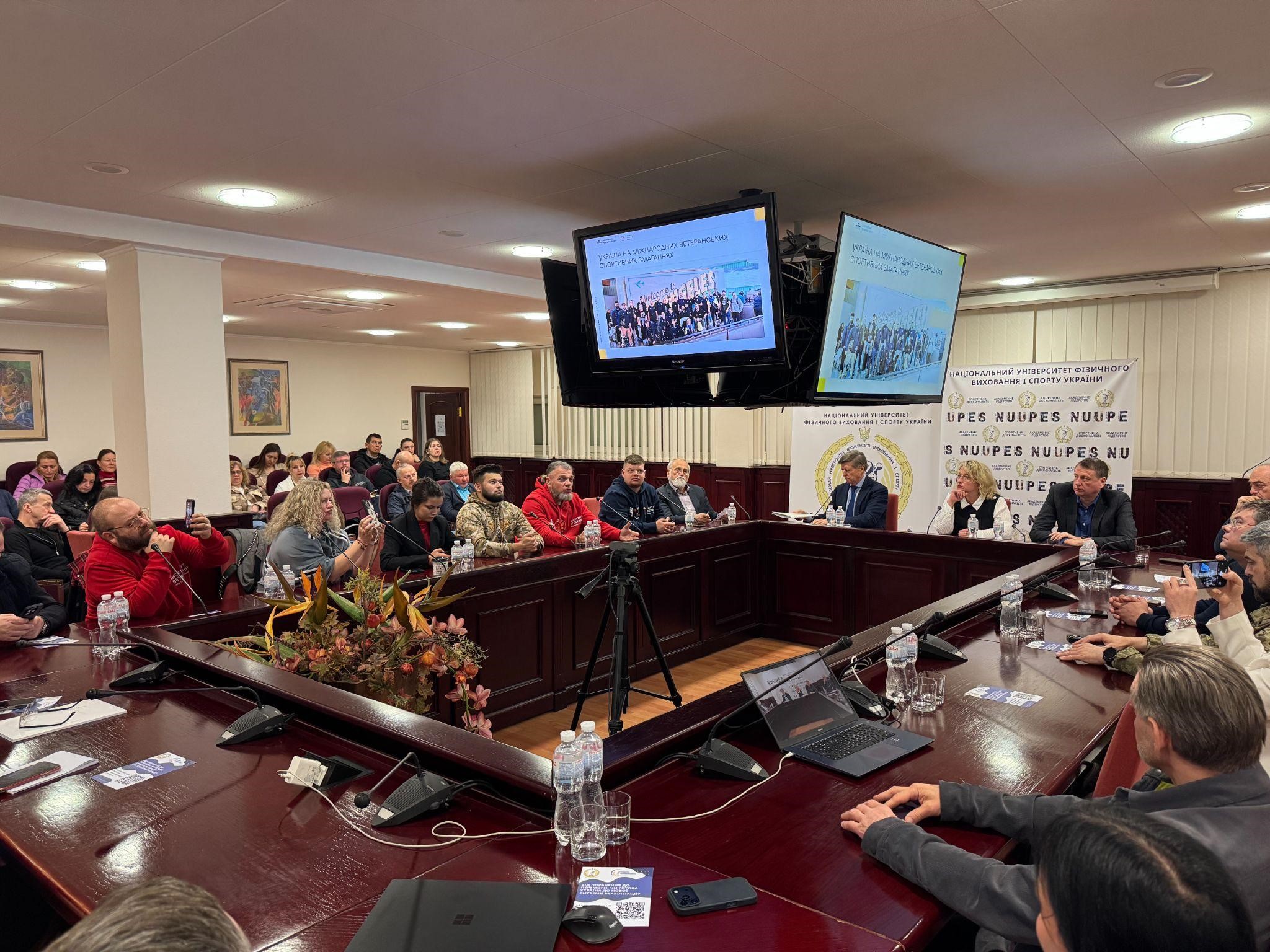
On April 16, 2026, an open expert meeting was held at the National University of Physical Education and Sports of Ukraine
“From Injury to Victory: Is Ukraine Ready for a New Rehabilitation System?”, which served not only as a discussion platform but also as an attempt to form a shared vision of the future model of adaptive sports and rehabilitation in Ukraine.
The event brought together representatives of government institutions, relevant ministries, the scientific and educational community, the National Olympic University, civil society organizations, the sports community, rehabilitation centers, and the veterans themselves—those for whom this system is intended to work first and foremost.
Full-scale war has radically changed the social structure of Ukrainian society. Thousands of soldiers are returning to civilian life with injuries—both physical and psychological. In this context, rehabilitation ceases to be a narrowly defined medical issue and becomes a matter of national resilience.
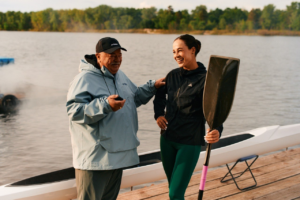
Adaptive sports play a much broader role in this process than mere physical activity. It is a tool for physical recovery, psycho-emotional stabilization, social integration, and the formation of a new identity after trauma.
However, the main challenge, which was repeatedly raised during the meeting, is the lack of a systematic approach.
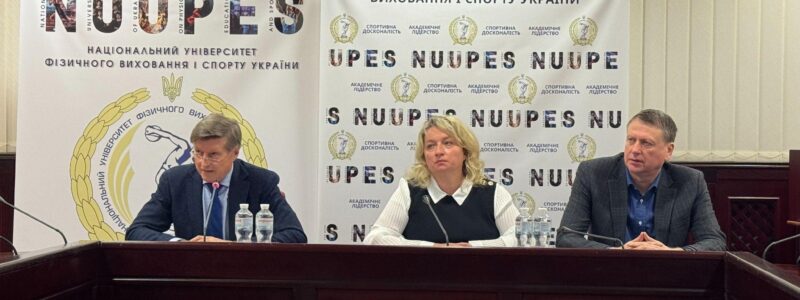
Opening the event, Viktor Korzh, director of the NUPSU Training and Rehabilitation Center, immediately identified the key problem: there are already many initiatives in Ukraine, but they remain fragmented.
“Physical education and sports rehabilitation, as well as adaptive sports, are an extremely important social component that should serve the recovery and social integration of our wounded veterans.
This requires an individualized approach, professional medical supervision, and consideration of each person’s health condition.
Only then will these tools truly be beneficial and not cause harm.
“Sports and physical rehabilitation are powerful tools that must be based on deep knowledge and responsibility, and only then will they truly be beneficial and not cause harm.”
His statement set the tone for the entire discussion: the focus is not on creating new separate projects, but on building a comprehensive ecosystem.
Special attention was paid to the role of education in shaping this system.
Olga Borisova, Acting Rector of the National University of Physical Education and Sports of Ukraine, emphasized the strategic importance of training specialists.
“Today, universities must go beyond traditional education and become centers for shaping a new rehabilitation system.
We are talking about training specialists who will work at the intersection of sports, medicine, and psychology.
It is precisely such professionals who will ensure the quality and safety of the veterans’ recovery process.”
This approach underscores that the challenge of adaptive sports is not merely organizational but also a staffing issue. Without systematic training of specialists, even the best programs cannot function effectively.
A key focus of the discussion was an analysis of the experiences of the United States and Israel—countries with long-standing experience working with veterans.
Artem Goncharenko, head of the “Architecture of Resilience” Institute for Rehabilitation, Reintegration, and Professional Development at KNUBA, emphasized that the key difference between these systems is their integration.
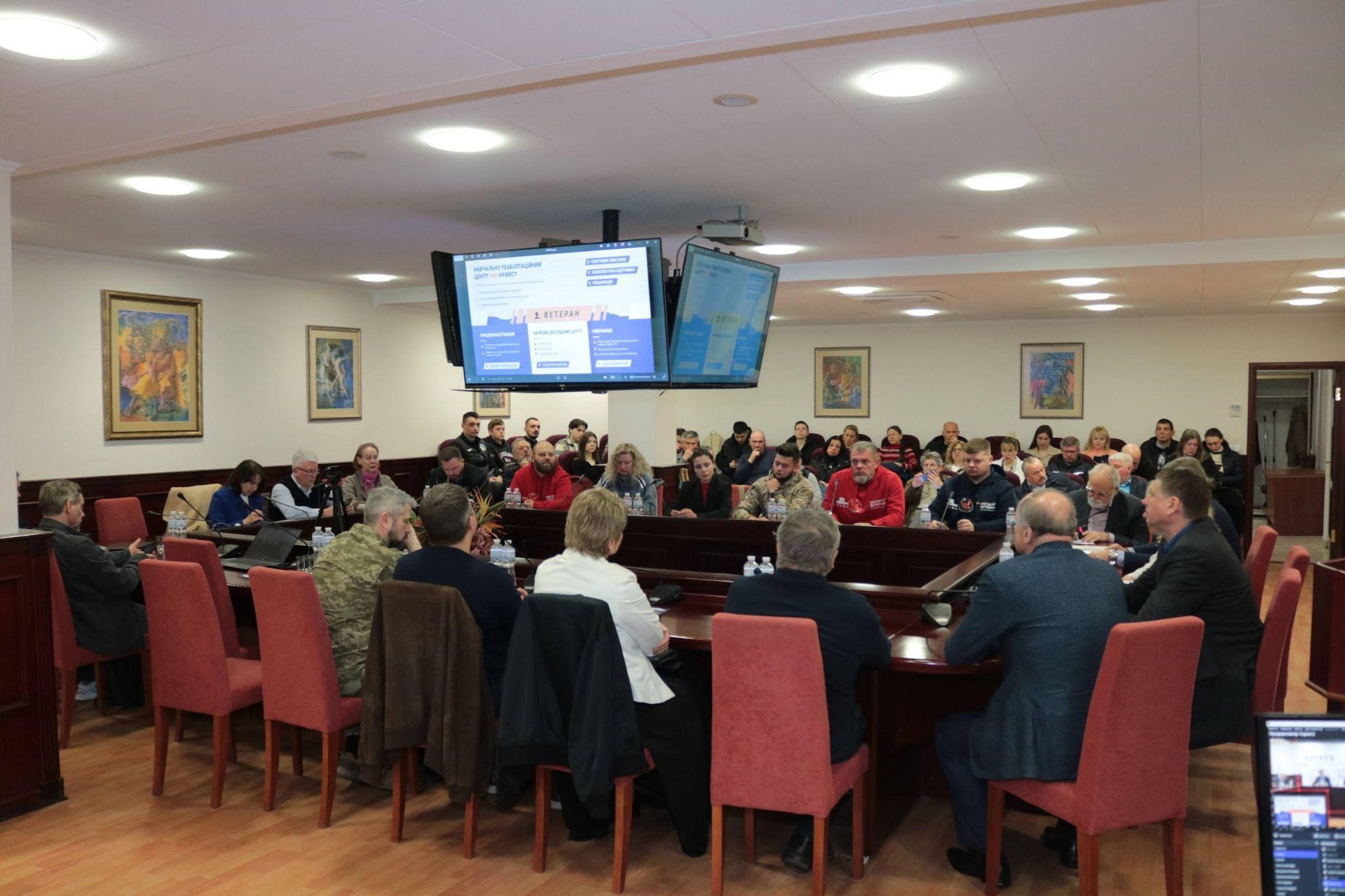
“In the U.S. and Israel, adaptive sports do not exist in isolation—they are integrated into state rehabilitation policy.
This is part of a continuous process: from the hospital to a full return to society.
It is important for Ukraine not simply to adopt this experience, but to properly integrate it into its own system.”
In fact, this involves a shift from “post-injury assistance” to a model of “supporting the individual at every stage of recovery.”
One of the most powerful moments of the meeting was the speech by veteran Vadym Honcharenko, who shared his own experience of participating in international competitions.
“Adaptive sports are not just about physical recovery.
It’s about regaining self-confidence, about the opportunity to feel in control of your life again.
It was through sports that I was able to find new motivation and return to an active life.”
His words effectively confirmed what the experts had been saying: the effectiveness of the system is measured not by the number of programs, but by the changes in the lives of specific people.
Also among the meeting participants were: the head of the Sports Committee of Ukraine, Illia Shevlyak; the head of the Department of Physical and Mental Health at the Ministry of Veterans Affairs of Ukraine, Vyacheslav Chernenko; and other guests who actively participated in the discussion.
One of the main conclusions of the meeting was the need for genuine cooperation between the state, educational institutions, the business sector, and civil society organizations. Without such collaboration, the adaptive sports system will remain fragmented and unable to ensure long-term impact.
The meeting at the National University of Physical Education and Sports of Ukraine demonstrated that an understanding of the problem has already been established in Ukraine and that all key players are in place to address it. However, the next step is to consolidate efforts to ensure veterans’ full return to a meaningful life.
Adaptive sports today is not just about physical activity. It is about a new social policy, about bringing people back to life, about the state’s ability to respond to the challenges of war.
And the main question that remained after the event:
Will Ukraine be able to unite all these efforts into a single system that works not on a case-by-case basis, but for every veteran?
The answer to this question depends not on words, but on the decisions that will be made in the near future.