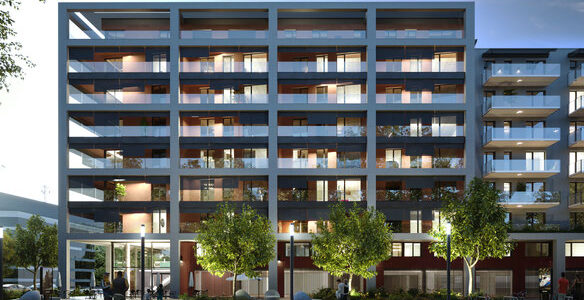
According to Serbian Economist, after several years of low activity among foreign buyers, Hungary’s real estate market may be entering a phase of renewed interest from foreign capital.
According to experts, the Hungarian market has long been operating below its potential: after four years of stagnation, foreign investors have largely ceded ground to domestic buyers. Now analysts expect that a combination of political changes, potential reforms, and pent-up demand could bring Hungary back into the spotlight for international investors.
An additional factor is the expectation of an improved investment climate and the potential release of European funding. Property Forum notes that market participants are discussing a “restart” of the Hungarian real estate market following the April 2026 elections, with macroeconomic stability, regulation, and the willingness of institutional investors to return to the country remaining key issues.
At the same time, the market has already gone through a period of significant price growth. According to Global Property Guide, citing the Hungarian National Bank’s housing price index, housing in Hungary rose by 21.29% year-over-year in the third quarter of 2025, or by 16.29% in real terms, indicating strong price momentum even before the full return of foreign demand.
In 2026, the market appears more balanced. According to data from Duna House cited by International Investment, approximately 78% of transactions are concluded below the initial asking price, indicating a strengthening of buyers’ bargaining power and the market’s transition from overheating to a more stable phase.
Budapest remains the main center of interest. The capital combines high rental demand, developed infrastructure, tourist traffic, and its status as the country’s business hub. However, it is in Budapest that authorities are also discussing restrictions on short-term rentals: earlier, one of the city’s central districts voted to ban short-term rentals starting in 2026, which could alter the investment model for some buyers.
For foreign investors, Hungary retains several advantages: prices are lower than in most Western European capitals, the market is part of the EU, and the weakening of the forint may make purchases more attractive to buyers with capital in euros or dollars. At the same time, the risks remain significant: rental regulations, high inflation in recent years, political uncertainty, and the market’s dependence on state support and credit conditions.
The return of foreign capital could support prices, especially in Budapest and other liquid locations. However, for local buyers, this could exacerbate the housing affordability problem, which has already become one of the key social issues in Hungary. The government has previously launched first-home support programs, including subsidized loans at 3% for up to 25 years, to help young buyers enter the market.
Thus, the Hungarian real estate market enters 2026 in a mixed state: prices have already risen significantly, demand has become more cautious, but expectations of political and economic changes may once again attract foreign investors. For the market, this means a likely uptick in transactions, and for buyers—the need to more carefully evaluate location, rental models, and regulatory risks.