The development of local grape varieties in Ukraine is already moving from the level of professional discussion to practical implementation and is becoming one of the key areas for enhancing the competitiveness of Ukrainian winemaking, building regional brands, and promoting high-value-added products in domestic and international markets.
This was discussed during the National Roundtable “Local Grape Varieties: Heritage, Sustainability, and Rural Development,” organized by the UKRSADVINPROM Association to mark the 10th anniversary of the Association’s activities.
Participants in the event noted that local grape varieties are already becoming for Ukrainian producers not only an agricultural resource but also an element of cultural heritage, regional identity, and the future export specialization of Ukrainian winemaking. It is precisely around these varieties that the new identity of Ukrainian wine is taking shape—with its own history, origin, taste, and distinctiveness.
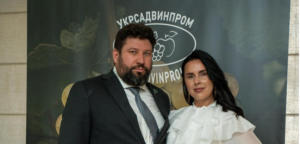
Volodymyr Pechko, Chairman of the “UKRSADVINPROM” Public Association, emphasized that Ukrainian winemaking already has its own foundation for development, and this foundation is linked to the promotion of domestic grape varieties. According to him, the flagship and ambassadorial varieties of Ukrainian wine could be, first and foremost, “Odesa Black” and “Sukholymansky,” which reflect Ukrainian breeding, authenticity, and the country’s wine identity.
Special attention was given to the creation of a Vineyard Register and the conduct of a comprehensive inventory of vineyards in accordance with EU approaches. This work is intended to serve as a practical foundation for Ukraine’s further integration into the European system of support for viticulture and winemaking, as well as for the potential use of EU financial instruments following the country’s accession to the European Union.

Pechko also reported that approximately 10,000 hectares are currently under vineyards in Ukraine. According to him, the reduction in vineyard acreage requires additional attention from the government and the industry, as it is impossible to ensure the stable growth of winemaking without preserving and developing the raw material base.
Interest from retailers and the HoReCa sector in local producers is already becoming an important factor for the Ukrainian wine market. Olena Gordon, a representative of the “Ukraine Food Retail Alliance” (UFRA)—which includes leading Ukrainian food retail chains such as ATB-Market, Silpo, VARUS, NOVUS, and KOLO—noted that local producers can enter retail chains provided they meet standards and are ready to scale up production.
This factor is particularly important for craft wineries, which are already creating a strong local product and have their own history, but face the chains’ requirements regarding supply stability, quality, safety, documentation, and production traceability.
Representatives of the restaurant and hotel sectors, in turn, noted that Ukrainian consumers’ interest in domestic wines is already growing. There is potential for promoting Ukrainian wine both domestically and abroad; however, strengthening the industry’s position requires systematic promotion—participation in international exhibitions, professional presentations, tastings, and “blind tastings,” which allow for an objective demonstration of product quality.
Wine tourism is already emerging as a distinct promotional tool. Festivals, tastings, and the development of wine routes help forge an emotional connection between producers and consumers, introduce Ukrainian wine to a wider audience, and create additional opportunities for the development of rural areas.
According to the participants, craft winemaking requires a distinct approach to regulation and development, as it cannot be evaluated using the same criteria as mass industrial production. For the sector to grow, it is important to foster a culture of Ukrainian wine consumption, support local producers, and develop the domestic market, which can serve as a foundation for future exports.
Mykola Patyka, Vice President of the National Academy of Agrarian Sciences of Ukraine, highlighted the role of science in preserving and developing the genetic potential of Ukrainian grape varieties. Scientific support, breeding, research into the adaptability of varieties, and work with genetic resources are essential for ensuring that local varieties become not only part of the country’s heritage but also a competitive product in the modern market.
The development of local grape varieties is already laying the groundwork for the emergence of new regional brands and geographical indications, the revitalization of rural areas, and increased recognition of Ukrainian products in international markets. For the industry, this means a shift from the general idea of promoting Ukrainian wine to a more specific model—one with its own varieties, origin, history, quality standards, and distribution channels.
The “UKRSADVINPROM” General Association is an industry association operating in the fields of horticulture, viticulture, and winemaking. The organization brings together market participants, takes part in industry discussions, promotes the interests of Ukrainian producers, and supports the development of high-value-added products. In 2026, the Association celebrated its 10th anniversary.
GRAPES, local variety, UKRSADVINPROM, WINE, WINEMAKING, ПЕЧКО

Related: