
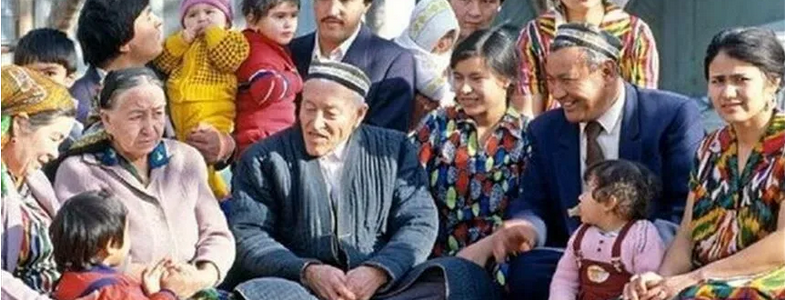
According to preliminary census results, Uzbekistan’s population reached 39.047 million people, the republic’s National Statistics Committee reported.
The population and agricultural census took place from January 15 to February 28, 2026, and was the first in the history of independent Uzbekistan. According to the statistics committee, 82.3% of the population participated in the online census, and when door-to-door visits were included, the total coverage rate was 97.3%.
The main finding is that the population turned out to be higher than current statistical estimates. Prior to the census, it was estimated at 38.236 million people, while the preliminary result was 39.047 million people. The difference is 810,600 people.
Compared to the 1989 census, Uzbekistan’s population has roughly doubled. This confirms the country’s main demographic trend: Uzbekistan remains one of the fastest-growing countries in the post-Soviet space.
The population is distributed almost evenly by gender, though there are slightly more men: 19.766 million men and 19.281 million women. The census also included 56,900 foreign citizens who have been residing in the country for more than one year. The majority of them are citizens of India, Russia, and Kazakhstan.
The ethnic composition remains predominantly Uzbek: Uzbeks make up 89.4% of the population, Tajiks 3.3%, Karakalpaks 2.2%, Kazakhs 1.8%, Russians 1.6%, Kyrgyz 0.6%, Turkmens—0.5%, and other nationalities—0.6%. 35.7 million people, or 91.3% of the population, identified Uzbek as their native language.
This is an important signal for the economy: population growth means an expansion of the domestic consumer market, the labor force, and demand for housing, schools, healthcare, transportation, energy, and urban infrastructure. At the same time, it increases pressure on the labor market and requires the government to engage in more precise planning for regional development.
Against this backdrop, Ukraine is experiencing the opposite demographic trend. At the end of 1991, the country’s population was estimated at 51.7 million; the 2001 census recorded 48.457 million; and as of early 2026, according to demographer Alexander Gladun’s estimate, 28 million people lived in territory controlled by the Ukrainian government. However, Ukraine’s current population is not known with certainty, as there has not been a census for more than 25 years, and millions of people are living abroad.




