

Starting May 20, 2026, the short-term rental market in Bulgaria will face stricter regulations: new EU-wide rules will require mandatory registration of properties and data sharing between platforms and the government, which could lead to the mass removal of illegal listings from Airbnb and Booking.com. The source of these changes is EU Regulation 2024/1028 on the collection and exchange of data regarding short-term rentals, which takes effect on May 20, 2026. Its goal is to increase transparency in the sector, simplify the identification of landlords, and provide national authorities with a tool to monitor compliance with local requirements.
According to Boris Pavlov, chairman of the Bulgarian Association of Tourism Real Estate and Innovation, about half of the current short-term rental listings in Bulgaria may disappear from platforms if owners do not register properly. This primarily concerns the shadow market segment, which has operated without full administrative and tax legalization.
Bulgarian law already requires that short-term rentals be registered as tourist accommodations rather than as ordinary private rentals. To do this, as industry guidelines indicate, municipal registration, submission of guest data via the ESTI system, and payment of tourist tax are typically required. New EU regulations are tightening controls specifically at the level of digital platforms, which will be required to work only with properly registered properties.
For the real estate and tourism markets, this has a dual effect. On the one hand, part of the supply may indeed leave the platforms in the coming months, which will support prices in the legal segment and strengthen the position of professional operators. On the other hand, stricter market filtering should increase the sector’s transparency, tax collection, and the predictability of rules for investors.
Against this backdrop, Bulgaria is entering a phase of a more formalized short-term rental market, where the key advantage will be not simply the availability of a property, but its full compliance with local and European regulations.

According to the Interfax-Ukraine Culture project, “this year, the competition received 179 applications from publishers around the world—experts at the Ukrainian Book Institute received 18 more applications than last year. A total of 176 projects submitted by 119 publishers from 44 countries passed the technical screening. Based on the evaluation results, the Expert Council approved 100 translation projects. According to the plan, all of them will be published this year,” the Institute stated in its announcement.
It is noted that the most translations are planned into Polish—9 publications, English—8, Serbian—7, followed by Czech and German—6 publications each, and 5 books will be published in Arabic, French, and Italian.
“In total, Ukrainian books will be translated into 30 languages. In addition to those mentioned, the list includes Slovak, Spanish, Lithuanian, Latvian, and Macedonian—4 books each; Greek, Croatian, Bulgarian, and Georgian—3 each; and Swedish, Azerbaijani, Portuguese, and Bengali—2 each. One book each will be published in Finnish, Romanian, Hebrew, Japanese, Estonian, Hungarian, Danish, Albanian, and Bosnian,” the UIC reported.
The Institute noted that foreign publishers were most interested in the book on modern warfare *Hemingway Knows Nothing* by Artur Dron; specifically, it will be published in Swedish, Polish, Lithuanian, English, Slovak, Georgian, French, and Portuguese.
In addition, Illarion Pavliuk’s mystical detective novel *I See You Are Interested in Darkness* will be available to Finnish, Czech, Polish, Romanian, and Azerbaijani readers, while Sofia Andrukhovych’s *Amadok* is set to be published in French, Spanish, Lithuanian, and Azerbaijani.
A detailed list of the winning projects is available at the link: https://docs.google.com/spreadsheets/d/1LqUVQOfAiPASGYxuIpLqJwjTnj3giqZsaIOWIYO2eRg/edit?gid=0#gid=0
As reported, 75 new translations of Ukrainian books have been published as part of the Translate Ukraine 2025 program.
https://interfax.com.ua/news/culture/1156991.html
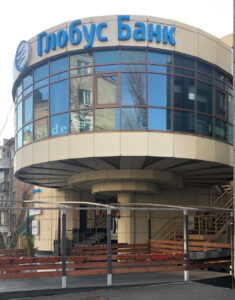
According to Fixygen, JSC “Globus Commercial Bank” will hold its annual general meeting of shareholders on April 27, 2026, via remote participation. The list of key issues to be discussed includes approval of the bank’s performance results, financial statements, distribution of financial results, and decisions regarding corporate governance. The bank discloses relevant information in a special section for shareholders.
Globus Bank was registered by the National Bank of Ukraine on November 29, 2007. The bank operates as a universal commercial institution, serving corporate and private clients.
https://www.fixygen.ua/news/20260406/kb-globus-priznachiv-zbori-aktsioneriv-na-27-kvitnya.html

The Supervisory Board of PJSC “National Depository of Ukraine” (NDU, Kyiv) announced the extension of the deadline for accepting applications from candidates intending to participate in the competitive selection process for the position of NDU Board Chair until April 22 inclusive.
“To attract a wider range of candidates and ensure the selection process is as transparent and competitive as possible,” the announcement on the NDU website states.
According to the announcement, the selection process will take place in two stages: in the first stage, all interested parties submit their applications to participate in the competition, and in the second stage, interviews will be held with the selected candidates.
Afterward, the supervisory board will submit recommendations regarding the candidate for the position of CEO for consideration at the general meeting of NDU shareholders, who have the authority to make this decision.
It is noted that candidates, among other things, must have at least five years of experience as a manager in capital markets and/or organized commodity markets and be thoroughly familiar with “the issues and trends in the development of Ukraine’s capital market, particularly the stock market infrastructure, legislation governing professional activities, as well as experience working in foreign capital markets.” During the interview, they will be required to briefly present their vision for the depository’s strategic development in the medium term.
As reported, from June 2021 until the end of December 2025, Alexey Yudin served as the head of the NDU’s board, and currently, until the conclusion of the competition, Marina Adamovskaya holds that position; she has served as deputy head of the board since June 2019.
In early September 2025, the National Bank announced the launch of a memorandum of cooperation in support of an integrated capital market infrastructure, signed in Rome in July of this year with the European Bank for Reconstruction and Development (EBRD) with the participation of the Ministry of Economy, the Ministry of Finance, the National Bank, and the National Securities and Stock Market Commission (NSSMC). The first stage involved optimizing the ownership structure and corporate governance of the NDU by transferring the state’s stake to the NBU for management.
Next, plans call for the creation of a holding company involving a reputable international strategic investor (an operator of trading and post-trading infrastructures) selected through an open tender, international financial organizations, local market participants, and the state/state-owned banks.
This holding company, in turn, will establish a new stock exchange in Ukraine, which will replace the National Bank as the majority owner of the central clearing institution—the Settlement Center. Additionally, this exchange will hold a minority stake in the NDU, while the National Bank will hold the majority stake.
The final stage should be the consolidation of depository services under the NDU, which is to function as a single central securities depository, by transferring to it the functions of accounting for and servicing government bonds from the National Bank.
In addition to managing the state’s 25% stake in the NDU, as of September 24 of this year, the National Bank directly owned 25%, with another 10.9399% belonging to its Corporate Pension Fund, while the state-owned Oschadbank and Ukreximbank held 24.9903% and 9.9903%, respectively. At the same time, the National Securities and Stock Market Commission (NSSMC) appoints the trustee for the shares of Oschadbank, Ukreximbank, and the NBU’s Corporate Pension Fund, but this provision of the law on the depository system is expected to be amended as part of the infrastructure reform.
Another 4.0795% of the shares were owned by 27 legal entities and 2 individuals; specifically, Yelena Nusinova held 1.7054% of the shares, and Odessa Privatization Center LLC, owned by former NSSMC member Viktor Ivchenko, held 1.7151%.
On April 2, Ukrainian Defense Industry JSC announced a tender for voluntary medical insurance services for employees.
According to a notice on the Prozorro e-procurement system, the estimated cost of the services is 3.9 million UAH.
The deadline for submitting bids is April 13.
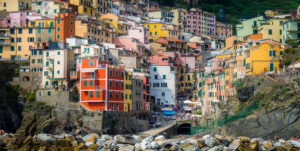
Prices for existing housing in Italy rose by 1.5% in the first quarter of 2026 compared to the previous quarter, with the average asking price reaching €1,891 per square meter. This is according to a report by the analytical division of idealista.
According to the source, price increases were recorded in 80% of the country’s administrative centers. The most notable quarterly increases occurred in Belluno (8.7%), Cremona (6.9%), and Lecco (6.4%). Among major cities, Bari, Cagliari, Rome, Bologna, Catania, and Florence showed positive trends, while Naples saw a slight decline of 0.4%.
Milan remains Italy’s most expensive city, as before, with a price of €5,192 per square meter. It is followed by Venice—€4,897 per square meter, Bolzano—€4,869, Florence—€4,602, and Bologna—€3,717. Rome ranks sixth at €3,369 per square meter. The most affordable cities were Caltanissetta—€653 per square meter, Ragusa—€730, and Biella—€752.
At the regional level, price growth has spread across nearly the entire country. A quarterly decline was recorded only in Molise and Basilicata, while the strongest growth was seen in Valle d’Aosta—4%, Veneto—3%, as well as Liguria and Tuscany—2.2% each. Trentino-Alto Adige remains the most expensive region at €3,266 per square meter, while Molise is the least expensive at €911 per square meter.
The market maintains positive momentum across most of Italy, though macroeconomic factors—including interest rates and inflation—may influence it in the coming months. The idealista index itself is based on asking prices published in listings, not on the actual prices of completed transactions. The methodology also excludes auction properties and atypical listings, and the median price is used as the benchmark.



