

According to the Relocation.com.ua project, the Cypriot authorities have officially ended the transition period during which foreign investors could still apply for permanent residency under the previous, more lenient conditions. This was announced by the Cyprus Department of Migration, which published a notice on March 3 regarding the cessation of accepting applications under the old criteria under Regulation 6(2).
This refers to a mechanism that allowed some applicants to take advantage of the conditions in effect before the requirements were tightened. Now that this option has closed, new applications must comply with the program’s updated rules, including current investment and compliance requirements. According to industry market reviews, the key condition for third-country nationals to obtain permanent residency in Cyprus through the fast-track program remains an investment of at least €300,000 in real estate or another approved asset; however, applications under the old parameters are no longer accepted.
The decision may affect some of the demand from foreigners who viewed real estate purchases as a way to secure resident status on the island. At the same time, Cyprus’s housing market itself remained stable in early 2026. According to data based on official statistics from the Department of Lands and Surveys, in February 2026, the total number of real estate transactions increased by 11% year-over-year. Cypriot buyers accounted for 866 transactions, EU citizens for 231, and buyers from non-EU countries for approximately 430–440 transactions, or nearly 29% of the monthly volume.
The most notable activity among foreign buyers in February was recorded in Paphos and Larnaca. In Paphos, EU citizens completed 92 transactions, while buyers from non-EU countries completed 145. In Larnaca, EU citizens accounted for 42 transactions, while non-European buyers accounted for 121. This confirms that coastal areas continue to be the main focal points for foreign capital in Cyprus’s residential real estate market.
Overall, according to Audit Office data, 61% of real estate sales in Cyprus in 2024 were made by Cypriots, 12.07% by EU citizens, and 27.35% by citizens of non-EU countries.
In total, 15,797 real estate transactions were registered on the island in 2024, of which 4,321 involved non-European buyers. The highest share of foreign transactions was in Paphos—44.19% of all sales—followed by Larnaca—33.85%, Famagusta—26.71%, and Limassol—26.51%.
When it comes to the main groups of foreigners investing in housing in Cyprus, the market is currently shaped by several major flows. First, there are EU citizens, who are particularly active in Limassol and Paphos. Second, there are buyers from countries outside the EU, for whom Cyprus remains attractive both as a place to live and as an investment destination. Among the most prominent non-European groups in recent years are Lebanese, Israelis, Russians, and Chinese. According to the Audit Office, in the Nicosia sample for 2020–2024, the largest groups of foreign buyers were Chinese and Lebanese—16% each—followed by Russians—14%—and Israelis—10%.
More recent data presented by the Cypriot Ministry of Interior to parliament shows that between September 2024 and September 2025, British, Israeli, and Russian buyers stood out among foreign buyers. In Larnaca, Israelis purchased 850 properties, Lebanese—723, and British—302. In Limassol, Russians led with 846 purchases, followed by Israelis—571 and Greeks—261. In Paphos, the British took first place with 890 transactions, followed by Israelis with 683 and Russians with 327.
Thus, the closure of the transitional scheme for obtaining permanent residency under the old rules means one thing for foreign investors: access to the Cypriot real estate market remains, but the previous preferential terms can no longer be used.

According to the project Relocation.com.ua, citing data from idealista with reference to Banco de Portugal, foreigners invested €3.905 billion in Portuguese real estate in 2025, setting a new record and exceeding the 2024 level by 10.4%. Against this backdrop, the total inflow of foreign direct investment (FDI) into Portugal, conversely, fell by 34.9% to €8.51 billion, while the share of real estate in total FDI rose to 45.9%, or nearly half of all foreign capital.
The geography of this capital remains fairly predictable. The largest volume of accumulated foreign investment in Portugal is concentrated in Greater Lisbon—€113.2 billion, followed by the North of the country—€37.2 billion, and the Algarve—€21.7 billion; together, these three regions account for 80.5% of the total foreign investment stock.
Among the countries from which capital flowed in 2025, Luxembourg stood out—€1.1 billion, the United Kingdom—about €900 million, and Germany—€800 million. At the same time, Banco de Portugal itself notes that jurisdictions such as Luxembourg, the Netherlands, and Spain often serve as intermediary platforms, so the ultimate sources of funds may differ from the country of the direct counterparty.
But if we look not at investment capital but at actual real estate transactions, the picture becomes clearer. The latest detailed official breakdown from INE shows that in 2024, foreign families purchased 38,552 houses and apartments in Portugal, which is 6.7% more than in 2023 and 19.2% higher than the 2019 level. That said, foreigners still remained a minority in the market: in total, families purchased 134,540 properties, of which 95,988 were bought by buyers of Portuguese origin. Among foreign buyers, Brazilians led the way with 7,694 transactions, followed by Angolans with 4,054 and the French with 4,016. Separately, INE noted a rapid increase in the number of Americans: the number of their purchases rose from 537 in 2019 to 1,707 in 2024.
If we broaden the picture and look at all major foreign groups residing in Portugal, it becomes clear that the market demand is much broader than just traditional buyers from Brazil, France, or the United Kingdom. According to AIMA, 1,543,697 foreigners were residing in Portugal as of the end of 2024.
The largest community was Brazilians—484,596 people, followed by Indians—98,616, Ukrainians—79,232, Nepalese—58,086, and British—48,238.
The mortgage market adds a distinct dimension to this picture. According to Banco de Portugal, in 2024, 10.1% of people who took out a mortgage for their primary residence were foreigners. Brazilians again led the way, accounting for 38% of all foreign borrowers; they were followed by Angolans and British nationals. In terms of loan amounts, Brazilians accounted for 30% of foreign mortgage volume, the British for 7%, Americans for 6%, and the French and Italians for 5% each. This shows that in Portugal, foreign demand has long been driven not only by purchases with personal funds but also by full-scale lending.
That is precisely why the Portuguese market should now be viewed from two perspectives. In the first, foreign capital has indeed set a record and continues to fuel the real estate market even after the abolition of “golden visas” for housing. Second, the composition of actual foreign demand is becoming increasingly diverse: as before, Brazilians, Angolans, French, British, and Americans are the most active buyers, but within the country’s demographic structure, the role of Ukrainians, Indians, Nepalese, and other new communities is becoming increasingly prominent. For the market, this means one thing: the foreign presence in the Portuguese housing market is not weakening, but changing form.
https://relocation.com.ua/foreigners-break-record-in-portugals-housing-market/

According to The Serbian Economist, Serbia’s Elixir Group and Germany’s K+S have launched production of a new water-soluble fertilizer for agriculture at the Prahovo ChemPark site in Serbia. The product will be marketed in Europe under the brand name soluMAP®.
Simply put, production has begun in Prahovo of a fertilizer that dissolves quickly in water and is used in modern plant nutrition systems—primarily in drip irrigation and other precision application methods. This is important for the European market, as such supplies will be geographically closer and delivery times shorter. K+S explicitly states that the project is intended to strengthen the reliability of supply for European customers.
The site is located in Prahovo on the Danube, near the borders with Romania and Bulgaria. K+S notes that this simplifies logistics across Europe and to Turkey, while the proximity to Elixir’s phosphoric acid production facilities provides the project with a local raw material supply.
The Elixir and K+S project was announced back in 2023. At that time, it was reported that the investment would amount to €35 million, and the capacity of the new plant in Prahovo would be 50,000 tons per year. Production was planned to begin in 2026.
For Elixir, this launch also reinforces the role of Prahovo ChemPark as a major industrial and chemical hub. The group describes itself as the leading producer of phosphoric acid in the region and the largest producer of compound mineral fertilizers in Southeast Europe, with over 70% of its output exported to more than 85 countries.
The tMAP 12-61 product is a fertilizer with a high phosphorus and nitrogen content. The numbers 12-61 indicate the proportion of the main nutrients: 12% nitrogen and 61% phosphorus.
It is used in drip irrigation, fertigation, and foliar feeding, especially during the early stages of plant growth when crops need phosphorus for root system development.
https://t.me/relocationrs/2448
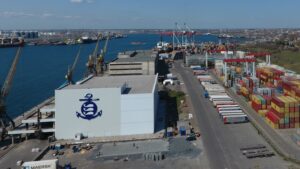
Odessa Port Cold Storage PJSC will hold its annual general meeting of shareholders on April 21, 2026, via remote participation. According to the published notice, shareholders are invited to review the supervisory board’s report, approve the financial and operational results for 2025, and cover the loss of UAH 197,000 using retained earnings.
The company is registered in Odesa. According to Opendatabot, the company’s director is Ihor Khmelevskyi, and the issuer itself operates in the city’s port infrastructure.

PJSC “Oberig” will hold its annual general meeting of shareholders on April 10, 2026. According to the published notice, shareholders are being asked to approve the 2025 results, distribute profits in the amount of UAH 20.224 million (allocating UAH 4 million to dividends), and approve a number of significant transactions, including those with a maximum value of up to UAH 50 million.
Oberig PJSC was registered in the Mykolaiv region in 2005 and is engaged in the cultivation of grain and oilseed crops.
According to Opendatabot, the company’s revenue in 2025 amounted to 127.64 million UAH, net profit to 20.224 million UAH, and assets to 232.6 million UAH.

Odessa Sugar Company PJSC will hold its annual general meeting of shareholders on April 10, 2026. For the company, this will be one of the key corporate events of the spring, at which shareholders are expected to consider issues related to the company’s current operations and last year’s results.
According to Opendatabot, Odessa Sugar Company PJSC is registered in Odessa, and its director is Alexander Diordiev.



