
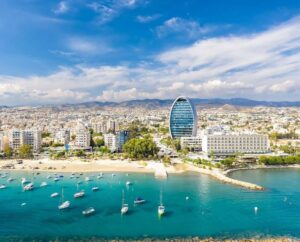
Cyprus’s real estate market continued to grow rapidly in the summer of 2026: from January through July, 12,047 real estate purchase and sale agreements were filed with the country’s land registries, a 14% increase compared to the same period last year.
In July, approximately 2,040 contracts were registered, which is about 11% higher than the figure for July 2025. Thus, July became one of the busiest months for the Cypriot real estate market this year. The data is based on statistics from the Department of Land and Geodesy of the Republic of Cyprus.
Demand from foreign buyers continues to play a significant role in the market’s growth.
In July, Cypriot citizens concluded 1,211 transactions, which is 12% more than a year earlier. They accounted for about 59% of the market. Another 829 contracts, or approximately 41%, were concluded by foreign buyers.
Of these, buyers from European Union countries concluded 277 contracts, compared to 274 in July of last year—an increase of just 1%.
Demand from citizens of non-EU countries grew much faster. They concluded 552 transactions, compared to 478 a year earlier—a 15% increase. Thus, more than two-thirds of all July purchases by foreigners were made by citizens of third countries.
In the first seven months of 2026, sales to buyers from countries outside the EU increased by 19% year-over-year, with growth recorded in all five administrative districts under the control of the Republic of Cyprus.
Limassol, Paphos, and Larnaca attract the most foreigners
The geographic distribution of demand among local and foreign buyers differs significantly. Among Cypriots, sales in Limassol grew particularly rapidly—in July, they increased by 39%, to 445 transactions. In Paphos, growth stood at 29%, while domestic demand declined in Larnaca and Famagusta.
Foreign demand is particularly noticeable in coastal areas. In July, non-EU citizens signed 150 contracts in Larnaca, a 42% increase from the previous year. Paphos traditionally remains one of the island’s most foreigner-oriented markets, while Limassol is the largest market for high-end real estate and corporate relocation.
From January through July, foreigners from the EU and third countries together accounted for approximately 41% of all real estate sales in Cyprus.
The Land Registry’s preliminary statistics do not break down the nationalities of foreign buyers by country. However, the Cypriot Ministry of the Interior has previously provided more detailed data on nationalities to Parliament.
According to government statistics for the period from September 2024 to September 2025, the composition of foreign buyers varies significantly by region.
In Limassol, Russian citizens led the way among foreign buyers with 846 purchases, followed by Israelis with 571 and Greek citizens with 261.
In Paphos, British citizens constituted the largest group—890 purchases—followed by Israelis—683—and Russians—327.
In Larnaca, Israeli citizens were particularly active buyers—850 properties—followed by Lebanese—723—and British—302.
In Nicosia, Greek citizens led the way with 403 purchases, followed by Romanian citizens with 112, Russian citizens with 80, and Lebanese citizens with 79. The Ministry of the Interior submitted this data to the Cypriot Parliament, and it was subsequently published by the Cyprus Mail.
Ukrainian citizens are also among the active buyers of Cypriot real estate, although they do not yet rank among the top three groups.
The most detailed breakdown by country, provided by the Cypriot Ministry of the Interior to Parliament in January 2025, covered transactions from 2021 through early 2025.
According to these data, Ukrainians were among the top ten most common nationalities of buyers in four coastal districts—Limassol, Paphos, Larnaca, and Famagusta. In Limassol and Paphos, they were preceded by Russians, British, Israelis, Greeks, Romanians, and Chinese.
As for Nicosia, there is separate data on applications by foreign citizens to purchase real estate in 2024. Ukrainians accounted for 4% of these applications, the same percentage as British citizens. Chinese and Lebanese nationals each accounted for 16%, Russians for 14%, Israelis for 10%, Syrians for 6%, and Egyptians for 5%.
However, it is currently impossible to accurately calculate the number of purchases made specifically by Ukrainians between January and July 2026: the DLS’s monthly public statistics group Ukraine together with all other countries outside the EU.
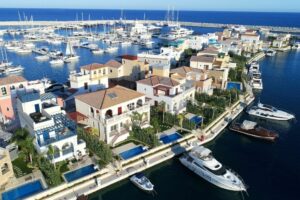
Cyprus’s residential real estate market continued to grow in the first half of 2026 amid steady demand from foreigners, rising construction costs, and active construction in coastal cities.
According to a study by Ask Wire, the average price of an apartment sold in Limassol from January to June was approximately 363,000 euros. In Paphos, this figure was estimated at 262,000 euros; in Nicosia, 183,000 euros; in Larnaca, 171,000 euros; and in the Famagusta area, 150,000 euros.
Data from the Central Bank of Cyprus confirms that the upward trend continues. In the first quarter of 2026, apartment prices rose by 10.8% compared to the same period last year, prices for single-family homes rose by 3%, and the overall residential real estate index rose by 7.5%. The regulator attributes the price increases primarily to sustained demand from foreign buyers, rising construction costs, and the currently limited supply of housing. The report was published on June 23, 2026.
Limassol remains the most expensive market, where a significant portion of the supply consists of luxury coastal complexes, high-rise residential buildings, and properties targeted at international investors. Paphos ranks second in terms of average apartment prices.
Larnaca showed the most notable growth. According to Ask Wire’s estimates, apartment prices in the city rose by nearly 8.9% over the year, and 1,521,000 apartment transactions were recorded in the first half of the year. Demand is driven by prices that are lower than in Limassol, the development of urban infrastructure, proximity to the airport, and foreign buyers’ interest in new seaside properties.
In the first quarter of 2026, foreign buyers accounted for approximately 43.4% of all registered real estate purchase agreements in Cyprus, compared to 40.1% for the full year of 2025. Buyers from countries outside the EU accounted for 29.1% of the market. Official statistics from the Cyprus Land Department are published with a breakdown by EU and third-country buyers but do not include a complete, up-to-date ranking by nationality.
Who Is Buying Real Estate in Cyprus
The main foreign buyer groups include citizens of the United Kingdom, Russia, Israel, Lebanon, and Greece; however, their presence varies significantly by region.
In Paphos, demand from British, Russian, and Israeli buyers is particularly noticeable. At certain times, foreign buyers account for up to three-quarters of local transactions. British buyers tend to purchase properties for relocation, vacation, or long-term residence, while Russian and Israeli demand is largely linked to the relocation of capital, businesses, and families.
Larnaca primarily attracts buyers from Israel and Lebanon. For them, the city is appealing due to its transportation accessibility, relatively low entry barrier, and geographical proximity to the countries of the Eastern Mediterranean.
In Limassol, citizens of Russia, Israel, and Greece remain among the most prominent foreign buyers. Nicosia relies more heavily on domestic demand, while Greeks, Britons, and Australians stand out among foreign buyers there. In the Famagusta region, buyers from the United Kingdom, Greece, and Lebanon play a significant role.
Chinese investors, who were actively present in the Cypriot market from 2020 to 2024, have become less prominent in recent regional rankings. However, official statistics may underestimate the share of foreign capital, as purchases made through companies registered in Cyprus or other EU countries may be counted as domestic transactions.
The market is also being supported by the recovery of mortgage lending: the volume of mortgage loans issued rose by 24.5%, while the average interest rate fell to approximately 3.15%. New, energy-efficient one- and two-bedroom apartments located near the coast are in the highest demand.
Ask Wire expects that by the end of 2026, real estate prices in Cyprus will rise by an additional 3–5% on average, and prices for new energy-efficient apartments will increase by 4–6%. Larnaca is likely to continue growing faster than the national average. The main limiting factors will remain the declining affordability of housing for local residents, a shortage of new supply, and geopolitical uncertainty in the Eastern Mediterranean.
Cypriot banks and financial institutions have begun conducting enhanced due diligence on clients who have obtained citizenship or a residence permit through investment programs, including the former Cypriot “golden passport” program and current investment-based residency schemes.
On June 5, the Tax Department of the Republic of Cyprus published a notice regarding the strengthening of due diligence procedures under DAC2/CRS standards. The measures are aimed at determining clients’ actual tax residency and preventing the use of investment passports and residence permits to conceal assets or evade tax reporting.
The new requirements primarily apply to clients who indicate tax residency in countries with high-risk investment programs. Banks must more carefully verify whether the declared jurisdiction actually corresponds to the client’s real “center of vital and economic interests.”
As part of the verification process, financial institutions may request additional information from clients: whether citizenship or a residence permit was obtained through an investment program, whether the client has the right of residence in other countries, whether they have stayed in other jurisdictions for more than 90 days in the past year, and where they actually filed tax returns.
For new clients, the enhanced procedures apply from the date of publication of the notice—June 5, 2026. For existing clients, financial institutions have up to six months to conduct the additional verification.
If a bank determines that a client’s actual situation does not match their declared tax residency, information about their accounts may be shared with the tax authorities of the relevant country through the CRS automatic exchange system.
The OECD has previously noted that citizenship and residency-by-investment programs can be used to circumvent tax transparency rules if a client obtains formal status in one country but actually lives and conducts economic activities in another.
The list of jurisdictions whose programs the OECD considers potentially risky for the CRS includes, in particular, Cyprus, the UAE, Bahrain, Antigua and Barbuda, Dominica, Grenada, St. Kitts and Nevis, St. Lucia, the Bahamas, Barbados, the Seychelles, Vanuatu, and the Turks and Caicos Islands.
This is an important signal for the Cyprus real estate market, as investment residency remains one of the factors driving demand for housing from foreign buyers. The current permanent residency-by-investment program requires an investment of at least €300,000, particularly in real estate; however, investors must now be prepared for a more thorough review of their sources of funds, tax history, and actual place of residence.
Cyprus’s citizenship-by-investment program, known as the “golden passport” program, was shut down in 2020 following a corruption scandal and pressure from the EU. However, some investors who obtained citizenship earlier still hold Cypriot documents and bank accounts, making them a group of heightened interest for tax and financial authorities.
Tighter controls may complicate account management for some foreign investors, especially those who hold multiple residencies, do not maintain transparent tax records, or cannot verify the source of their funds. That said, for real estate buyers with documented income and a clear tax history, the new rules do not mean automatic denial of service, but they do raise compliance requirements.
Cyprus remains one of the prominent real estate and tax planning markets in the Eastern Mediterranean. The country is an EU member, has a developed banking sector, a low corporate tax rate, and continues to attract interest from foreign homebuyers, primarily in Limassol, Paphos, Larnaca, and Nicosia. However, following the closure of the “golden passport” program and the strengthening of international tax information exchange, the market is gradually shifting from a model of quick investment statuses to stricter compliance and transparency regarding the origin of capital.

In April 2026, foreign buyers accounted for 649 real estate transactions in Cyprus, or 40.3% of the total number of registered sales, according to the Cyprus Mail, citing data from the Cyprus Department of Lands and Surveys. A year earlier, foreigners accounted for 552 transactions, or 39.3% of the market.
A total of 1,611 real estate sales were registered in Cyprus in April, which is 15% more than in April 2025. From January to April 2026, total sales rose by 14% to 6,320 transactions, compared to 5,541 during the same period last year. Sales to foreigners over the four-month period increased to 2,693 transactions from 2,223 a year earlier.
According to data from the Cyprus Department of Lands and Surveys, among the registered sales contracts involving foreigners in April, 197 properties were purchased by buyers from EU countries and 452 by buyers from non-EU countries. For January–April, the figure stood at 872 properties for EU citizens and 1,821 properties for buyers from third countries.
Paphos remains the most active region in terms of foreign demand. In April, 84 properties were registered there with contracts from EU buyers and 141 properties from non-EU buyers. In Limassol, the figures were 33 and 151 properties, respectively; in Larnaca, 37 and 98; in Nicosia, 29 and 40; and in Famagusta, 14 and 22.
In long-term statistics, the British, Russians, Greeks, and Israelis lead among the largest foreign buyers of real estate in Cyprus. According to data submitted by the Cypriot Ministry of Interior to parliament and published by Open4Business, foreign buyers purchased more than 37,000 properties between 2021 and 2024. The United Kingdom ranked first with approximately 11,800 properties, Russia second with about 4,900, Greece third with about 4,700, Israel fourth with 3,900, and Lebanon fifth with 2,100 properties.
Ukrainians are also among the notable buyers of Cypriot real estate. In the 2021–2024 ranking, Ukraine is listed in 9th place among buyer countries, with Ukrainian buyers being particularly prominent in Limassol and Paphos. Exact quantitative data on Ukrainians is not disclosed in the published summary.
Recent data by nationality for the period from September 2024 to September 2025 confirms the dominance of British, Russian, Israeli, and Greek buyers. In Larnaca, Israelis were the largest group with 850 transactions, followed by Lebanese with 723 and British with 302. In Limassol, Russians led with 846 transactions, followed by Israelis with 571 and Greeks with 261. In Paphos, the British took first place with 890 transactions, followed by Israelis with 683 and Russians with 327.
The growth in foreign demand is intensifying the debate in Cyprus over housing affordability and the rules governing property purchases by third-country nationals.
According to the Relocation.com.ua project, the Cypriot authorities have officially ended the transition period during which foreign investors could still apply for permanent residency under the previous, more lenient conditions. This was announced by the Cyprus Department of Migration, which published a notice on March 3 regarding the cessation of accepting applications under the old criteria under Regulation 6(2).
This refers to a mechanism that allowed some applicants to take advantage of the conditions in effect before the requirements were tightened. Now that this option has closed, new applications must comply with the program’s updated rules, including current investment and compliance requirements. According to industry market reviews, the key condition for third-country nationals to obtain permanent residency in Cyprus through the fast-track program remains an investment of at least €300,000 in real estate or another approved asset; however, applications under the old parameters are no longer accepted.
The decision may affect some of the demand from foreigners who viewed real estate purchases as a way to secure resident status on the island. At the same time, Cyprus’s housing market itself remained stable in early 2026. According to data based on official statistics from the Department of Lands and Surveys, in February 2026, the total number of real estate transactions increased by 11% year-over-year. Cypriot buyers accounted for 866 transactions, EU citizens for 231, and buyers from non-EU countries for approximately 430–440 transactions, or nearly 29% of the monthly volume.
The most notable activity among foreign buyers in February was recorded in Paphos and Larnaca. In Paphos, EU citizens completed 92 transactions, while buyers from non-EU countries completed 145. In Larnaca, EU citizens accounted for 42 transactions, while non-European buyers accounted for 121. This confirms that coastal areas continue to be the main focal points for foreign capital in Cyprus’s residential real estate market.
Overall, according to Audit Office data, 61% of real estate sales in Cyprus in 2024 were made by Cypriots, 12.07% by EU citizens, and 27.35% by citizens of non-EU countries.
In total, 15,797 real estate transactions were registered on the island in 2024, of which 4,321 involved non-European buyers. The highest share of foreign transactions was in Paphos—44.19% of all sales—followed by Larnaca—33.85%, Famagusta—26.71%, and Limassol—26.51%.
When it comes to the main groups of foreigners investing in housing in Cyprus, the market is currently shaped by several major flows. First, there are EU citizens, who are particularly active in Limassol and Paphos. Second, there are buyers from countries outside the EU, for whom Cyprus remains attractive both as a place to live and as an investment destination. Among the most prominent non-European groups in recent years are Lebanese, Israelis, Russians, and Chinese. According to the Audit Office, in the Nicosia sample for 2020–2024, the largest groups of foreign buyers were Chinese and Lebanese—16% each—followed by Russians—14%—and Israelis—10%.
More recent data presented by the Cypriot Ministry of Interior to parliament shows that between September 2024 and September 2025, British, Israeli, and Russian buyers stood out among foreign buyers. In Larnaca, Israelis purchased 850 properties, Lebanese—723, and British—302. In Limassol, Russians led with 846 purchases, followed by Israelis—571 and Greeks—261. In Paphos, the British took first place with 890 transactions, followed by Israelis with 683 and Russians with 327.
Thus, the closure of the transitional scheme for obtaining permanent residency under the old rules means one thing for foreign investors: access to the Cypriot real estate market remains, but the previous preferential terms can no longer be used.

Applications are now being accepted for the 16th International Cyprus Short Film Festival, which will take place October 10–16, 2026, in Limassol (Republic of Cyprus), according to the Ukrainian State Film Agency.
The State Film Agency noted that the festival aims to promote the art of cinema by screening short films from around the world, as well as to support the work of filmmakers and the development of contemporary cinematic language.
Short films in five categories are accepted for the international competition program: fiction, documentary, experimental, student, and animated. The duration of the films must not exceed 30 minutes.
Applications for participation can be submitted until May 2, 2026, via the online platforms ShortFilmDepot or FilmFreeway.
It is noted that the Cyprus International Short Film Festival is part of the European Film Academy’s network of partner festivals and, since 2019, has had the right to nominate one film for the European Film Academy Award.
International film festivals regularly open submissions for directors from various countries, giving young filmmakers the opportunity to present their work to the international professional community.
As reported, the Cabinet of Ministers has increased the number of deputy heads of the State Agency of Ukraine for Cinema to three.



