

Two planes carrying 28 passengers from the MV Hondius cruise ship, where an outbreak of hantavirus occurred, landed in the Netherlands on Tuesday, and one of the Dutch hospitals treating a patient with hantavirus has quarantined 12 staff members as a precautionary measure, Reuters reports.
Western media also report that passengers who are not Dutch nationals will be sent for treatment in their home countries.
Employees of the Dutch medical center at the University of Nijmegen have been placed under a six-week preventive quarantine, as it was discovered that updated strict protocols were not followed while handling test samples. The hospital reported that the risk of infection for employees remains “very low.”
According to the latest data, three passengers on the MV Hondius have died from hantavirus: a married couple from the Netherlands and a German citizen.
About ten people tested positive for hantavirus. It was noted that the deceased woman and a British man currently in intensive care in South Africa were found to have the Andes strain of hantavirus. Only this type of hantavirus is transmitted from person to person, the country’s Ministry of Health emphasized. Western media reported that this strain is common in Latin America, particularly in Argentina, where the cruise began.
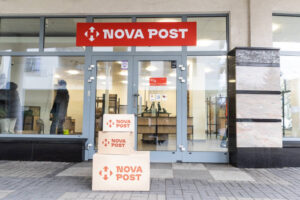
Nova Post, which entered the Dutch market in late 2024 with a door-to-door delivery service, increased its shipment volumes in the country fivefold in 2025 thanks to network expansion, collaboration with local partners, and e-commerce platforms.
According to a statement by Nova Post on Telegram on Wednesday, as of now, nearly 1,400 service points are available to customers in the Netherlands, and this year the company plans to integrate with Vinted Go, which will add another 1,700 parcel lockers and pickup points across the country.
In addition, Nova Post intends to collaborate with Sendcloud, a delivery automation platform for online stores, which will enable business customers to work with Nova Post through a single delivery management system.
It is noted that the company is seeking partners to open additional mini-branches in Amsterdam, Rotterdam, The Hague, Breda, and Eindhoven, while in 2025 it opened a freight branch in Utrecht and a pickup and drop-off point in Rotterdam.
At the same time, the report does not include information on the volume of shipments in the Netherlands for 2025.
Vyacheslav Klimov, co-owner of the express delivery leader Nova Poshta, said in March of this year that Nova Post Europe plans to double its network of branches in Europe in 2026 and keep its strategy focused on ensuring maximum delivery speed.
Nova Post Europe processed 13 million international shipments in 2025 and plans to increase this volume by over 30% in 2026 and maintain this pace through 2030, Nova Post Europe CEO Oleksandr Lysovets previously stated in an interview with Forbes Ukraine. According to him, these plans will be supported by a new phase of European expansion with investments exceeding $5 million.
The core business of Nova Post, the main asset of the NOVA Group, is express delivery of documents, parcels, and palletized oversized cargo. Its ultimate beneficial owners are Volodymyr Poperechnyuk and Klimov.
Ukrainians’ attitudes toward the Netherlands in March 2026 are characterized by one of the highest levels of positive perception among all countries surveyed. According to the results of a sociological survey conducted in March 2026 by the research company Active Group in collaboration with the Experts Club information and analytical center, 72.7% of respondents describe their attitude as positive, which is significantly higher compared to 63.3% in August 2025. At the same time, the share of negative assessments dropped from 2.3% to 1.2%, which effectively indicates an almost complete absence of critical sentiment.
A breakdown of the results shows that 34.3% of respondents have a “completely positive” attitude toward the Netherlands, while another 38.5% have a “mostly positive” one. The share of neutral assessments stands at 24.2%, which is a relatively low figure compared to other countries. Negative assessments are minimal: 0.7% are “mostly negative” and 0.5% are “completely negative,” while 1.9% of respondents were undecided.
A comparison with the previous period demonstrates not only an increase in positive perceptions but also a further “cleansing” of public opinion of negative assessments. This trend is significant, as the Netherlands is among the countries with the highest level of stable support within Ukrainian society.
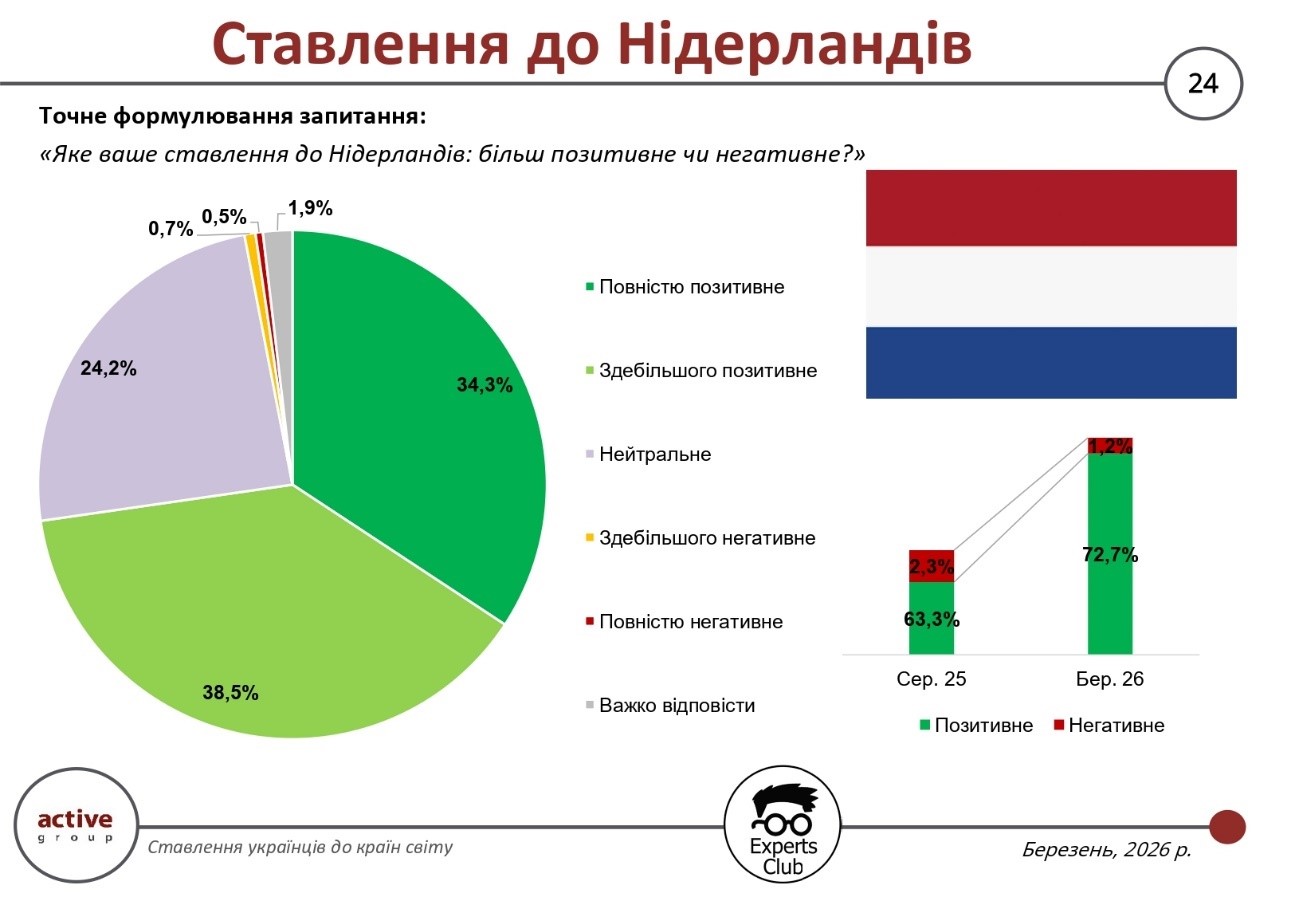
Unlike many other countries, where a significant portion of respondents hold a neutral position, in the case of the Netherlands, a clearly formed positive attitude dominates. This means that the country has a distinct and clear image in the perception of Ukrainians, one associated with reliability and predictability.
The increase in positive ratings by more than 9 percentage points indicates growing trust and a strengthening of the Netherlands’ image. At the same time, the decrease in the already low level of negative responses suggests the absence of significant factors that could shape a critical perception.
“Ukrainians quite clearly distinguish between countries toward which they have formed a stable positive attitude, and the Netherlands belongs precisely to this group. Where a country has a clear position and consistency in its interactions, we see not just high ratings, but their continued growth. This means that public opinion reacts not to specific situations, but to systemic signals,” noted Oleksandr Pozniy, director of the research company Active Group.
Thus, the survey results indicate that the Netherlands is consolidating its status as a country with one of the best images in Ukraine. A high level of positive sentiment, minimal negative ratings, and stable growth dynamics form the basis for further strengthening bilateral relations in both the social and economic spheres.
According to a study conducted by the Experts Club information and analytical center based on data from the State Customs Service, the Netherlands ranks eleventh in terms of total trade in goods with Ukraine, amounting to $3.01 billion. This is one of the few countries in the upper part of the ranking where Ukraine has a trade surplus, as exports of Ukrainian goods exceed imports.
The study was presented at the Interfax-Ukraine press center; the video can be viewed on the agency’s YouTube channel. The full version of the study can be found at this link on the Experts Club analytical center’s website.
ACTIVE GROUP, EXPERTS CLUB, NETHERLANDS, Pozniy, SOCIOLOGY, SURVEY, UKRAINE, URAKIN
Numbeo has published its Quality of Life Index for 2026, ranking the quality of life in 89 countries and 304 cities across the world based on a combination of factors including purchasing power, pollution levels, house price to income ratio, cost of living, safety, healthcare quality, travel time to work and climate.
According to the ranking, the top 5 countries for quality of life were the Netherlands, Denmark, Luxembourg, Oman and Switzerland, while the top 10 also included Finland, Austria, Germany, Iceland and Norway.
The Netherlands is also leading in the ranking of cities – the first places were taken by The Hague, Utrecht and Eindhoven, followed by Groningen and Rotterdam; the top ten also included Luxembourg, Vienna, Amsterdam, Ghent and Nuremberg.
Ukraine, as noted in the publication, is located in 68th place directly above Russia.
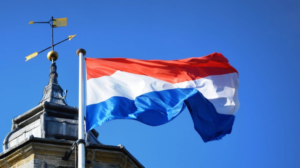
The Netherlands has increased its total financial assistance to Ukraine through the Energy Support Fund to EUR100 million, allocating additional funds to strengthen energy resilience and support critical infrastructure, according to First Deputy Prime Minister and Minister of Energy of Ukraine Denys Shmyhal.
“The Netherlands has increased its total assistance provided through the Ukraine Energy Support Fund to EUR 100 million. The Netherlands will allocate an additional EUR 35 million,” according to a statement posted on social media.
The purpose of the additional funding is to ensure a stable power supply to critical infrastructure facilities after Russian attacks, in particular by installing solar power plants on the roofs of buildings as part of the “Ray of Hope” initiative.

In 2025, Ukraine imported 12.85 thousand tons of cut flowers, which is 8.5% more than in 2024 (11.84 thousand tons), according to the State Customs Service.
According to the published statistics, in monetary terms, the volume of imports last year increased by 14.2% to $64.48 million, compared to $56.46 million a year ago.
The Netherlands remains the undisputed leader in supplies, providing almost three-quarters of the Ukrainian market, or 72.4% of supplies in monetary terms, or $46.68 million. Ecuador (12.8%, or $8.25 million) and Kenya (6.2%, or $4.00 million) also lead in flower supplies to Ukraine. In 2024, this trio remained the same with similar shares of supplies: the Netherlands (71.1%), Ecuador (13.5%), and Kenya (5.8%).
Flower exports from Ukraine in 2025 remained symbolic, amounting to only $184,000 at the end of the year, which is 12.5% less than in 2024 ($210,000). The main buyers of Ukrainian flowers were Moldova (59% or $108,600), Georgia (23% or $42,300), and Lithuania (10% or $18,400). A year ago, the composition of the top three buyers was slightly different: Moldova was also the leader (58% or $121,800), but it was followed by Poland (17% or $35,700) and Lithuania (12% or $25,200).
As reported, in 2021, Ukraine introduced a special three-year duty on imports of cut fresh roses, regardless of the country of origin and export. The duty rate in the first year of its application was 56%, in the second — 44.8%, and in the third — 35.84%.
Based on the results of the duty’s impact provided by the Ministry of Economy, the Interdepartmental Commission on International Trade (ICIT) concluded in 2025 that the application of special measures had a positive effect on the activities of domestic producers, but did not completely eliminate the consequences of the damage caused to them. Recommendations to extend the duty were forwarded to the ministry.



