

Scientists at the D.K. Zabolotny Institute of Microbiology and Virology of the National Academy of Sciences of Ukraine are creating probiotic preparations for fermenting vegetables. The D.K. Zabolotny Institute of Microbiology and Virology of the National Academy of Sciences of Ukraine is developing probiotic preparations for fermenting vegetables based on strains of the lactic acid bacterium Lactobacillus plantarum, the website of the National Academy of Sciences of Ukraine reported on Tuesday.
At the forum “Innovative Approaches to Industrial and Craft Production: Challenges and Opportunities,” the Institute’s scientists presented fermented beverages based on vegetable juices. Vegetable juices are a source of vitamins and many other nutrients. Fermentation with the lactic acid bacteria Lactobacillus plantarum not only extends the shelf life, but also enriches vegetable juice with biologically active metabolites, reduces carbohydrate content and gives the juice functional properties.
Scientists at the Department of Industrial Microorganism Physiology have produced a beetroot drink – beetroot juice fermented with selected strains of lactic acid bacteria. It is sweet and sour in taste (with a faint beet flavor), contains less carbohydrates and more of certain amino acids, as well as lactic and other organic acids, vitamins B, PP, C, E, minerals, betanin and pectin.
Long-term studies of the biological activity of beetroot juice and clinical trials on volunteers have shown that drinking 50 ml of beetroot juice for two weeks had a positive effect on overall health, improving the functioning of the digestive tract and circulatory system. A positive effect after drinking the juice is observed in dysbiosis, gastritis, hypertension, myocardial dystrophy, hypovitaminosis C and B in wartime and postwar. Today, the Institute’s scientists continue to work on this product: they have improved the composition of the bacterial starter and are studying its biological activity in depth.
fermenting, microbiologists, probiotic preparations, VEGETABLES

Ukraine’s state budget has received about $950 million from Japan as part of World Bank projects for recovery and social protection, the Finance Ministry said on Thursday.
“The financing consists of a $52.4 million grant from Japan under the Housing Opportunities for People’s Empowerment (HOPE) project and a $900 million loan from the Japanese government through the Investing in Social Protection for Improved Reach, Resilience, and Efficiency (INSPIRE) project,” the release said.
According to the release, the funds will be used to reimburse the state budget of Ukraine for urgent and priority needs, in particular in the field of recovery and social assistance.
The INSPIRE project is funded by a $1.2 billion loan from the World Bank’s Trust Fund for the Provision of Necessary Credit Support to Ukraine (ADVANCE Ukraine), with support from the Government of Japan, and aims to provide social protection to vulnerable populations during and after the war, improve access to social assistance and social services, and strengthen the adaptability of the social support system to effectively respond to current and future challenges.
The HOPE project aims to restore infrastructure in the combat-affected areas, de-occupied and affected regions of Ukraine. Funds will also be provided to homeowners for repairs in multi-family and private homes that have sustained moderate damage and do not require major repairs. The project will support policy reforms at the national level to improve recovery outcomes and alignment with Ukraine’s European integration goals.
On December 19, Finance Minister Sergiy Marchenko said that since the beginning of this year, Ukraine has managed to attract more than $39 billion in external financing, compared to $32.1 billion for the entire last year, and by the end of the year this amount will reach about $42.3 billion.
In particular, on December 20, Ukraine received a grant of EUR 150 million from the EU, and on Thursday – EUR 1.5 billion of the last tranche of the EU’s macro-financial assistance this year.

Motor (Transport) Insurance Bureau of Ukraine (MTSBU) has made 6.763 thousand payments from the Victims Protection Fund (VPF) in January-November 2023, which is 33.2% more than in the same period of 2022. According to the MTSBU report on its website, the total amount of such payments increased by 44.6% to UAH 393.7 million compared to January-November.
The largest volume of payments – UAH 269.5 mln, or 68.5% in terms of the amount and 4.3 thousand in terms of the number of payments for damage caused by the perpetrators of road accidents who do not have a valid CMTPL insurance policy. Compared to the corresponding period of 2022, the number of such payments increased by 33%, the amount – by 89.1%.
This trend is increasing due to the socio-economic consequences of the war.
For drivers of privileged categories from the FZP during the reporting period, almost 1.1 thousand payments were made for the amount of UAH 72.9 million, which is 28.8% more in number and 46.7% more in amount than in the same period of 2022.
In January-November 2023 the MTSBU paid UAH 12,1 mln on liabilities of insurance companies that have ceased their activity and recognized as bankrupt.
For the liabilities of companies that have ceased to operate in the MTPL insurance market, but recognized bankrupt in accordance with the procedure established by law, payments were made at the expense of the guarantee contributions of such insurers in the amount of UAH 34.4 million available in the MTSBU FZP.
The MTSBU also notes that the minimum regulatory payments for accidents caused by an unidentified vehicle (such cases are paid only on the fact of threat to life and health) remain UAH 4.4 mln, and those caused by cars that were seized as a result of unlawful actions – UAH 0.22 mln.
Motor (Transport) Insurance Bureau of Ukraine, Victims Protection Fund, МТСБУ
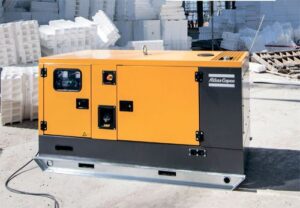
The European Commission has announced the shipment of another 500 power generators to Ukraine.
“The ongoing brutal attacks by Russia have left Ukraine’s energy infrastructure fragile. We are sending 500 more power generators to Ukraine, bringing the total number to more than 5,500, to ensure adequate energy supply and keep vital services running,” the European Commission said in a statement on Twitter.
The financial value of the 500 power generators being sent to Ukraine is €16.5 million. The generators will be handed over to various Ukrainian ministries.
A post on the Commission’s website states that the goal is to ensure sufficient electricity supply during the cold and dark months, as well as to keep vital Ukrainian services, including hospitals, operational. 40 of the 500 generators are intended for schools.

Canadian mining company Black Iron Inc. with assets in Ukraine intends to submit an updated proposal to the Cabinet of Ministers of Ukraine as part of an investment agreement on the Shymanivske iron ore project.
According to the company’s press release on Thursday, it has received a response from the Ministry of Economy under its investment support agreement, explaining that the legislation is now expiring and Black Iron will be required to update and resubmit the application.
“Black Iron understands that the Ukrainian government’s main focus is on the war. Unfortunately, those not directly involved in the war effort are not working in a more constructive and timely manner with investors, as Black Iron understands that to date no investment has been made with the signing of the agreement,” the statement reads.
The signing of investment agreements with Black Iron and other significant investors is important for improving the living standards of ordinary Ukrainians by supporting foreign direct investment needed to rebuild Ukraine and revitalize its war-torn economy.
In addition, it is emphasized that the constantly changing composition of ministers, coupled with the fact that it took more than two years to finalize the law on investment agreements, makes it difficult for companies to invest in Ukraine’s recovery. As such, it is imperative that Ukrainian government officials not directly involved in the fighting focus on actively working with engaged large investors, such as Black Iron, to develop practical solutions to rebuild the country.
“Black Iron’s management has been informed that the updated legislation on investment support agreements is under final review and should be published within the next few weeks. Upon publication of this law, Black Iron intends to update its Investment Agreement application and supporting documentation for resubmission, hoping to be more directly and timely involved in finalizing the Investment Agreement for submission to the Cabinet of Ministers of Ukraine for approval,” the company concludes.
As reported earlier, Black Iron Inc. continues to promote the Shymanivske iron ore project, having prioritized the conclusion of an investment agreement with the government of the country. The main issue is obtaining a land plot under the jurisdiction of the Ministry of Defense. Discussions with the ministry have led to an agreement on the preliminary amount of money that Black Iron will have to pay as compensation for obtaining this land plot for its use.
The company also announced that it is considering new potential projects.
In October 2010, Black Iron acquired a Cypriot subsidiary from the EastOne investment group of Ukrainian businessman Victor Pinchuk Geo-Alliance Ore East Limited along with its licenses for $13 million, then renamed it BKI Cyprus. The main assets are 99% in Shymanovske Steel and Zelenivske Steel (both in Dnipro).
In July 2013, after a number of problems with the project, Black Iron Inc. announced an agreement with the largest Ukrainian mining and metallurgical group Metinvest to develop its iron ore assets. Metinvest B.V. paid $20 million to Black Iron Inc. and acquired a 49% stake in BKI Cyprus. However, Metinvest later withdrew from the project.
The Shymanivske iron ore deposit is surrounded by five other operating mining companies, including ArcelorMittal’s iron ore complex. According to Black Iron, the existing infrastructure, including access to electricity, railways, and port facilities, will allow the project to be implemented quickly to the production stage.
According to a presentation from May 2021, the expected capital investment in the launch of the first stage is estimated at $452 million, and the second – $364 million. The project envisaged the construction of a factory for the production of premium iron ore with an iron content of more than 68% with a capacity of 4 million tons per year in the first stage and 8 million tons per year in the second.

Oil prices are rising on Friday and ending the week with steady growth due to problems with the transportation of energy resources through the Red Sea.
The movement of tankers in the Red Sea has sharply decreased due to attacks by Yemeni Houthis on ships.
The cost of February futures for Brent on the London ICE Futures exchange as of 7:20 a.m. is $80.04 per barrel, which is $0.65 (0.82%) higher than at the close of the previous session. As a result of previous trading, these contracts fell by $0.31 (0.4%) to $79.39 per barrel.
Futures for WTI for February in electronic trading on the New York Mercantile Exchange (NYMEX) rose by $0.6 (0.81%) to $74.49 per barrel by this time. On Thursday, these contracts fell by $0.33 (0.4%) to $73.89 per barrel.
Since the beginning of this week, Brent has risen in price by 4.5%, WTI – by 3%.
On Thursday, oil prices fell on the information about Angola’s withdrawal from OPEC, where the country had been a member for 16 years. This decision of Angola indicates the existence of serious contradictions in OPEC, which is trying to limit production to support oil prices, Market Watch notes.
“At first glance, Angola’s withdrawal from OPEC is not such a big deal, given that the country could barely meet its production quota,” said Price Futures Group analyst Phil Flynn.
“The concern, however, is that Angola’s withdrawal could signal latent tensions over OPEC ceding market share to non-member producers,” he said, according to Market Watch.



