

The volume of industrial production in the UK in May decreased by 0.6% compared to the previous month, according to the British National Statistics Office (ONS).
The indicator declined for the second month in a row and showed the worst dynamics since August last year.
Analysts polled by Trading Economics expected a decline of 0.4%.
In annualized terms, industrial production fell by 2.3%, matching the forecast, after declining by a revised 1.6% a month earlier.
The country’s manufacturing output in May fell 0.2% from April, electricity and gas production fell 2%, while the mining sector rose 0.3%.
For more information on key macroeconomic indicators in Ukraine and the world, see the link on the YouTube channel Club of Experts at the link:

Oil prices of benchmark grades are moderately rising on Thursday morning after rising at the end of the previous session, caused by the fall of the dollar.
The price of September futures for Brent on London’s ICE Futures exchange at 8:18 a.m. Q2 is $80.3 per barrel, up 19 cents (0.24%) from the previous session’s close. On Wednesday, these contracts rose by $0.71 (0.9%) – to $80.11 per barrel, having updated the maximum since the end of April.
Quotes of futures for WTI crude oil for August at the electronic trading of the New York Mercantile Exchange (NYMEX) by the specified time rose by 14 cents (0.18%) and amounted to $75.89 per barrel. At the end of the previous session they rose by $0.92 (1.2%) – to $75.75 per barrel.
On the eve it became known that the growth rate of consumer prices in the U.S. slowed to 3% in June from 4% in May, having updated the minimum since March 2021. Analysts on average expected a decline to 3.1%.
Oil traders are keeping an eye on easing inflationary pressures as this may result in the Federal Reserve (Fed) having no need to raise interest rates further, meaning “the current positive conditions in the economy may persist for some time,” said Colin Cieszynski, senior strategist at SIA Wealth Management.
“This has helped raise demand expectations, while supply from Saudi Arabia and Russia remains subdued,” he added.
The prospect of an imminent end to the U.S. monetary tightening cycle collapsed the dollar, which supported commodity prices. The ICE index, which shows the dollar’s performance against six major currencies, plunged 1.2% the day before, hitting its lowest level in more than a year.
The U.S. Department of Energy report, which indicated a sharp increase in oil reserves in the country last week – by almost 6 million barrels instead of the expected increase by 483 thousand barrels.
Gasoline inventories remained virtually unchanged, while distillate stocks rose by 4.815 million barrels. Experts surveyed by Trading Economics on average forecasted a decrease of 727 thousand barrels and 262 thousand barrels, respectively.
Stocks at the terminal in Cushing, where oil traded on Nymex is stored, decreased by 1.605 million barrels over the week.

The Falcon 9 rocket will launch into orbit on Friday with another batch of 54 mini-satellites to replenish the orbital constellation of the Starlink system’s global Internet coverage network, developer SpaceX said.
The launch will take place from Launch Complex 40 at the U.S. Space Force base at Cape Canaveral in Florida on Sunday at 00:40 U.S. East Coast time (7:40 a.m. QST).
This is Starlink’s 94th internet satellite launch since May 2019 and its 25th since the beginning of this year. SpaceX has already put into orbit more than 4.7 thousand such satellites. Some of them failed or went out of orbit. More than 4.4 thousand devices remain in orbit in working condition.
The first reusable stage of the launch vehicle, which is being used for the 16th time, will have to make a controlled vertical landing on the offshore drone platform A Shortfall of Gravitas, located in the Atlantic.

Canadian Prime Minister Justin Trudeau announced CAD541 million ($410 million) in new funding and projects to support Ukraine and strengthen transatlantic security at the NATO summit in Vilnius.
“The new funding for Ukraine builds on more than $8 billion in multifaceted assistance Canada has committed since the beginning of 2022, and builds on the Prime Minister’s announcement this week in Latvia to renew and expand Operation Reassurance, which is part of NATO’s defense and deterrence measures in Eastern Europe, and doubles Canada’s current presence in the country,” the Canadian head of government said in a statement on its website on Wednesday.
According to the prime minister, that Canada intends to provide Ukraine with additional drones with cameras, and will also provide training to the Ukrainian military as part of Operation Unifier in Canada.
In addition, the Prime Minister announced an additional CAD48.8 million ($37 million) to the Comprehensive Assistance Package for Ukraine, on top of the CAD34.6 million announced in April 2023, which will support NATO’s practical non-lethal assistance to Ukraine through the donation of materials including fuel, bridge equipment, radios and first aid supplies.
“Canada, along with Belgium, Denmark, Luxembourg, the Netherlands, Norway, Poland, Portugal, Romania, Sweden and the United Kingdom, signed a statement to form a joint coalition to train the Ukrainian Air Force to operate and maintain F-16 fighter jets. By signing the statement, Canada commits to contribute to a multinational effort to train Ukrainian pilots, technicians and support personnel to operate and maintain F-16 fighter jets,” the statement reads.
Trudeau also announced an additional CAD2.7 million ($2.05) in cybersecurity assistance to Ukraine.

The National Restaurant Association of Ukraine has asked the Kyiv Defense Council to consider extending the opening hours of catering establishments, Kyiv Mayor Vitali Klitschko has said.
The mayor posted the relevant document on his Telegram channel.
“We understand that business must work, the economy must receive taxes, and people must have jobs. The city authorities will consider this issue carefully. A meeting will be held with entrepreneurs to discuss all aspects. And after that, the issue will be considered by the Kyiv Defense Council,” said Klitschko.
Entrepreneurs emphasize that extending the work of catering establishments by one hour – until 23:00 – will help improve the economic situation in the city, create additional jobs, and increase revenues from taxes, fees, and payments to budgets of all levels.
Previously, all catering establishments were open only until 22:00, as the curfew started at 23:00. Since March 2023, the curfew in Kyiv has started at 00:00.
Since the second day of the war, the restaurants that are members of the Association have set up 21 kitchens in Kyiv and provide free meals to 178 organizations every day: units of the Armed Forces, hospitals, orphanages and nursing homes, police, territorial defense, people in bomb shelters and many people in need.
A request to extend the work of catering establishments was signed by 80 restaurateurs and chain owners.
It is worth noting that Klitschko promised to consider this issue in the near future.
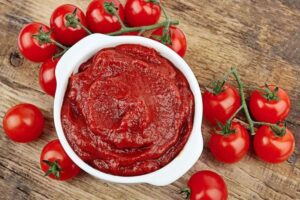
The Chumak PJSC intends to build a plant for processing tomatoes into paste in Odessa Region, as the company considers this region to be the most favorable in terms of climatic conditions, the director of the department of agrarian policy, food and land relations of the Odessa OVA, Alla Stoyanova, has said on Facebook.
The official recalled that Ukraine covers its domestic needs in vegetables at the expense of imports. According to Stoyanova, in Odessa region in 2023, the sown area of vegetable crops is 1489 hectares, of which 476.6 hectares are allocated for tomatoes, 307.1 hectares – onions, 95.11 hectares – carrots, 81.87 hectares – cabbage, 22.75 hectares – cucumbers, 434.44 – other vegetable crops.
The Director of the Department also informed that relocation of production facilities of Chumak PJSC to Odessa region will be a significant support for agro-industrial complex of the region and will create almost 5000 additional jobs.
The director of “Evrika” LLC Mikhail Bely suggested “systematic and balanced approach to the issue of product logistics”, which will facilitate the delivery of products to farmers for processing and will help the company “Chumak”.
Farmers present at the meeting expressed their willingness to expand production areas under tomato production.
“Vegetable farming is a high-cost business. It depends on irrigation and acquisition of specialized machinery, because farmers massively complain about the shortage of workers. In addition to investments in mechanization of production, attention should also be paid to storage and processing of products. We have a huge potential – natural, logistical (…), human”, summarized Stoyanova.



