China will gradually introduce a consumption tax on lithium and lithium-ion batteries, as well as solar cells, which have been exempt from taxation since 2015, according to the Xinhua News Agency.
Mercury-free, nickel-metal hydride, lithium, and lithium-ion batteries, as well as vanadium flow batteries, will be taxed at a rate of 2% starting September 1, 2026. Starting in September 2027, the rate will increase to 4%.
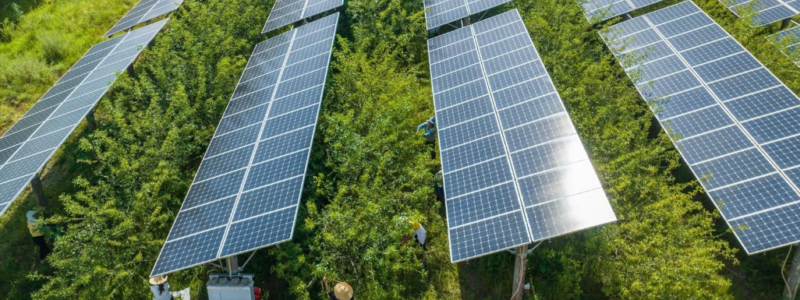
For photovoltaic, or solar, cells, a 2% tax will take effect on April 1, 2027, and will also be raised to 4% starting in April 2028.
The new rules were announced by China’s Ministry of Finance, the General Administration of Customs, and the State Taxation Administration.
The introduction of the tax could increase the production costs of batteries and solar cells in China. If manufacturers pass on the additional costs entirely to buyers, selling prices could rise by approximately 2% in the initial phase and up to 4% once the rate is fully implemented.
However, the actual price increase will depend on competition, corporate profitability, and contracts with buyers. Chinese manufacturers may absorb part of the costs themselves to avoid losing market share in both domestic and foreign markets.
The changes will potentially affect the cost of electric vehicles, energy storage systems, and solar power plants, as batteries and photovoltaic modules are among the key components of such projects. At the same time, due to the high proportion of other costs, the price of a finished electric vehicle or solar power plant will not necessarily increase by the full 4%.
Some promising technologies will remain temporarily exempt from the tax until December 2028. These include sodium-ion and solid-state batteries, fuel cells, as well as perovskite, tandem, and gallium arsenide solar cells.
China currently levies a 4% consumption tax on most battery products. At the same time, lithium and lithium-ion batteries, as well as solar and fuel cells, have been exempt since 2015.
This policy has facilitated rapid expansion of production capacity and helped Chinese companies become global leaders. However, the excess supply has simultaneously intensified price competition and reduced profitability for some manufacturers.
Analysts at Citic Securities estimate that the tax changes could generate an additional 45 billion yuan, or about $6.6 billion, in revenue for the Chinese government.
Following the announcement of the new rules, shares of solar cell manufacturer Longi Green Energy Technology rose 2.1%, JinkoSolar’s rose 4%, and those of CATL, the world’s largest battery manufacturer, rose 4.6%.