Spanish Prime Minister Pedro Sánchez announced the dissolution of parliament and the holding of early parliamentary elections on November 29, 2026, after a fragmented parliament blocked a number of key government initiatives, including measures to combat the housing crisis.
On October 5, Sánchez announced the convening of an extraordinary cabinet meeting to initiate the procedure for dissolving parliament. The early election will take place nearly a year ahead of schedule.
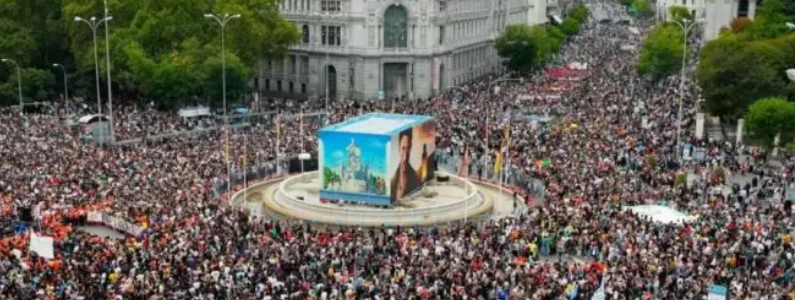
The decision was made following yet another escalation of the housing crisis in Spain. Last week, parliament rejected the government’s proposed housing measures, and on October 3, tens of thousands of people took to the streets in protests across approximately 50 cities nationwide.
In Madrid alone, according to Reuters, about 70,000 people took part in the demonstrations. Protesters demanded tougher measures against rising rents, evictions, and the shortage of affordable housing. Protests also took place in Valencia and other major cities.
The housing crisis in Spain has worsened in recent years amid rapidly rising prices, insufficient supply of new housing, and high rental costs in major cities and tourist regions.
According to the latest Eurostat data, published on October 1, 2026, residential real estate prices in Spain rose by 12.1% in the second quarter compared to the second quarter of 2025. By comparison, housing prices across the European Union rose by an average of 4.7% during this period, and by 4% in the eurozone. Thus, the rate of price growth in Spain is more than double the European average.
Moreover, prices continue to rise on a quarterly basis: in the second quarter, prices in Spain rose by another 3.4% compared to the first quarter of 2026. In the first quarter, the annual growth rate was 12.8%.
High growth rates are also being seen in the resale market. According to indices published in early October by Spain’s largest real estate portals, the average price of resale housing continued to grow at double-digit rates in the third quarter. According to Idealista, prices rose by 11.8% year-over-year—to 2,930 euros per square meter—while Fotocasa estimates annual growth at 13.8% and the average price at approximately 3,140 euros per square meter.
At the same time, the situation is complicated by lending conditions. The Bank of Spain reported in July that in the second quarter of 2026, banks tightened lending conditions, and public demand for mortgage loans declined. Banks also expected lending conditions to tighten further in the third quarter.
Consequently, the housing issue has evolved from a primarily social and economic problem into one of the central factors on the Spanish political agenda. The rapid rise in real estate prices, the shortage of affordable housing, the situation in the rental market, and mass protests increased pressure on the government at a time when Sánchez’s cabinet was already struggling to pass bills in parliament.
Early parliamentary elections in Spain are scheduled for November 29, 2026.