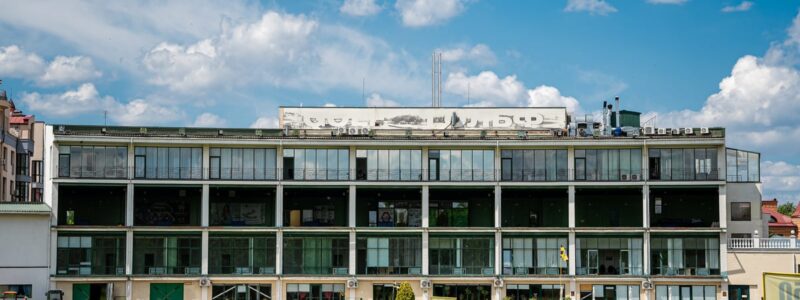
The Kyiv School of Economics (KSE) has raised $40 million to build a new campus in Obolon, Kyiv; part of these funds will be allocated to a 100-bed student co-living facility, according to the KSE press office.
A co-living space is a modern student housing format that combines private areas or rooms for sleeping and relaxing with shared spaces: a kitchen, living room, coworking area, and study zones.
“KSE students live and study side by side: common areas, the library, labs, classrooms, and housing—all in one environment. Students inspire one another every day. The idea for science, business, or politics in Ukraine in the coming decades may begin with a conversation over coffee in the kitchen,” commented KSE University Rector Tymofiy Brik.
Currently, 296 students live in KSE co-living spaces in Kyiv. The new space adds another 100 spots.
It is reported that among the first residents of the co-living space in the new academic year will be 50 students returning to Ukraine through the Come Back Home grant program (supported by the Carnegie Corporation of New York), and another 50 students who are already studying at KSE or have arrived from other cities in Ukraine.
KSE’s existing main campus is the Dragon Capital building on Shpaka Street in Kyiv. A new campus will open on Obolonska Embankment, with its buildings housing co-living spaces and lecture halls.
KSE is opening its first new facility this academic year: a 1,022-square-meter co-working space with over 100 seats and 858 square meters of classrooms.
The total budget for the campus development is $40 million.
As reported, in late April 2025, KSE purchased a new campus—the “Golf Club” in Kyiv’s Obolon district—for $18 million. This year, an additional $22 million was raised, part of which is being allocated to the new student co-living space and new lecture halls on Obolonska Embankment.
KSE is a private university and research center founded in 1996. It operates as a non-profit organization registered in the United States. Since 2022, KSE donors have allocated over $150 million to humanitarian, defense, and educational projects, including the development of university infrastructure.