The National Commission for the Regulation of Electronic Communications and Postal Services (NCCEC) has extended the permit for Ukraine’s largest mobile operator Kyivstar to test Starlink Direct to Cell (D2C, direct satellite communication with a smartphone) technology until 20 April 2026, according to the approved decision.
The document states that testing may continue throughout Ukraine, with the exception of border areas, areas of military operations, and temporarily occupied territories.
The conditions stipulate that the operator must use the 1725-1730 MHz/1820-1825 MHz (2×5 MHz) bands, ensure territorial retreat from the borders with other states in the west of the country, and comply with measures to avoid radio interference with existing users of the radio frequency spectrum, according to the decision.
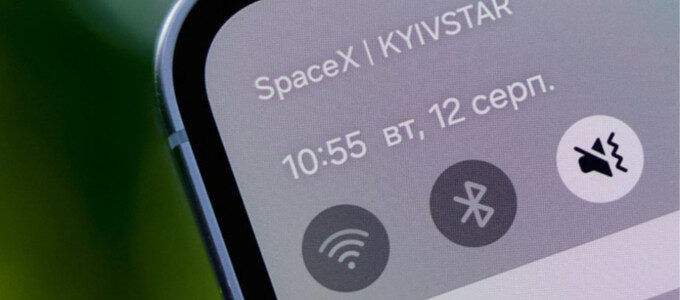
As reported, testing of Starlink Direct to Cell satellite communication technology, which allows users to exchange SMS messages in the absence of mobile communication but with direct visibility of the sky, became available in November to all Kyivstar subscribers in Ukraine who had compatible smartphones with 4G (LTE) support. The system operates via a network of more than 650 Starlink Direct to Cell satellites.
It was noted that voice calls and mobile internet are planned to be introduced in Starlink Direct to Cell in 2026.
In the third quarter of 2025, Kyivstar served 22.5 million mobile subscribers, which is 3.6% less than a year ago, while the number of 4G customers grew by 2.4% to 15 million.
In the third quarter, the company’s EBITDA profit amounted to UAH 7.1 billion, which is 21.5% more than in the third quarter of 2024, and in dollars, the growth was 20.4% to $171 million.
The main shareholder of Kyivstar Group, with an 89.6% stake, is the telecommunications holding company VEON, which owned 100% of Kyivstar before it was listed on the stock exchange.