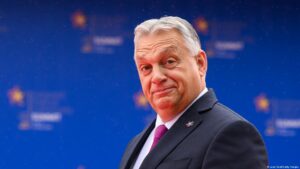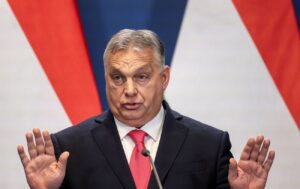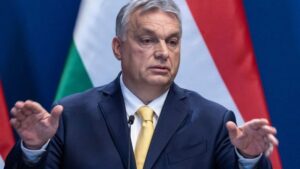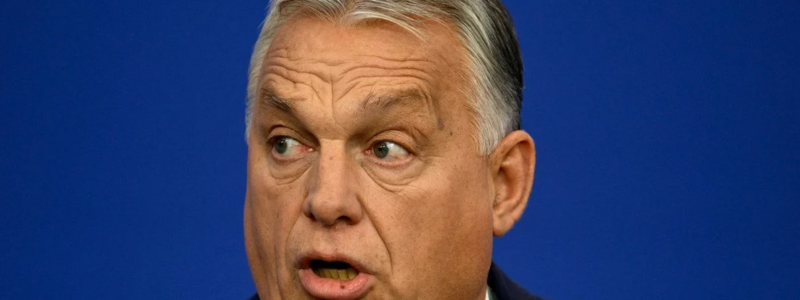
Former Hungarian Prime Minister Viktor Orbán has been re-elected as leader of the Fidesz party for a one-year term, despite the party’s defeat in the April parliamentary elections and a drop in its poll ratings.
At the party convention, 729 delegates voted for Orbán out of 737 valid ballots. There were no votes against, and eight delegates abstained. Orbán was the only candidate for the party leadership.
The re-election confirmed that Orbán retains control over Fidesz even after losing power. The party moved into opposition after 16 years in power, losing the April elections to the Tisza party led by Péter Magyar.
According to Reuters, recent polls show a sharp shift in the political balance in Hungary: support for Fidesz has dropped to about 17%, while Tisza received about 55%. In the elections, Mályi’s party secured a parliamentary majority sufficient to overhaul parts of the political and institutional system established under Orbán.
At the convention, Orbán acknowledged responsibility for Fidesz’s defeat and stated that the party must learn to operate under new conditions—no longer as the ruling party, but as the opposition. At the same time, his re-election indicates that there is currently no public alternative to the former prime minister within Fidesz.
For Hungary, this means that Orbán remains a key figure in the right-wing opposition and the main political opponent of Péter Magyar’s government. In the coming year, Fidesz will likely attempt to restructure the party, retain its core supporters, and formulate a strategy for returning to power.
Péter Magyar, a former member of the Fidesz political system, founded the Tisza party after breaking with Orbán’s inner circle and became the main beneficiary of public discontent with corruption, the state of institutions, and Fidesz’s prolonged dominance. His election victory marked Orbán’s biggest political defeat since 2010.
Viktor Orbán is a Hungarian politician and one of Europe’s most prominent right-wing leaders. He first served as Prime Minister of Hungary from 1998 to 2002, then returned to power in 2010 and led the government for 16 years. During Orbán’s tenure, Fidesz established a model of governance that the politician himself called “illiberal democracy.” His governments pursued a strict immigration policy, tightened control over institutions and the media, and clashed with the EU over issues of the rule of law.