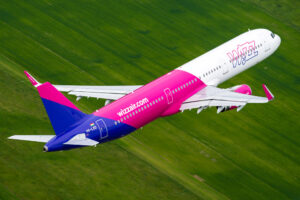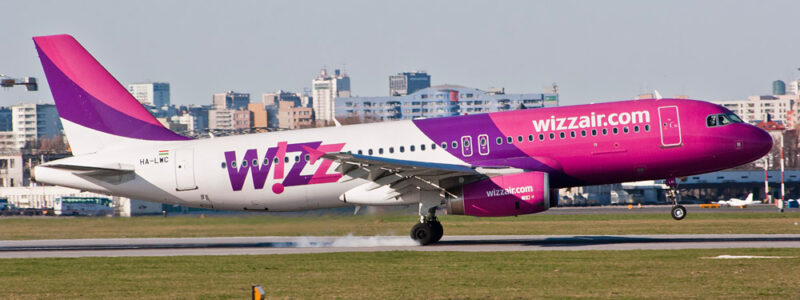
A revision of EU air passenger rights regulations could pose a serious challenge to the business model of Wizz Air and other ultra-low-cost carriers, which generate profits not only through base fares but also through a wide range of additional paid services.
European institutions are discussing updates to rules related to compensation for flight delays and cancellations, passengers’ rights to carry-on baggage, seating arrangements for families, transparency regarding additional fees, and the handling of complaints. For traditional airlines, this means an increased compliance burden, but for ultra-low-cost carriers, the potential impact could be greater, as a significant portion of their revenue comes from ancillary revenue—baggage fees, seat selection, priority boarding, rebooking, and other services.
Wizz Air is one of the most prominent examples of this model in Europe. The company’s base fare typically includes a minimal set of services, while many aspects of the trip are paid for separately. Wizz Air’s official website states that passengers may bring one carry-on bag measuring up to 40 x 30 x 20 cm on board free of charge, provided it fits under the seat. Larger carry-on bags, checked baggage, seat selection, and a range of other services are subject to additional fees.
It is this business model that allows low-cost carriers to offer low base fares while simultaneously increasing average revenue per passenger through additional services. If the EU introduces stricter requirements for free carry-on baggage, seating children next to accompanying adults, or limits certain fees, a portion of airlines’ revenue could come under pressure.
The key debate centers on the revision of Regulation (EC) No 261/2004, which governs compensation and assistance to passengers in the event of denied boarding, flight cancellations, and long delays. According to the European Parliament’s analytical service, the EU Council proposed in 2025 to change the compensation thresholds, specifically to set longer delay thresholds for payments, while the European Parliament advocates for maintaining stricter passenger protections and additional rights, including stricter rules on carry-on baggage and a ban on unfair ancillary charges.
For Wizz Air, the risk lies in the fact that the regulator could affect two pillars of the business model at once: revenue from ancillary services and operational discipline. Ultra-low-cost carriers operate with high fleet load factors, tight schedules, and rapid aircraft turnaround. Any new requirements regarding passenger service, compensation, connections, baggage, or seating could increase costs and reduce flexibility.
The issue of carry-on baggage could become particularly sensitive. Currently, many European low-cost carriers distinguish between a small bag stored under the seat and a full-sized cabin bag placed in the overhead compartment.
If the new version of the rules establishes passengers’ right to a larger allowance of free carry-on luggage, this will cut into one of the usual sources of additional revenue. Additionally, airlines may face an operational challenge: the cabins of narrow-body aircraft simply lack the physical space to accommodate full-sized carry-on luggage for all passengers.
The second sensitive issue is seating families together. If airlines are required to seat children next to their parents or accompanying adults for free, this will limit the monetization of seat selection. For passengers, this will be an improvement in service, but for low-cost carriers, it will mean a loss of revenue from seat selection.
The third area is compensation for delays and cancellations. The current EC261 regulation provides for payments ranging from 250 to 600 euros depending on the flight distance under certain conditions. Wizz Air explicitly lists these compensation amounts under EC261 on its website.
Airlines and industry associations warn that expanding passenger rights could significantly increase their costs. According to estimates cited in industry discussions, the current EC261 regime already costs European carriers approximately €8 billion per year, and expanding the requirements could increase this amount.
However, for passengers and consumer organizations, the argument is the opposite: the European air travel market has become more complex, and many fees and restrictions have become opaque. From this perspective, tightening the rules should not destroy the low-cost model, but rather make it more transparent—so that the final ticket price is clearer from the very beginning of the purchase.
For the markets of Central and Southeastern Europe, potential changes are particularly important. Wizz Air holds a strong position in Hungary, Romania, Poland, Serbia, North Macedonia, Albania, Bosnia and Herzegovina, and other countries in the region. For many airports and passengers, the company has become a key provider of affordable international flights. Any change in the low-cost carrier economy could affect flight frequency, prices, and route availability.
On the other hand, pressure on Wizz Air does not necessarily mean abandoning the current model. The company can adapt by raising base fares, introducing new package deals, optimizing schedules, revising baggage policies, digitizing claims processing, and increasing the share of direct sales. Low-cost carriers have already gone through similar regulatory cycles and typically responded not by exiting the market, but by adjusting their fare structures.
The key question for Wizz Air and other ultra-low-cost carriers is how far the EU will go. If the reforms are limited to clarifying compensation and procedures, the impact will be manageable. However, if the rules affect free baggage, family seating, and additional fees, the pressure on ancillary revenue could become significant.