
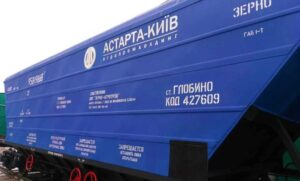
The Board of Directors of the Astarta agricultural holding has decided not to recommend a dividend payout from profits for the 2025 fiscal year for consideration at the annual general meeting of shareholders, which will take place on June 16.
“The Board’s decision is based on the need to retain profits to meet the company’s current investment and operational needs,” the company said in a stock exchange announcement on Friday.
Astarta’s share price fell 5.64% on that day to PLN50.2 per share.
Astarta is a vertically integrated agro-industrial holding operating in seven regions of Ukraine and is the country’s largest sugar producer. The company’s portfolio includes five sugar factories, agricultural holdings with a land bank of 214,000 hectares (including 129,000 hectares in Poltava Oblast, 42,000 hectares in Khmelnytskyi Oblast, and 16,000 hectares in Vinnytsia Oblast), and dairy farms with 30,000 head of cattle. The holding also operates a soybean processing plant and a bioenergy complex in Poltava Oblast, as well as a network of six grain elevators.
Astarta’s net profit for 2025 fell 4.2-fold to $19.94 million, while consolidated revenue decreased by 23% to $472 million.
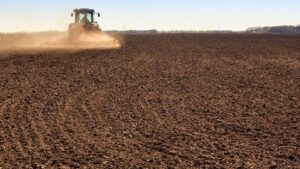
According to its annual report, the Astarta agricultural holding achieved a gross harvest of grain and oilseed crops of approximately 0.6 million tons in 2025, matching the previous year’s result.
“Climate instability, logistical constraints, and rising costs prompted the Company to increase acreage for crops with predictable sales and stable economics, such as corn and sunflower. However, unfavorable weather put significant pressure on crops, reducing productivity,” the company’s report noted.
The holding revised its crop rotation structure in response to climatic and logistical factors. Corn acreage more than doubled—to 12,000 hectares—resulting in a harvest of 94,000 tons of grain (+134% compared to 2024), while sunflower production increased by 32%—to 61,000 tons.
The soybean harvest decreased by 27%—to 122,000 tons (including the 2026 harvest), and the rapeseed harvest by 23%—to 31,000 tons due to weather anomalies. The sugar beet harvest amounted to 1.8 million tons, which is only 2% less than the previous year thanks to a 12.2% increase in yield, which almost completely offset the 13% reduction in acreage. Wheat production fell by 9% to 237,000 tons amid a reduction in acreage and a slight decline in productivity.
Yields for the holding’s main crops generally exceeded the national average. The yield for corn was 7.6 t/ha compared to 7.2 t/ha nationwide, and for wheat, 5.2 t/ha compared to 4.5 t/ha. A gap was also recorded for sunflowers—2.1 t/ha versus 1.9 t/ha—and rapeseed—2.8 t/ha versus 2.7 t/ha—while sugar beet yields stood at 55 t/ha.
In 2026, Astarta plans to expand its corn acreage by 66%, to 20,000 ha, and increase winter rapeseed acreage by 36%, to 15,000 ha, compared to last year. A reduction in acreage is expected for sunflowers by 20% to 23,000 ha, wheat by 15% to 39,000 ha, and sugar beets by 6% to 32,000 ha. The area under soybeans will remain stable at 56,000 hectares, which is 1.7 times less than the peak figure of 70,000 hectares in 2024.
“The condition of winter crops is generally satisfactory, as the insulating snow cover protects the plants from severe cold. Significant moisture reserves also create the potential for higher yields of spring crops,“ the agricultural holding noted.
”Astarta” is a vertically integrated agro-industrial holding operating in seven regions of Ukraine and is the country’s largest sugar producer. The company’s portfolio includes five sugar refineries, agricultural enterprises with a land bank of 214,000 hectares (including 129,000 hectares in Poltava, 42,000 hectares in Khmelnytskyi, and 16,000 hectares in Vinnytsia regions) and dairy farms with 30,000 head of cattle. The holding also operates a soybean processing plant and a bioenergy complex in Poltava Oblast, as well as a network of six grain elevators.
Astarta’s net profit for 2025 fell 4.2-fold to $19.94 million, while consolidated revenue decreased by 23% to $472 million. The agriholding’s EBITDA fell by 37% to $100 million, with a margin of 21%. The company’s net debt doubled over the past year and stood at $226 million at the end of the period.
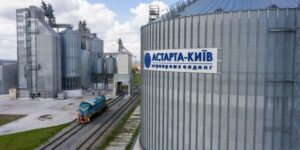
The Astarta agricultural holding reported a net profit of EUR19.94 million in 2025, which is 4.2 times less than in 2024, according to the company’s annual report on its website.
According to the report, Astarta’s consolidated revenue for the past period decreased by 23% to EUR472 million due to lower oilseed yields, reduced sales volumes of agricultural crops and sugar, combined with lower prices for certain products.
It is noted that export sales of EUR294 million accounted for 62% of consolidated revenue in 2025, while the agricultural segment generated 32% of consolidated revenue, or EUR149 million, which is 28% less than in 2024.
Sugar sales fell by 36% over the past year—to EUR147 million—and accounted for 31% of total revenue. At the same time, the share of soybean processing rose to 24% of Astarta’s revenue, or EUR112 million, thanks to a 6% increase in sales.
Sales in the livestock segment also grew by 6% year-over-year—to EUR56 million, accounting for 12% of total revenue in 2025.
According to the report, Astarta’s gross profit decreased by 42% to EUR137 million due to a EUR46 million decline in the fair value of biological assets and agricultural products, reflecting lower global prices, while EBITDA profit fell by 37% to EUR100 million, while the EBITDA margin decreased by 5 percentage points to 21%.
Astarta noted that its operating cash flow in 2025 decreased 4.5-fold to EUR36 million amid a 16% increase in inventories to EUR186 million, while cash flow from investing activities rose 91% to EUR100 million. Key investments included a strategic upgrade of the agricultural machinery fleet, a soybean processing plant (EUR42 million, with plans to launch in the second half of this year), a new multi-component seed crusher project, and the renovation of dairy farms.
Astarta’s net financial debt in 2025 (excluding lease obligations) stood at EUR94 million as of the end of last year, compared to a positive cash position of EUR21 million in 2024, while net debt doubled year-over-year last year to EUR226 million.
Astarta is a vertically integrated agro-industrial holding operating in eight regions of Ukraine and is the largest sugar producer in Ukraine. It comprises six sugar refineries, agricultural enterprises with a land bank of 220,000 hectares and dairy farms with 22,000 head of cattle, an oil extraction plant in Hlobine (Poltava region), seven grain elevators, and a biogas complex.
Astarta’s net profit for January–September 2025 fell by 42.2% to EUR43.70 million, while consolidated revenue decreased by 22.4% to EUR342.78 million.
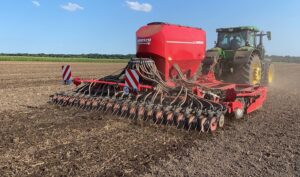
Astarta, Ukraine’s largest sugar producer, has begun its 2026 spring planting campaign, starting with sugar beet sowing in the Poltava region, the company announced on its Facebook page on Wednesday.
According to the report, 32,000 hectares have been allocated for sugar beets this year, which is 5.9% less than last year’s 34,000 hectares. At the same time, the area planted with sunflowers will decrease by 21%—to 23,000 hectares—and the area planted with winter wheat will decrease by 15%—to 39,000 hectares. The largest increases are planned for grain corn—by 43%, to 20,000 hectares—and winter rapeseed—by 36%, to 15,000 hectares. Soybean acreage remains unchanged at 56,000 hectares, as does the area under organic farming at 2,000 hectares.
“This year’s planting season is taking place under challenging conditions: increased moisture caused by abnormal frosts and frozen soil requires special attention from agronomists. They are adapting cultivation technologies and carefully monitoring field operations to improve production efficiency. Operational control is ensured by innovative solutions from AgriChain Machinery, AgriChain Scout, and AgriChain Barn. Combined with an updated fleet of equipment, this allows for a rapid response to weather and technological challenges, ensuring the stability and quality of the planting campaign,” said Vasyl Khmeliuk, Chief Operating Officer of Astarta, as quoted in the statement.
The holding noted that the final crop structure will be determined based on the results of the campaign. The use of digital ecosystems and an updated fleet of machinery allows the company to maintain a high pace of work despite challenging weather conditions.
Astarta is a vertically integrated agro-industrial holding operating in eight regions of Ukraine. It comprises six sugar factories, agricultural enterprises with a land bank of 220,000 hectares and dairy farms with 22,000 head of cattle, an oil extraction plant in Hlobine (Poltava region), seven grain elevators, and a biogas complex.
According to the results for 2025, Astarta reduced its total revenue from sales of key product categories by 15.6% compared to 2024—to UAH 21.05 billion, while physical sales volumes of its main products fell by 23.5%—to 1.21 million tons.

Agricultural holding Astarta, Ukraine’s largest sugar producer, has purchased over 50 units of agricultural machinery and components with a total value of over $5.2 million for spring fieldwork, the holding announced on Facebook.
“Systematic investments in modern equipment allow us to optimize operational processes, reduce costs, and lessen the environmental impact, particularly by reducing our carbon footprint,” said Astarta’s Chief Operating Officer Vasyl Chmeliuk.
The list of purchased equipment includes heavy-duty and small tractors, planting complexes, precision seeders, and other equipment. The majority of the fleet has already been delivered to production sites. The modernization is aimed at implementing precision and regenerative farming practices, as well as optimizing soil cultivation processes.
Astarta clarified that the infrastructure upgrade is part of a long-term investment strategy. By the end of 2025, the holding’s total investments in modern equipment amounted to approximately $22 million.
Astarta is a vertically integrated agro-industrial holding operating in eight regions of Ukraine. It comprises six sugar factories, agricultural enterprises with a land bank of 220,000 hectares and dairy farms with 22,000 head of cattle, an oil extraction plant in Hlobine (Poltava region), seven grain elevators, and a biogas complex.
According to the results for 2025, Astarta reduced its total revenue from sales of key product categories by 15.6% compared to 2024—to UAH 21.05 billion—while physical sales volumes of its main products fell by 23.5%—to 1.21 million tons.

Astarta Agricultural Holding, Ukraine’s largest sugar producer, is considering the acquisition of two Ukrainian agricultural enterprises: ‘Vozrozhdenie’ LLC and “Orion Moloko” LLC (both located in the Lubenskyi District, Poltava Oblast), according to a company announcement on the Warsaw Stock Exchange on Friday.
“Such an acquisition, if completed, would give Astarta decisive influence over the assets of these enterprises (primarily lease rights to arable land located near Astarta’s main operating assets in Poltava Oblast),” the agricultural holding noted.
It clarified that its subsidiary Ancor Investments Limited (Nicosia, Cyprus) has already received approval from the Antimonopoly Committee of Ukraine for the acquisition of the enterprises, but this submission to the AMCU was a procedural step allowing the parties to continue assessing the feasibility of the transaction.
“As of the date of this report, the final transaction has not been concluded. The company will provide further information in accordance with its disclosure obligations,” the statement reads.
According to the Unified State Register of Legal Entities and Individual Entrepreneurs, both Poltava-based enterprises specialize in the cultivation of grains, legumes, and oilseed crops, as well as in dairy farming. Prior to the conclusion of the agreement, the ultimate beneficial owner of the companies was Marina Sigal (Israel), co-owner of the Agromars holding (Gavrilovskie Tsyplyata brand) and the Freedom Farm group.
According to data from the Opendatabot service, Orion Moloko LLC (Shompelevka village, Lubenskyi District, Poltava Oblast) was founded in 2008. The company’s revenue increased by 29.5% compared to 2024—to 196.95 million UAH, assets decreased by 26.2%—to 193.39 million UAH, and net profit amounted to 61.99 million UAH. The number of employees at the end of the year was 79.
LLC “Enterprise ”Vozrozhdenie” (Petrakievka village, Lubenskyi District, Poltava Oblast) was founded in 2007. The company’s revenue in 2025 decreased by 27.0% to UAH 83.14 million, assets by 34.4% to UAH 64.53 million, and net profit amounted to UAH 11.15 million. The company employs 62 people.



