

The third-largest Ukrainian mobile operator, LLC “lifecell” (TM lifecell), increased its daily active subscriber base by 250,000 over the past two months amid blackouts, said CEO of Datagroup-Volia-lifecell (DVL), Mykhailo Shelemba, in an interview with Forbes Ukraine.
According to him, the total number of subscribers, taking into account the three-month active base, is slightly more than 9 million. This trend is observed due to the fact that a significant number of subscribers on the market have two SIM cards.
“With the start of blackouts, they begin to actively use the second one, but they are included in the three-month base in the next reporting period. The situation is volatile,” said the CEO of DVL.
He specified that the number of MNP subscribers who transferred their numbers to lifecell in January and February 2026 was about 120,000, including almost 20,000 on February 14-15.
“Throughout the history of the MNP service, more than 70% … transfer it to lifecell. Today, we have 927,000 subscribers who have transferred to lifecell in almost seven years of service. Of these, about 400,000 came in a year and a half after the deal (when French NJJ Xavier Niel bought lifecell from Turkish Turkcell). The dynamics are positive,” Shelemba noted.
According to him, based on relative estimates, lifecell has seen the best results in terms of number portability in Lviv, Ivano-Frankivsk, Ternopil, Cherkasy, Chernivtsi, Rivne, Poltava, and Volyn.
Commenting on the 18.7% increase in revenue in 2025 to UAH 15.9 billion, the CEO of DVL noted that it is important for lifecell to grow faster than its competitors in terms of both the number of subscribers and revenue.
Shelemba explained the increase in the subscriber base by the fact that the company invested $20 million in the purchase and installation of batteries at base stations, as well as implemented a complex system for calibrating the operation of various technologies: 2G, 3G, 4G, in order to provide mobile Internet services during blackouts longer than its competitors, as traffic increased by 28% year-on-year.
According to him, the company also conducted tests using SES at base stations. At the same time, according to the operator’s estimates, the payback period will be longer than for other investments in the core business, which will not solve the problem of blackouts.
“We decided to spend this money on batteries, generators, and team equipment. We believe that subscribers will appreciate this focus more,” explained the CEO of DVL.
He also said that since the beginning of 2025, the DVL group has invested about $2 million in converting the network to PON, which has allowed 2,700 homes to be connected. According to him, the goal is to achieve critical mass coverage in cities: in Vinnytsia, for example, 80% coverage has already been achieved, but the transition to PON is actively underway in Lviv, Kyiv, Kharkiv, and Dnipro.
“We are not building the network in pieces, we are covering at least microdistricts at once. The larger the city, the more difficult it is to do this quickly. The indicator in Kyiv is about 30%,” Shelemba added.
In an interview, he also advocated holding an auction for frequencies in the 700 MHz band for the deployment of 5G only when the state finds another 10 MHz of the band for the third operator, because now there are only 20 MHz, although 10 MHz can be found in the military.
“This process usually takes about a year. If they do it by the end of the year, it will be a record,” Shelemba said.

According to the results for January 2026, dairy enterprises of all categories in Ukraine produced 421,200 tons of raw milk, which is 11.8% less than in December 2025 and 7% less than in January last year, according to the Association of Milk Producers (AMP), citing preliminary data from the State Statistics Service.
The industry association explained that the decline in production in January was caused by prolonged blackouts and the limited ability of processing enterprises to accept raw materials during power outages.
At the same time, the industrial sector recorded growth: agricultural enterprises produced 269.9 thousand tons of milk, which is 4% more than in January 2025. The share of enterprises in the overall production structure was 64%.
On the other hand, there was a significant decline in private households – to 151.3 thousand tons, which is 21.7% less than in the same period last year and 26.7% less than in December.
According to the Ministry of Economy, Environment, and Agriculture, the negative dynamics in the household sector are due to a further reduction in the number of cows and a shortage of electricity due to shelling, which makes the processing process more expensive. In total, milk production in Ukraine amounted to 6.8 million tons in 2025 (4% less than in 2024).
Despite the general challenges, industrial milk production increased in 13 regions in January 2026. The highest growth rates were recorded in Rivne (+26%), Lviv (+15%), Ivano-Frankivsk (+14%), and Ternopil (+12%) regions. In the Volyn region, volumes increased by 9%. Positive dynamics were also recorded in the Zhytomyr, Kyiv, Khmelnytskyi, Vinnytsia, Mykolaiv, Cherkasy, Chernihiv, and Poltava regions.
The business association noted that farmers are forced to spend more money on their own electricity generation. Due to long blackouts, there were interruptions in the shipment of raw milk from dairy farms to milk processing enterprises.
“In the context of the crisis, dairy farms may revise their investment plans for 2026, as it is difficult to increase raw milk production during blackouts, and a significant recovery in demand for dairy products on the domestic market is unlikely in the short term,” the Milk Producers Association predicts.
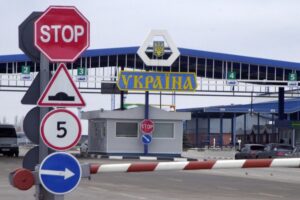
The clearance of vehicles and goods at the Ukraine–Moldova border is temporarily not being carried out due to a failure of the central databases of the customs authorities of the Republic of Moldova, Ukraine’s State Customs Service has reported.
“Please take this information into account when planning to cross the border! The resumption of clearance operations will be announced additionally,” the message posted on the Telegram channel on Saturday said.
As reported, according to First Vice Prime Minister and Minister of Energy of Ukraine Denys Shmyhal, on January 31 at 10:42 a technological incident occurred, involving the simultaneous disconnection of the 400 kV line between the power systems of Romania and Moldova and the 750 kV line between the western and central parts of Ukraine.

579 filling stations of the U.GO and Ukrnafta brands, which are part of Naftogaz group, have the appropriate equipment and are ready to operate in case of a blackout, the company said in a press release on Friday.
“Gas stations are represented in 20 regions of Ukraine and Kiev,” the group said.
A full list of gas stations can be found on Naftogaz Group’s Power Drive website: fill up at U.GO and Ukrnafta gas stations even in blackout conditions | Naftogaz Ukrainy (naftogaz.com).
“The enterprises of the Naftogaz group do everything possible to support Ukraine and the Ukrainians during the war. So we will be glad to see you at U.GO and Ukrnafta gas stations equipped with generators, which are ready for any possible challenges,” Oleksiy Chernyshev, chairman of the board of Naftogaz Ukraine, was quoted in the press release.
As reported, Naftogaz Oil Trading (a subsidiary of the NJSC) as of November 2022 launched 46 gas stations under the brand U.GO on the basis of assets of the arrested network Glusco, which consists of 126 gas stations
“Ukrnafta owns 85 special permits for the production of hydrocarbons. On its balance sheet there are 1,809 oil and 153 gas wells. The company owns 537 petrol stations, of which 449 were in operation at the beginning of December 2022. The controlling stake in the company belongs to Naftogaz of Ukraine, while the minority stake (about 42%) was held by Igor Kolomoysky and Hennadiy Boholyubov’s structures before the withdrawal.

Ukrainian private clinics find opportunities to continue working and provide medical services to the citizens of the country during the blackout, according to the results of a survey conducted by the Interfax-Ukraine agency.
In turn, the Adonis medical group of companies reported that, in particular, their clinic in Sofiyivska Borschahivka in Kyiv operates during a power outage in the normal mode and receives patients according to the appointment schedule, and the maternity hospital accepts women around the clock. At the same time, planned and emergency hospitalization and emergency care continue.
Adonis noted that the clinic has an autonomous power supply system, so there is light in each subsection 24/7, which allows the inpatient treatment of patients to continue even during power outages.
“At first, due to blackout, we urgently resolved a number of organizational issues, such as the delivery of technical and drinking water and the search for fuel for generators. But now the branch has large reserves and is ready for any challenges of the present. The clinic is equipped with everything necessary. Therefore, our patients are in comfortable conditions, have unlimited access to drinking water, and have the opportunity to charge gadgets,” the clinic said.
At the same time, the Adonis branch in Podil also operates 24/7, is provided with water, and in case of power outage, a generator runs. All types of services are provided there, such as consultations, diagnostics, laboratory tests, surgical interventions, a hospital and an ambulance work.
Adonis on Osokorky also operates as usual during power outage and accepts patients according to the schedule. At the same time, the cryobank and embryo laboratory located in the clinic are additionally provided with stable backup power sources, however, at present, ultrasound diagnostics do not work during power outages.
Adonis noted that clinics are provided with generators and the needs of clinics are covered by 100%. In addition, there are separate power supplies for both the outpatient and operating rooms and the embryology laboratory. Surgical and inpatient medical care is provided in branches operating 24/7.
At the same time, Adonis noted that when dealing with energy supply issues, they “found themselves in a strange situation where the local residential community blocked the installation of additional power generators.”
“We have found a compromise solution and are now at the stage of setting up a generator that will meet the needs of our patients, including surgical ones, by 100%. The clinic is equipped with everything necessary. Our patients are in comfortable conditions, have unlimited access to drinking water, and can charge gadgets. Heat is supplied centrally,” the company said.
The Leleka medical center reported that their center continues to operate from a generator to which all critical nodes are connected, so there is water, heat and light.
“We are provided with everything: both heat and water due to engineering system solutions, which was thought out during construction in 2015. We provide all medical services as usual. There are generators that allow us to continue working, conduct consultations, take tests, diagnose, and operate, provide resuscitation. Medical equipment is working, food is being prepared,” the clinic said.
The main problem with blackouts is the high cost of fuel for the generators.
“It’s more expensive than electricity,” the medical center explained.
“There are interruptions in mobile communications and the Internet during blackouts, which we cannot influence. But this does not affect the safety of patients, but simply adds certain service inconveniences,” the clinic said.

Kyiv Mayor Vitaliy Klitschko has published a list of shopping malls, shopping and entertainment centers, pharmacies and other establishments that will be able to work during prolonged blackouts.
As clarified by the mayor in his Telegram channel, the work schedules during blackouts may be reduced.
Retail chains: https://tinyurl.com/2wundzdr
SHOPPING MALLS: https://tinyurl.com/w22r77e5
Communal markets: https://tinyurl.com/fd95bf6b
Agricultural fairs: https://tinyurl.com/29fxpcj9
Establishments with consumer services: https://tinyurl.com/y5282vcx
Food establishments: https://tinyurl.com/5n75nza6
Service stations and auto shops: https://tinyurl.com/27t824ac
Private medical institutions: https://tinyurl.com/7vjmfrdy
Pharmacies of KP “Farmacia”: https://tinyurl.com/44wcz9aw
Veterinary clinics and pet stores: https://tinyurl.com/3nje8whn
Banks: https://tinyurl.com/897vy75x
Ukrposhta outlets: https://tinyurl.com/525yfyty
In addition, the mayor published a list of the pump rooms, which are powered by generators: https://tinyurl.com/bdd25kdt; a map of the pump rooms: https://tinyurl.com/yvt2zmct; and a map of the heating points: https://tinyurl.com/y6dcrcnn.



