
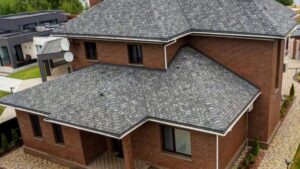
In 2023, the main areas of sales of Sweetondale products will be retail sales and low-rise housing construction, the company’s press service told Interfax-Ukraine.
The building materials manufacturer Sweetondale owns three plants in Ukraine that produce roofing and thermal insulation materials: a mineral insulation plant in Cherkasy, a polymer insulation plant, and a bitumen-polymer roll materials plant in Kamianske.
“Since the beginning of the full-scale invasion, we have seen a significant redistribution in sales channels. Previously, our main focus was on industrial and civil construction, but now retail sales (42%) and sales to low-rise cottage construction projects (47%) have come to the fore. The share of the professional segment has almost halved and now does not exceed 10%, but we hope that with the active launch of recovery programs and the emergence of new projects, this share will grow,” said Iryna Konotoptseva, Head of Marketing at Sweetondale.
According to the company’s analysts, just like before the war, Sweetondale holds leading positions in each of its production areas. Namely, mineral insulation accounts for approximately 47% of the market, polymer insulation for approximately 46%, and bitumen roll materials for approximately 55%.
Since the beginning of the full-scale invasion, the cost of polymer insulation and bitumen rolls, which have an imported raw material component of more than 80%, has increased significantly, by 40-45%.
“The main factors for this were the rising cost of raw materials, energy, fuel and the increased logistics leverage for the delivery of raw materials,” Konopoptseva explained.
“At the same time, the price of mineral insulation decreased by about 10%. This was achieved by partially using domestic raw materials.
“One of the main issues for us in recent years has been finding new suppliers of raw materials, and we have accepted this challenge. Currently, we supply the majority of raw materials for our products from Europe,” Konotoptseva said.
Logistics within the country has also risen significantly. Sweetondale delivers building materials throughout Ukraine, and the cost of transportation companies’ services has increased significantly. Konoptseva said that since the beginning of the war, the tariff for delivery from Kamianske to Kyiv and Uzhhorod has increased by 43%, and from Kamianske to Odesa by 54%.
The expert noted the high demand for manufactured goods from Ukrainians.
“Ukrainians continue to prefer domestic producers. In addition to the obvious support of the Ukrainian manufacturer, this is also a big benefit for customers, as traditionally European manufacturers are more expensive, and the logistics of these goods are longer and more expensive. Thus, according to our estimates, the share of Ukrainian producers in mineral insulation is 80%, in polymer insulation – 88%, and in rolled materials – 90%,” she said.
As for government programs (restoration, energy efficiency, etc.), their impact on the market is still insignificant.
“There are quite a few programs, but, in our opinion, they are still unstructured and the conditions for participation in them are not always transparent for business. In addition, we can note that such programs often use products with low characteristics,” Konotoptseva said.
According to Opendatabot, the authorized capital of Zavod “Sweetondale” LTD (Zavod “Sweetondale” LTD, EDRPOU code 32944149) is UAH 13.5 million, in 2022 the company received revenue of UAH 940.074 million, net profit amounted to UAH 112.112 million.
Sweetondale was founded in 2012 by Gary Alan Stern. Initially, it specialized in engineering and leasing of industrial equipment. Negotiations on the acquisition of plants owned by Russia’s Technonikol began in 2015 and ended in February 2018.
The portal “Diya” launched the possibility to connect to the program “eRestoration” general contractors and retailers of building materials, the Ministry of Development of Communities, Territories and Infrastructure informed.
“Starting from today, the business that sells construction materials and provides housing repair services can join the program of state aid “eRestoration”,” the ministry said on Facebook on Monday.
Thus, general contractors of residential and commercial construction (vendor code – 1520), stores of building materials and lumber (5211) and stores of glass, paint, wallpaper (5231) can become participants in the program.
According to the Department of Digital Transformation, more than 15,900 applications for assistance have been entered into the eRecovery system so far.
As it was reported, on May 10 there was launched the program of the state aid “eRestoration”, which provides assistance for current repairs of housing damaged as a result of war. The money can be used to purchase building materials, pay for construction work, as well as for the services of contractors who have the appropriate codes for work, and their vendors have applied for participation in the program through the portal “Dia”.
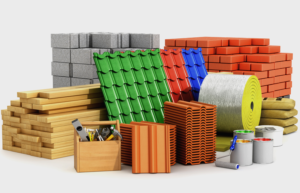
Almost 15 percent of Ukrainian producers of building materials suffered as a result of Russia’s aggression, but the sector is capable of providing up to 90 percent of the materials needed to rebuild the country, the USAID press service said.
These are the results of a study conducted by specialists from the public organization Institute for International Economic Research and the state enterprise Ukrpromvneshekspertiza with the assistance of the USAID Economic Support for Ukraine Project (USAID Project).
As reported, in 2022 the USAID project supported a study of the Kyiv School of Economics to assess the extent and cost of damage to infrastructure and residential buildings in Ukraine. According to data as of November 2022, destroyed facilities needed construction materials and equipment worth about $62.8 billion.
“Experts from Ukrpromvneshekspertiza and the Institute for International Economic Research studied the state of production capacity of Ukrainian construction material factories during wartime. They learned that about 15% of these plants were damaged or destroyed, but this sector retains high production capacity for a wide range of building materials and can provide up to 90% of the materials needed,” said USAID Deputy Project Director Brian Milakowski.
In addition, local production of building materials would save about 100,000 jobs, generate $5.6 billion in wages and $4.4 billion in tax revenue.
The results of the study show that the production of sheet glass or electrical switchboard equipment has been virtually eliminated. These materials are imported from EU countries, which affects their cost. At the same time, the construction of factories, including the production of glass, aerated concrete, dry construction mixtures, continues.
Among the problems named in the study were power outages due to damaged energy facilities, difficulties in accessing finance for working capital and capital investment. Some manufacturers pointed to accounts receivable from builders and the potential loss of key engineering personnel due to conscription into the Armed Forces.
For investment activities, the main barriers are recognized high military risks, the inability to obtain loans, the lack of understanding of the market in the long term, the high cost of connecting to the power grid. At the same time, investment activities continue. This concerns the construction of new facilities for the production of glass, gas concrete, dry mixes, cement, mineral wool.
“Ukraine and its partners can be confident in the ability of the domestic construction materials sector to meet most of the needs of the country’s post-war reconstruction. Donors and lenders to Ukraine can focus on this domestic production potential when planning their assistance,” Volodymyr Vlasyuk, director of Ukrpromvneshexpertiza SE, was quoted in the release.
The survey results also highlight opportunities for technical assistance and improved access to financing to overcome specific limitations for further recovery and growth of the sector. For the international community, the construction materials sector can be viewed as a priority for investment and assistance to the war-torn economy.
The USAID Ukraine Economic Support Project (USAID Project) was created to strengthen Ukraine’s economy affected by the Russian invasion.
Swiss construction materials manufacturer Holcim is buying US roofing systems supplier Duro-Last for $1.293 billion.
According to a Holcim press release, the acquisition of Duro-Last will complement and strengthen the Swiss company’s operations in the roofing materials industry. The expected synergistic effect of the deal is $60 million per year.
The purchase of Duro-Last will bring Holcim’s roofing business annual sales above the $4 billion mark faster than previously expected.
Duro-Last is the market leader in commercial roofing systems in the U.S., with annual sales of about $540 million, Holcim noted.
The deal requires U.S. regulatory approval, and the parties plan to close by the second quarter of 2023.
Concrete market in 2022 fell in 5 times, reinforced concrete – three times, the general director of Kovalskaya PSG Sergei Pilipenko said in an exclusive interview with Interfax-Ukraine.
“The concrete market has fallen almost five times, reinforced concrete – three times. A lot of production space has been lost due to military operations. Many of the (existing) producers may not survive the year,” – said Pilipenko.
At the same time the CEO of the group noted that the construction of new housing showed the lowest dynamics, and 2022 market lived mainly at the expense of commercial construction and infrastructure
Kovalska Construction Group has been working on the construction market of Ukraine since 1956. It unites more than 20 enterprises in the sphere of extraction of raw materials, production and construction. The production is presented by brands “Concrete from Kowalska”, “Avenue”, Siltek and others. The enterprises of Kowalska operate in Kyiv, Zhytomyr, Lviv, Kherson and Chernihiv regions.
In addition, the group includes Kovalska Real Estate, which is engaged in construction of residential buildings in Kiev. Its portfolio includes 20 completed residential projects.

In case of prolonged and unpredictable power outages, construction materials producers will be forced to stop their enterprises completely, the president of the All-Ukrainian Union of Construction Materials Manufacturers Konstantin Salii said.
“If there is no light for more than 12 hours a day, and connections will be out of the predicted schedules, the enterprises will stop: no one will dare to lose expensive equipment. Commodity concrete 3-4 hours in tanks will not survive – this is a terrible loss, “- said Salii in a comment to the agency” Interfax-Ukraine “.
According to him, there are practically no alternative sources of energy for enterprises of building materials production with energy capacity over 1 MW.
According to the president of UBC, the decline of production and consumption of building materials in Ukraine, which began with the start of a full-scale war, will continue until the start of the construction season in 2023. At the same time, he noted that despite the sufficient supply of raw materials from producers, financial resources are almost exhausted.
“Financial resources are almost exhausted – a wave of plant closings and sales for debt could begin in the spring of 2023,” Salii pointed out.



