

Ukraine, Romania, and Moldova have agreed to establish a trilateral chamber of commerce and industry, according to Mykola Kutsak, chairman of the Chernivtsi Regional Council.
“In practice, this could mean closer cooperation between our countries and financial assistance to Moldova and Ukraine on their path to the EU. In particular, from our position, we will be talking about Ukraine’s recovery from the consequences of the hostilities,” Kutsak explained.
According to him, representatives of the three countries, the European Parliament, and the European Union are involved in the initiative. A working group has been set up to prepare for the launch of the future platform, which will coordinate further steps to form the structure and mechanisms of the chamber.

According to Serbian Economist, real estate prices in Serbia are market-driven and not “inflated,” said Ervin Pashanovich, a member of the board of the Association of Real Estate Agents of the Serbian Chamber of Commerce and Industry (Privredna komora Srbije).
According to him, the real estate market in the country remains “free” and without interference, and price levels are confirmed by demand. He noted that the average price per square meter of housing in Belgrade is about €2,400, with attention often focused on the most expensive projects, although there are different price levels on the market.
Pasanovic also pointed out that the majority of purchases are made by citizens seeking to resolve their housing issues, rather than investors, since, in his estimation, rental yields imply a long payback period: an apartment costing €100-150,000 can be rented for around €600 per month, which corresponds to a 24-30 year return on investment.
He added that the share of buyers purchasing housing with loans has reached a record 36%, and the share of foreigners among real estate buyers in Serbia is about 2%.
Pasanovic also commented on the application of the law on simplified accounting and registration of property rights, noting that the possible entry into the market of some previously unaccounted properties, in his opinion, will not lead to a noticeable decrease in prices, since a significant part of them are not located in central areas.
According to data from the Republic Geodetic Authority of Serbia (RGZ), in the third quarter of 2025, the average price of apartments on the secondary market in Belgrade was €2,691 per square meter, and in new buildings, €2,598 per square meter.
The RGZ reported that the total volume of the Serbian real estate market in the third quarter of 2025 was estimated at €1.8 billion with 30,511 sales contracts, and apartment transactions accounted for about 60% of the total market value (€1.1 billion).
https://t.me/relocationrs/2087
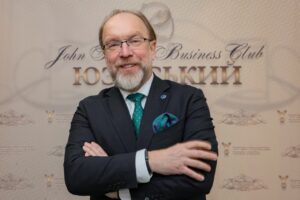
In 2025, the Chamber of Commerce and Industry of Ukraine (CCI) expects an increase in export volumes, primarily in industries where Ukraine already has sustainable competitive advantages. This was stated by CCIU
President Gennady Chizhikov in an exclusive interview with the Interfax-Ukraine news agency.
“We see growth potential in agro-processing, food industry, IT, machine building, pharmaceuticals, and woodworking. These industries have shown resilience even in wartime,” Chizhikov said.
According to him, products with high added value will remain the key driver. He stressed that the chamber’s task is to help businesses integrate into European value chains.
Ukrainian agrarians need urgent support in replenishing working capital, prolonging loans and settling relations with retail chains, because due to the enormous debt to processing enterprises, agricultural producers cannot purchase raw materials and grain from farmers.
A corresponding appeal to Prime Minister Denys Shmyhal with a proposal to hold a joint meeting to find solutions to prevent negative trends in the grain market was sent on July 20 by members of the agro-industrial complex entrepreneurs’ committee at the Chamber of Commerce and Industry (CCI) of Ukraine, according to the website of the organization.
“It has never been as difficult as it is today for farmers. The situation needs state intervention due to a number of problems: there are ultra-low purchase prices, lack of storage facilities, slow logistics, retail debt,” the Chamber of Commerce and Industry quotes its member, first vice- President of the Association of Farmers Viktor Sheremet.
According to the Chamber of Commerce and Industry, due to the blocking of Ukrainian maritime logistics, hostilities, higher fuel prices, shortage of working capital and lower prices for agricultural raw materials, a significant reduction in winter crops for a new crop is expected.
“Probably, the current crop of corn will remain under the snow,” the organization stressed in the appeal.
In addition, this year a serious challenge for farmers will be the purchase of seeds, fertilizers, fuel, the preservation and export of grain, a number of enterprises and farms are expected to go bankrupt due to the loss of access to export products and the challenges facing the agricultural sector of Ukraine.
“Given the threats that complicate the situation on the market, following the results of the discussion of industry problems, the meeting participants decided to appeal to the Prime Minister of Ukraine Denys Shmygal with a request to hold a joint meeting with interested ministries and departments, business representatives, industry associations, donor organizations to consolidate efforts to search for effective solutions to ensure the organization of the harvesting campaign, storage of grain, autumn sowing and activation of exports,” the Chamber of Commerce and Industry concluded.
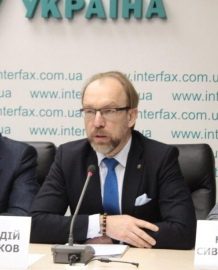
The spread of coronavirus in some cases can be recognized as force majeure, the consequences of which did not allow fulfillment of obligations under economic contracts, President of the Chamber of Commerce and Industry of Ukraine (CCI) Hennadiy Chyzhykov has said. “The CCI of Ukraine receives a large number of requests regarding the recognition of the spread of coronavirus as force majeure. The CCI very carefully approaches this issue and relies on international practice and the legal framework,” he told Interfax-Ukraine.
At the same time, Chyzhykov said that in general “coronavirus, like flu, is not a basis for evidence of force majeure.”
According to him, the basis for evidence of force majeure is the presence of one or more circumstances stipulated by law. Among them are such circumstances, including an epidemic.
In addition, force majeure circumstances may be determined by the parties in the text of the contracts.
“The presence of force majeure circumstances in the contracts such as an epidemic, an emergency situation in the healthcare sector or restrictive actions of the authorities, strengthens the position on the recognition of facts that do not allow the fulfillment of relevant obligations. But it is always necessary to provide evidence that it is coronavirus or measures to combat its spread that are circumstances that could cause the inability to fulfill obligations,” Chyzhykov said.
He also said that a party that refers to force majeure circumstances should contact the competent authority (the chamber of commerce and industry) of the country where these circumstances arose, and obtain the appropriate document (certificate), so that it can be presented to the counterparty according to terms of the contract.



