

According to Experts.news, global fossil fuel consumption increased by 8%, or 40 exajoules (EJ), between 2017 and 2025, despite improvements in energy efficiency across economies and the rapid growth in the use of renewable energy sources (RES), according to the findings of the Energy Institute’s Country Transition Tracker 2026, released by the UK-based Energy Institute on November 10.
According to the report, global demand for natural gas saw the largest increase during this period—by nearly 15%, or 19 ExJ. Coal consumption rose by 7%, and oil consumption by 5%.
The study covers approximately 80 of the largest energy-consuming countries, which account for over 96% of global energy consumption and 95% of greenhouse gas emissions.
According to the Energy Institute, 83% of the countries studied have seen a decline in the energy intensity of their economies since 2017—that is, the amount of energy required to generate a unit of GDP. At the same time, 86% of countries reduced the carbon intensity of their energy consumption.
Despite these changes, global demand for fossil fuels continued to grow. In 2025, oil, natural gas, and coal still accounted for more than 85% of global energy consumption.
Renewable energy consumption increased by more than 60%
According to estimates by the Energy Institute, global use of renewable energy sources, including hydropower, increased by more than 60% between 2017 and 2025.
Growth was recorded in 74 of the 79 leading countries included in the analysis.
However, despite the rapid expansion of solar, wind, hydropower, and other renewable sources, their share in 2025 accounted for only about 8.6% of total global energy demand.
At the same time, decarbonization is occurring much faster in electricity generation than in other energy sectors.
In particular, France has the highest share of electricity from low-carbon and carbon-free sources among the countries studied—95 percent—of which nuclear power plants account for 68 percent of total generation. Brazil ranks second in this regard, with a share of 89 percent.
Greenhouse gas emissions continue to rise
The increase in fossil fuel consumption was accompanied by a further rise in global energy-related greenhouse gas emissions. Between 2017 and 2025, these emissions increased by an average of nearly 1% annually.
The largest reductions in emissions in absolute terms during this period were recorded in Germany—by 222 million metric tons—and Japan—by 216 million metric tons.
In contrast, energy-related emissions increased by 2.096 billion metric tons in China and by 783 million metric tons in India.
The Energy Institute notes that the United Kingdom, Spain, France, and Germany rank among the top five countries across five or six energy transition indicators.
Jemma Reniés, Director of External Relations at the Energy Institute, emphasized that the energy transition is proceeding unevenly both among individual countries and across sectors of the global economy.
According to her, the success of the transition will be determined not only by the volume of new clean energy capacity brought online but also by the ability of countries to meet growing energy demand while simultaneously reducing emissions.
According to the Statistical Review of World Energy published on June 30, 2026, total global energy demand in 2025 exceeded 600 EJ for the first time, increasing by 1.7% compared to the previous year.
At the same time, renewable energy sources made the largest contribution to the growth in global energy consumption, although fossil fuels continue to dominate the energy mix.
The Energy Institute is an independent British professional organization in the energy sector that publishes international energy statistics, analytical studies, and assessments of energy market developments. The annual publication *Statistical Review of World Energy* contains data on the production and consumption of oil, gas, coal, electricity, renewable energy, and nuclear energy, as well as energy-related greenhouse gas emissions.
Source: Energy Institute, official report “Country Transition Tracker 2026” dated November 10, 2026.
COAL, DECARBONIZATION, ENERGY, GAS, OIL
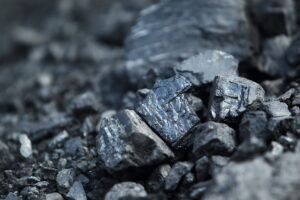
Global demand for coal will rise this year and reach a new all-time high amid a surge in natural gas prices and a summer heat wave that has increased electricity consumption from air conditioners, according to forecasts by the International Energy Agency (IEA).
According to the agency’s estimates, global coal demand will rise by 1.2% in 2026 to 8.94 billion metric tons.
“Coal is virtually not shipped through the Strait of Hormuz, as the Middle East is neither a major producer nor a significant consumer of coal, but the closure of the strait still affected the coal market due to rising natural gas prices,” the IEA said in a statement. “This has stimulated an increase in electricity generation at coal-fired power plants in countries where there is a choice between gas and coal.”
If shipping through the Strait of Hormuz resumes and liquefied natural gas (LNG) supplies return to the levels seen before the start of hostilities in the Middle East, global demand for coal will decline next year. Otherwise, 2027 will once again set a record for coal consumption, IEA analysts noted.

According to Interfax-Ukraine, the Ministry of Energy is working to prepare state-owned coal mining enterprises for transfer to the State Property Fund (SPF) and subsequent privatization, Deputy Minister of Energy Valentina Moskalenko said.
“The Ministry of Energy has indeed prepared our proposals for the government’s action plan, and we are indeed working to prepare all (coal) enterprises for transfer to the State Property Fund, with a view to their subsequent privatization and the search for an effective private investor for them,” Moskalenko said during an online meeting of the Verkhovna Rada’s Energy Committee on Monday.
She also added that the Ministry of Energy, together with the Ministry of Finance, has resolved the issue of compensation for wage arrears, unused vacation time, and all other payments required by law to employees of the two mines being liquidated: “Mine No. 9” (Volyn Oblast) and the “Nadiya” mine (Lviv Oblast).
“The draft plans for the liquidation of the mines are ready, funds are available to carry out the liquidation work, and everyone who wished to transfer to other enterprises has done so,” noted the deputy head of the Ministry of Energy.
At the same time, Moskalenko emphasized that the operations of the state-owned enterprise “Lvivvuhillia” have always been accompanied by debts, and this issue must be resolved.
“Lvivvuhillya has always had debts, with varying trends, and they have never gone away; now all the debts remain with the state-owned mines. We must do everything possible to restore the health of the state-owned coal mining sector,” Moskalenko emphasized.
COAL, INVESTOR, Mine, MINISTRY OF ENERGY, State Property Fund of Ukraine

On February 2, the President of Uzbekistan was briefed on the current state and development plans for the coal and uranium industries. They discussed increasing coal production, strengthening competition in the industry, and the efficient use of existing reserves.
As noted, 10 million tons of coal are planned to be mined in the fall-winter season of 2025-2026, which is 1.3 million tons more than last season. As of today, 9 million tons of coal have been mined, an increase of 590,000 tons. It was emphasized that in the next season, it is necessary to bring production volumes to 11 million tons.
To achieve this, it is important to accelerate the development of deposits located in the Tashkent and southern regions, expand selective mining, and attract additional excavators and equipment on an outsourcing basis. By expanding the participation of private entrepreneurs, it is planned to extract an additional 2.5 million tons of coal in 2026.
Particular attention was paid to the project to develop the Nishbosh coal deposit in Angren. As part of the investment project, estimated to cost nearly $500 million, with reserves of 233 million tons, it is planned to start production in 2026 and ensure the production of 1 million tons of coal. In the future, the annual productivity of the deposit is expected to reach 10 million tons. The project will create 880 permanent jobs.
The presentation also discussed a project to produce new types of industrial products based on deep coal processing. At the initiative of the joint-stock company Uzkimyosanoat, it is planned to organize the production of polymer products based on chemical coal processing. The $5 billion project involves the creation of facilities for processing 8-9 million tons of coal and producing 1.18 million tons of polymer products per year.
Last year, 7,000 tons of uranium were mined in Uzbekistan, and the discovered reserves reached 139,000 tons.
This year, it is planned to start developing the Arnasay, Western Kyzylkok, Southern Zhongeldy, and Eastern Agron deposits. In connection with the expected increase in production volumes, the need to increase processing capacities has been emphasized.
Measures have been identified to ensure a stable supply of sulfuric acid for uranium processing and the technical sulfur required for its production.
The president has instructed the responsible persons to ensure the timely and high-quality implementation of planned projects in the coal and uranium industries, increase production volumes, and improve economic efficiency.

The Cabinet of Ministers of Ukraine has canceled quotas for exports of coking coal of “K” grade for 2026, according to the government’s resolution No. 1795 of December 31 on the list of goods, export and import of which are subject to licensing and quotas.
According to the resolution, the quotas for exports of coking coal grade “K”, which were previously set at zero level, are absent in the document for 2026.
The resolution was published on the government website.

Global seaborne thermal coal exports in 2025 fell for the first time since 2020, by 5% to a three-year low of 945 million tons, Reuters reports, citing data from Kpler.
The main reason for the decline was a reduction in imports by Asian countries.
Since the beginning of the year, they have imported 841 million tons of thermal coal, which is 7% less than the figure for the whole of 2024.
China was the largest importer (305 million tons), followed by India (157 million tons), Japan (100 million tons), South Korea (76 million tons), and Vietnam (45 million tons).
At the same time, only South Korea and Vietnam increased their volumes. China reduced imports by 12%, India by 3%, which in both cases is explained by an increase in domestic coal production and consumption of other energy sources.



