

Bank Lviv (Lviv) has signed agreements with the European Investment Bank (EIB), the European Investment Fund (EIF), the Belgian Development Organization for Developing Countries (BIO) and the Bank of the Council of Europe (CoE) totaling EUR 103 million, which will allow it to expand financing to the private sector through credit lines, guarantees and support for micro-entrepreneurs.
“Within the framework of international partnerships, Lviv Bank has signed four strategic agreements with international financial institutions – for a total of more than EUR100 million to support Ukrainian private companies, SMEs and entrepreneurs!” Volodymyr Kuzio, deputy chairman of the bank’s board, said on Facebook on Tuesday.
He noted that Lviv Bank has attracted EUR 60 million from the EIB in the form of a multi-currency credit line, including local currency financing, to improve access to finance for the private sector.
Another EUR 35 million was provided by the EIF in the form of portfolio guarantees, which will reduce collateral requirements for Ukrainian private sector clients to 70% and at the same time strengthen the capital of Bank Lviv.
In addition, the bank will receive EUR 5 million from the Belgian development organization BIO, the first transaction in the institution’s history in Ukraine.
Another EUR 3 million is being provided by the Council of Europe Development Bank to support micro-entrepreneurs across the country.
According to the National Bank of Ukraine, as of April, Lviv Bank ranked 23rd in terms of total assets among 60 operating banks with UAH 14.8 billion, or 0.4% of the banking sector.

The European Investment Bank (EIB) and state-owned Ukreximbank (Kyiv) have signed a Letter of Intent to sign a financial agreement under the Economic Resilience Support Program II project for a total amount of EUR 100 million to finance small and medium-sized enterprises (SMEs), particularly in the energy efficiency and green technology sectors.
According to the bank’s website on Monday, the document was signed on July 10 at the International Conference on the Recovery of Ukraine (URC2025). The agreement is expected to give Ukrainian businesses access to long-term financing on favorable terms.
“Thanks to access to long-term financing, companies will be able to implement environmentally friendly projects, modernize production, and confidently integrate into the EU economic space,” said Viktor Ponomarenko, chairman of the board of Ukreximbank, as quoted in the statement.
According to the press release, the program aims to improve access for small and medium-sized businesses, as well as mid-cap companies, to sources of financing for investment projects and working capital needs. The initiative is expected to contribute to Ukraine’s sustainable economic development, its integration into the EU economy, and the entry of Ukrainian companies into international markets.
Within the framework of the EIB’s Green Initiative, Ukreximbank’s clients will be able to implement projects in the fields of renewable energy, energy efficiency, and the introduction of clean innovative technologies.
According to the NBU, as of April 2025, Ukreximbank ranked third in terms of total assets among 60 operating banks, with UAH 311.8 billion.
The European Investment Bank (EIB) will provide two loans of EUR 50 million and EUR 70 million to state-owned Ukrgasbank (Kyiv) to finance energy independence projects for municipalities and support green growth of small and medium-sized businesses, as well as a new EU portfolio guarantee.
“Within the framework of the Ukraine Recovery Conference (URC) in Rome, UGB (Ukrgasbank) and the European Investment Bank (EIB) announced the signing of a multi-component financial package,” the bank said on Thursday.
It is noted that this will allow attracting additional financing for small and medium-sized businesses worth tens of millions of euros and has become one of the first significant results of the Ukraine Recovery Conference 2025 in Rome.
As part of the package, Ukrgasbank will allocate EUR 50 million to strengthen the energy independence of Ukrainian municipalities. The funds will be used to modernize the district heating infrastructure, develop decentralized heat generation, integrate renewable energy sources and improve energy efficiency of public buildings. The EU grant component will make this funding available to frontline communities.
Another EUR 70 million will be allocated to support the sustainability and green growth of small and medium-sized businesses. These funds will help businesses maintain operations, modernize and implement environmental solutions.
“This financing is further strengthened by a portfolio guarantee from the EU provided by the EIB, which will significantly increase Ukrgasbank’s ability to lend and raise critical capital for the private sector in the amount of more than EUR 31.25 million, even in wartime,” the bank added.
According to the National Bank of Ukraine, in April 2025, Ukrgasbank ranked fifth in terms of total assets (UAH 220.0 billion or 5.9%) among 60 banks operating in the country.
As reported, the European Investment Bank Group and the European Commission announced a new EU financing package of EUR 600 million at the Ukraine Recovery Conference.
The European Bank for Reconstruction and Development (EBRD), the European Investment Bank (EIB) and the European Commission are launching the Ukraine Facility for Infrastructure Reconstruction (Ukraine FIRST) with EUR 30 million in funding to help prepare public investment projects for the reconstruction of infrastructure in Ukraine.
“The new program will cover the preparation of public investment projects in Ukraine, providing technical assistance, including feasibility studies, environmental assessments, cost estimates, and procurement plans,” the EBRD press release said.
It is noted that in addition to initial financing, additional funds are also planned to be provided by EU countries, in particular the Netherlands and Italy.
The program consists of two components. One, managed by the EBRD, will pool donor contributions and provide grants from international financial institutions to support project preparation.
The second, under the leadership of the EIB, will provide expert advisory services: feasibility studies, technical designs, and procurement plans. They will cooperate with the project preparation department of the Ukrainian government.
The pilot project of the program will be a EUR160 million loan to the state-owned Ukrnafta for the development of distributed generation and the installation of 250 MW of capacity.
Another project will be technical support from the EIB in partnership with the World Bank and, possibly, the EBRD, to prepare investments in the reconstruction and modernization of the M-15 Odessa-Remy highway, according to the statement.
The Ukraine FIRST program was presented by partners at the Ukraine Recovery Conference 2025 (URC) in Rome. It is part of the Framework for Project Preparation initiative developed by the Ukrainian government and international partners last year.
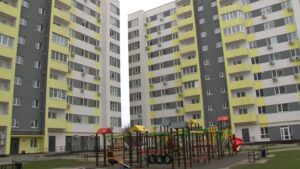
The European Investment Bank (EIB) is considering providing EUR 400 million in financing for a pilot project to build social housing in Ukraine, the press service of the Institute for Economic Research and Policy Consulting (IER) reports.
“Negotiations are currently underway to provide EUR 400 million in funding, which will consist of a grant and a loan for the construction of public housing. This should be housing in normally built-up parts of the city, with access to technical and social infrastructure,” said Grzegorz Gajda, Senior Sector Economist at the EIB, as quoted in the press release.
He noted that the housing should be built using the best European practices, in accordance with energy-efficient standards and the principle of build-back-better.
The project envisages the construction of about 6-6.5 thousand apartments. The EIB will select areas for social housing construction based on the needs of the regions and their interest in cooperation.
Along with this, the conditions for renting housing are being discussed. In particular, it is proposed to allocate social housing to employed Ukrainians with a salary not lower than the average, as well as to give local authorities the opportunity to transfer 20-30% of apartments for rent to people selected according to their own criteria, taking into account the professionals needed in the region.
According to the expert, the project also envisages finding opportunities for the social housing sector to independently finance its operations and maintenance to avoid the need for state funding for housing maintenance.
As the IER points out, at the beginning of 2022, there were only 3 thousand social apartments in Ukraine, while the number of internally displaced persons (IDPs) at the end of the year amounted to more than 5 million people. According to the International Organization for Migration, there are about 3.6 million internally displaced persons in Ukraine as of October 2024.
The European Investment Bank (EIB) Group is planning new loans totaling EUR450 million for Ukrainian energy investments, including the reconstruction of hydroelectric power plants and power grid infrastructure damaged by Russian attacks, as well as the restoration of district heating networks in Ukrainian cities.
According to a press release on the bank’s website, another EUR 86 million will go to Ukraine’s national power grid operator, NPC Ukrenergo, to build drone shelters for power plants.
“We are stepping up our support to help protect and repair Ukraine’s infrastructure before winter,” the release quotes EIB President Nadezhda Calvigno as saying, “On July 22, she briefed EU foreign ministers on these measures and held a regular video conference with Ukrainian Finance Minister Sergii Marchenko to discuss progress on ongoing projects, especially in energy infrastructure.
According to her, the bank will also expand its support for Ukraine’s economy by facilitating access to finance for businesses and promoting trade with the EU.
In the business finance component of the latest support package, the EIB Group approved three partial portfolio guarantees, which are expected to lead to more than EUR 110 million in new lending to Ukrainian micro, small and medium-sized enterprises through three Ukrainian banks. It is specified that the guarantees are to be signed in the second half of 2024 with the respective banks and will support 550 Ukrainian companies, preserving about 8,250 jobs.
In addition, the EIB Group intends to provide partial portfolio guarantees to five more banks in Ukraine by the end of the year under the EU4Business Guarantee Facility, the release said.
According to the release, this week the EIB is also joining forces with Ukrsibbank, the Ukrainian subsidiary of BNP Paribas Group and one of Ukraine’s largest banks, to launch a revolving credit line of at least EUR150 million in Ukrainian hryvnia to support businesses affected by the war. The local currency facility is expected to be operational by the end of 2024. This is the EIB’s second initiative to stimulate local currency lending in Ukraine, following a partnership with Citibank Ukraine for between $50 million and $100 million in Ukrainian hryvnia.
In addition, the release notes, by the end of this month and following the signing of an agreement with the European Commission in June, the European Investment Fund (EIF) will start accepting applications under a EUR300 million export credit guarantee facility to support EU companies trading with Ukraine. The initiative will offer guarantees to export credit agencies in EU member states, as well as Norway and Iceland, that want to help export to Ukraine.
Following a videoconference on July 22, the Ministry of Finance of Ukraine announced that it expects the EIB to approve a EUR250 million package of support for Ukraine’s energy sector in the near future.
In general, according to the Ukrainian side, the volume of EIB initiatives in the public sector is 26 projects worth EUR 5.3 billion, and the volume of the portfolio of joint projects in the public and private sectors is the largest for all years of cooperation and exceeds EUR 7 billion, including about EUR 2 billion of EIB investments in all areas since the beginning of the full-scale war.
Regarding current initiatives, the parties also discussed preparations for the signing of a financial agreement between Ukraine and the EIB on the project “Implementation of the Emergency Assistance System for the Population by a Single Number 112”, as well as potential joint projects, in particular, aimed at providing housing for Ukrainian citizens.
As reported, in 2024, Ukraine and the EIB signed a Memorandum of Understanding on cooperation in the public and private sectors of Ukraine’s economy. The Memorandum identifies priority areas of cooperation for the next 10 years.



