
The Veterans Cluster of Ukraine, in collaboration with the “Architecture of Resilience” Veterans Institute at Kyiv National University of Construction and Architecture, continues to support veterans, active-duty military personnel, and their family members as part of the 2026 admissions campaign.
The application period for master’s programs begins on August 7. By that time, applicants must create an online account, register for any applicable benefits, complete a foreign language interview, and pass subject-specific entrance exams.
Program participants can receive tuition-free education in over 50 fields of study and more than 100 academic programs. Funding is available through state compensation programs, grants, scholarships, and employer support programs.
The program also provides opportunities for retraining, professional development, earning a second higher education degree, and admission to master’s or doctoral programs. Veterans are offered full-time, part-time, online, and distance learning options, allowing them to combine their education with work, medical treatment, rehabilitation, or military service.
Throughout their studies, participants can receive psychological support, get involved in projects to rebuild Ukraine, and interact with employers. Program partners include Axor, Barks, and other businesses.
The network of partner universities includes KNUBA, the National University of Physical Education and Sports of Ukraine, the Western Ukrainian National University, the Yuriy Kondratyuk Poltava Polytechnic National University, Vasyl Stefanyk Precarpathian National University, the National University of Life and Environmental Sciences of Ukraine, Drohobych State Pedagogical University, Igor Sikorsky Kyiv Polytechnic Institute, Ivan Pul’uj Ternopil National Technical University, and the University of Educational Management.
The National University of Physical Education and Sports of Ukraine operates a training and rehabilitation center for veterans.
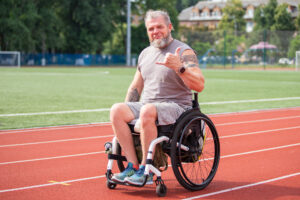
One of the program’s students is veteran Vadym Honcharenko, who is studying at KNUBA to become a coach in adaptive sports. According to him, his choice of major was influenced by his own experience with rehabilitation through sports.
“I want to show people who, due to injuries or disabilities, think that an active life is over for them that this is not the case. A lot depends on us,” Goncharenko noted.
He also advises prospective students to focus on their own needs and choose a major that will be practically useful after graduation.
The Veterans’ Cluster emphasizes that there is not much time left to make a decision, but applicants can still prepare their documents and complete the necessary procedures before the application period begins.
Detailed information is available on the website Veterano.info.
Contact information for consultations:
+38 073 94 96 179
+38 050 22 35 182
+38 067 49 81 098
Artem Goncharenko, Director of the Veterans Institute: +38 073 177 72 73.
Antonina Savchenko, Coordinator of Higher Education and Admissions Programs: +380 63 245 34 05.
admissions, EDUCATION, GONCHARENKO, KNUBA, master’s program, UNIVERSITY, ветеран
The Institute for Veterans at Kyiv National University of Construction and Architecture hosted Ukraine’s first Open Discussion Day with veterans and their families, dedicated to education, retraining, social adaptation, mental rehabilitation, and employment for veterans.
The event took place at the KNUCA Culture and Leisure Center in Kyiv as part of an Open House for veterans and their families and brought together veterans, their family members, representatives of the university community, medical professionals, socially responsible businesses, and partner organizations.
“Education and the learning process itself are not just about a diploma. They are an important element of veterans’ social adaptation and mental rehabilitation. The university is a large, new-type ecosystem where a veteran can rediscover themselves, feel the support of the community, acquire new skills, and ultimately find employment and return to an active life,” noted Artem Goncharenko, head of the KNUCA Veterans Institute.
The event was attended by representatives of Kyiv National University of Construction and Architecture, the National University of Physical Education and Sports of Ukraine, the Igor Sikorsky Kyiv Polytechnic Institute, the National University of Life and Environmental Sciences of Ukraine, and other higher education institutions in the capital and regions.
The event was co-organized by the Kyiv City Employment Service, which, according to the organizers, underscores a systematic approach to supporting veterans—from education, psychological, and medical support to professional retraining and subsequent employment.
One of the practical components of the Open Discussion Day was a training session on first aid titled “Don’t Panic. Act Correctly,” led by neurologist and epileptologist Denys Boichuk. Participants discussed how to act before, during, and after an epileptic seizure, what common mistakes can harm a person, and why certain widespread “tips from the internet”—in particular, the myth about “putting a spoon in the mouth”—have no medical basis and can be dangerous.
A separate segment of the training was dedicated to medical checkups for veterans and their families, developing the habit of getting regular health screenings, managing the effects of stress and trauma, and supporting loved ones consistently rather than sporadically.
During the event, a prize drawing was also held, and gifts were presented to participants. The event’s partners were Poparada.ua, Axor Industry, and CosmoMultimall. The organizers note that business participation in such initiatives demonstrates the potential for practical and meaningful collaboration between companies and veterans’ organizations.
According to the organizers, the Open Discussion Day held at the KNUBA Veterans Institute marked the first step toward establishing a permanent ecosystem to support veterans and their families through education, practical knowledge, professional retraining, and cross-sectoral cooperation.
The Veterans Cluster of Ukraine and the KNUBA “Architecture of Resilience” Veterans Institute have already begun accepting applications for educational programs for veterans, defenders, and their children. Participants are offered opportunities to study in over 50 fields and more than 100 educational programs, including retraining, courses, second higher education, master’s and doctoral programs, psychological support and rehabilitation, participation in projects for Ukraine’s recovery, and partnership programs with employers.
Study formats include full-time, part-time, online, and distance learning. The program works with communities across Ukraine and provides personalized support from admission through to employment.
Program details are available on the website: www.Veterano.info.
Contacts for additional information: +38 073 94 96 179, +38 050 22 35 182, +38 067 49 81 098, center@uvc.in.net, veterano@knuba.edu.ua. Head of the KNUBA Veterans Institute Artem Goncharenko: +38 073 177 72 73.
Tuition-free education refers to participation in state compensation programs, grants, scholarships, and support from employers. Admission takes place during the standard admission campaign within the standard timeframe.
Under a memorandum between the Ministry of Community and Territorial Development of Ukraine and the Kyiv National University of Construction and Architecture, and with the support of the flagship project “Movement Without Barriers,” a team of researchers has developed a pilot AI accessibility consultant in ChatGPT.
The tool helps users quickly obtain basic answers with references to DBN standards, which, in particular, regulate issues of inclusivity and accessibility, as well as advice for specific spaces or situations.
The AI consultant does not replace architects and accessibility experts, but it can serve as a convenient first step to get oriented, verify solutions, or prepare for working with specialists.
“For me, the topic of accessibility isn’t an abstract policy, but a personal story. My dad is a veteran with a disability who uses a wheelchair, and every day I see the barriers he faces. That is why the launch of the AI accessibility consultant is an important step toward making spaces in Ukraine truly accessible, not just ‘on paper.’” — Artem Goncharenko, Accessibility Ambassador at the Ministry of Education and Science
This approach is intended to make the process of creating an accessible environment more systematic, consistent, and understandable for communities, businesses, and everyone who works with public spaces.
The AI consultant is constantly updated with materials and technical data. The project is coordinated by the KNUBA Veterans Institute and the KNUBA Expert Working Group on Accessibility. If you have any questions while using the tool, please contact us at: veterano@knuba.edu.ua.
The materials generated by the AI Consultant are for informational purposes only. It is recommended to verify the information in accordance with current regulations and consult with specialists if necessary.
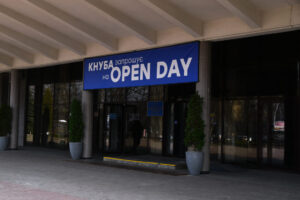
The “Architecture of Resilience” Veterans Institute at the Kyiv National University of Construction and Architecture will hold a series of open house events in May for veterans, defenders, and their family members.
According to the organizers, the events will take place on May 15, May 21, and May 28, 2026, at 3:00 PM at the following address: 2 Preobrazhenska St., KNUCA Student Center.
During the open house events, participants will be able to obtain information about admission opportunities to higher education institutions for veterans and their family members, benefits, support, and personalized admission pathways, as well as learn about educational, retraining, and professional development programs.
In addition, the organizers will present opportunities for psychological, social, and rehabilitation support provided by the Veterans Cluster of Ukraine and the KNUBA Institute of Veterans. Veterans and their families will also have the opportunity to ask the support team questions regarding education, adaptation, and further professional development.
KNUBA noted that the Institute of Veterans has begun preparations for the 2026 admissions campaign for veterans, defenders of Ukraine, as well as their children and family members. The program provides for admission to higher education institutions without the National Multidisciplinary Test (NMT)—based on an interview—the opportunity to study in over 100 fields and more than 250 educational programs, as well as individual support—from submitting documents to finding employment or starting a business.
The institute notes that education for veterans is viewed as a tool for returning to an active professional role and participating in the country’s reconstruction. That is why the program combines academic study with psychological support, rehabilitation components, practical projects, and partnerships with employers.
Programs are available in full-time, part-time, and distance learning formats—across Ukraine and from abroad. For veterans and defenders, admission is granted without the National Multidisciplinary Test (NMT) or the Unified State Exam (USE), based solely on an interview that takes into account prior service, educational, or work experience.
The 2026 admissions campaign places special emphasis on fields critical to the country’s recovery, including engineering, construction, architecture, IT, management, security, ecology, physical rehabilitation, and sports.
Participation in tuition-free education, as the organizers clarify, involves the use of state compensation programs, grants, scholarships, and support from employers.
Admission takes place within the framework of the main admissions campaign—from July 1 to August 10—with documents required to be prepared and submitted by July 1.
The program’s partner universities include Kyiv National University of Construction and Architecture, National University of Physical Education and Sports of Ukraine, Western Ukrainian National University, Yuriy Kondratyuk Poltava Polytechnic National University, Vasyl Stefanyk Precarpathian National University, National University of Life and Environmental Sciences of Ukraine, Drohobych National Pedagogical University, Igor Sikorsky Kyiv Polytechnic Institute, Ivan Pul’uj Ternopil National Technical University, and the University of Educational Management.
Details and consultations are available on the website www.Veterano.info
Contact information for inquiries: +38 073 94 96 179, +38 050 22 35 182, +38 067 49 81 098.
Email: center@uvc.in.net or veterano@knuba.edu.ua
Director: Artem Goncharenko, +38 073 177 72 73.

Vadym Honcharenko, a student at Kyiv National University of Construction and Architecture and a veteran, has joined the Ukrainian national team that will represent the country at the Air Force and Marine Corps Trials international veterans and military competition in the United States in 2026. This was reported by the Come Back Alive Charitable Foundation’s Center for Initiatives.
Based on the results of the selection process, 15 veterans—winners of the All-Ukrainian Defense Forces Competition “GART”—joined the team.
The formation, preparation, and participation of the Ukrainian team in international competitions are carried out jointly by the Ministry of Veterans Affairs of Ukraine and the Come Back Alive Initiative Center.
The Air Force and Marine Corps Trials are international adaptive competitions for military personnel and veterans, which are an official stage of selection for the Warrior Games. They are held annually in the United States and bring together participants from around the world, becoming an important element of the international sports and rehabilitation movement for veterans.
Vadym Honcharenko’s sporting achievements
Throughout 2025, Vadym Honcharenko demonstrated results in a number of adaptive and strength sports. He became the Ukrainian champion in para-arm wrestling and also represented Ukraine at the European Championships.
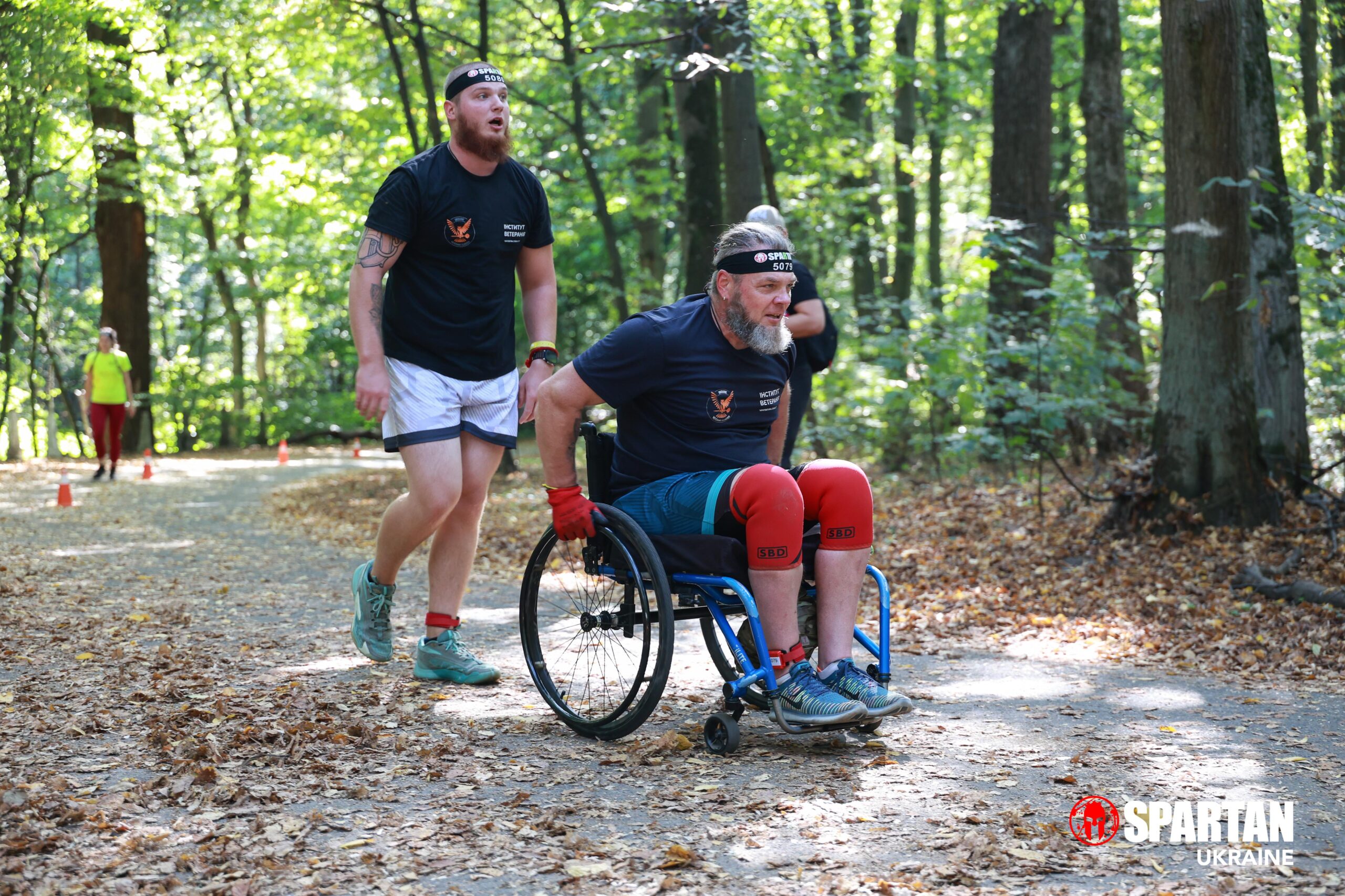
Throughout the year, Vadym repeatedly participated in functional and team sports competitions, including the Spartan Race, marathons, rugby, and CrossFit competitions. In November, he won the Zvytyaga Nezkonenyh (Victory of the Unconquered) strongman competition among military personnel and veterans, taking first place in several strength disciplines. The end of the year was marked by new prize places in rowing, powerlifting, and strongman multi-event competitions.
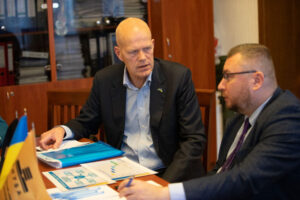
Kyiv National University of Construction and Architecture, together with the Swedish organization V94, is launching the SAFER Reconstruction project, aimed at training specialists in occupational health, safety, and the environment (HSE). The training process will be organized by the Vinnytsia Professional College of Construction, Architecture, and Design, a structural unit of KNUCA. The university will coordinate the program and provide expert support. This was announced by Rector Oleksiy Dniprov.
As part of the initiative, 30 Ukrainian veterans will undergo training to become HSE coordinators and implement EU standards in the construction industry during the reconstruction of Ukraine.
The training program will combine a theoretical component, practical training, and a module on democratic values and European integration. The program is currently being adapted to current market needs in compliance with Ukrainian and European standards.
KNUBA will provide coordination and academic support for the training process. The university’s role includes mentoring Vinnytsia College teachers, providing expertise in the preparation of training materials, quality control of educational content, and participation in the development of the theoretical and practical parts of the program. The KNUBA Institute for Reintegration, Rehabilitation, and Professional Development of Veterans “Architecture of Sustainability” is actively involved in the implementation of the program and is responsible for supporting participants and identifying their educational needs.
The SAFER Reconstruction project brings together an international consortium of partners: V94 – management and coordination, BDO Consulting – training of trainers, Vinnytsia Vocational College – implementation of training, Confederation of Builders of Ukraine – access to practical training at construction sites, Ukrainian Veterans Fund – selection and support of participants, Association of Civic Education Teachers – teaching of EU democratic values.
The project is funded by the Swedish Institute, a government agency of the Swedish Ministry of Foreign Affairs that supports international educational, cultural, and democratic programs. The Institute works to strengthen global cooperation, promote sustainable development, develop democracy, and engage citizens in public life, which is in line with the main objectives of the project in Ukraine.
V94 was founded in 2022 to promote Ukraine’s recovery, in particular by using Swedish experience to develop vocational training in the construction sector.



