
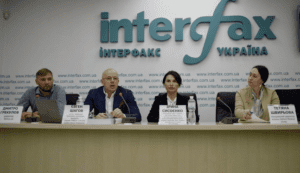
Experts representing private and public clinics and related businesses have teamed up to develop and launch a program to develop preventive medicine and support the health of Ukrainians in wartime.
As the head of the Health Support Program and GAMA CONSULTING, Adviser of the Russian National Institute for Preventive Medicine Yevhen Shagov said at a press conference in Kyiv, the need to develop the program is caused, in particular, by the needs of wartime medicine. The press conference was attended by experts from Kundiiev Institute of Occupational Health of the National Academy of Medical Sciences of Ukraine, the Oxford Medical clinic (Kyiv), Biotus.ua and the medical online hub DOC.UA, which are members of the initiative working group, which activities are aimed at the development of preventive medicine in Ukraine.
“Education and medicine are under the pressure of martial law and Russian aggression, and this cannot but have consequences. The education system has managed to transform during the pandemic, in healthcare we need to take this experience into account. We already see that war and chronic stress have an extremely negative impact on various aspects of health. All this is happening amid declining wealth of Ukrainians and the fact that a significant part of Ukrainians are abroad, where they often have a language barrier and lack high-quality health insurance to effectively take care of their health,” he said.
According to Shahov, chronic acute stress that a person faces in a war leads to an imbalance in the endocrine system, which causes emotional and physical burnout, decreased performance, and sleep disturbance. Moreover, stress is the cause of immune suppression, exacerbation of chronic diseases, the development of a number of new pathologies, up to oncological diseases. According to Shahov, this can be prevented by an effective and accessible system of preventive medicine: “There is no way to cancel stress, but it is possible to increase the stress resistance of Ukrainians.”
He noted that the goal of the program was to develop an effective “health basket,” which will include, among other things, personally selected vitamins and microelements. Monitoring the health status of patients, taking medications, adjusting all components of the prevention program can be carried out using online tools and distance medicine.
According to Shahov, the development of the program and the “health basket” began even before the war, its creation was announced in 2020 by President Volodymyr Zelensky. At present, its authors have already accumulated a sufficient amount of information about its positive impact on health.
The world’s leading experts in Anti-Age Medicine, Age Management, specialists from private and public medical institutions of our country took part in the work on the program.
According to Deputy Director of Kundiiev Institute of Occupational Health of the National Academy of Medical Sciences of Ukraine Iryna Sysoyenko, the issue of including preventive medicine in the general healthcare system is currently very relevant.
“In the conditions of martial law and the emergency load on the healthcare system, it is especially important to prevent the occurrence of diseases in time. Timely diagnosis allows us to detect the accumulation of heavy metals and harmful substances in the body, and preventive measures will prevent serious diseases in the future,” she said.
Sysoyenko noted that the institute, in particular, has toxicological laboratories and can clearly determine the presence of harmful substances in the human body.
In turn, General Director of the Oxford Medical clinic (Kyiv) Tetiana Shvyriova emphasized that with the start of military aggression, people began to seek medical help not only in urgent and emergency conditions, but also in a state of stress, psychological instability and “misunderstanding what they have to do with their chronic diseases.”
“Some people were cut off from doctors, from pharmacies, but they had to continue to be observed and receive consultations about their health. We see what months of lack of opportunity for people to receive qualified help amid acute stress lead to,” she said.
According to Director of Biotus.ua Dmytro Hrekulov, his company plans to expand the already existing production of Ukrainian vitamin drugs based on the recommendations developed by the project experts.
According to Olena Hrytsai, head of medical booking at DOC.UA, it will be possible to get recommendations and become a member of the program using the DOC.UA medical online hub platform.
“Now DOC.UA receives about 5 million requests from patients per month, and 40% of them are related to stress management, so the initiative is very relevant,” Hrytsai said.
biotusua, CONFERENCE, docua, Gama consulting, hrekulov, hrytsai, MEDICINE, OXFORD MEDICAL, preventive, shahov, shvyriova, сисоєнко
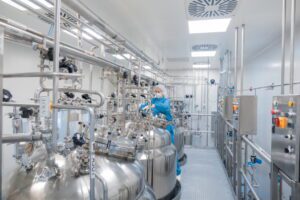
Yesterday, the Cabinet of Ministers included the pharmaceutical industry in the list of priority sectors of the economy, thereby strengthening state support in this area. Since the beginning of the war, the main pharmaceutical companies in Ukraine have generally maintained their production capacities, while several enterprises suffered as a result of Russian strikes, in particular, in March, the warehouses of the Farmak pharmaceutical plant burned down in Makarov, Kyiv region. The damage then, according to the enterprise, amounted to about 1.5 billion hryvnia.
How important is state support for pharmaceutical manufacturers now, and will the industry be able to provide Ukrainians with medicines in full? Igor Stakovichenko, an expert in the field of economics, answered these and other questions for the Open4business portal.
In his opinion, now the production of medicines should be equated by the state with the provision of the army, since in a warring state medicine is one of the foundations of a stable situation at the front and in the rear.
“It is hard to imagine that the army will be able to fight effectively if it is not provided with high-level medical support. At the same time, the production of its own medications is strategically important for the state. Supplies from Western partners are good, but having your own working pharmaceutical industry in such a difficult time is much better And this is understood in the government,” Igor Stakovichenko believes.
According to the expert, pharmaceutical production in Ukraine today is able to provide both the army and the population with a significant part of the necessary medicines. Igor Stakovichenko believes that the government’s timely decisions taken since the beginning of the war made it possible to quickly adapt the industry to new conditions.
“In particular, back in the spring, amendments were adopted to the law “On Medicines”, limiting the export of certain vital drugs. In addition, they significantly simplified the registration of pharmaceuticals during the war, creating an emergency procedure. This was done literally on the third day. In general, the government’s decision on The inclusion of pharmaceutical production in the list of priority industries is a continuation of the policy of supporting the industry, which has been outlined since the beginning of the war. Such support should remain at the level of the main state priorities,” stressed Igor Stakovichenko.
ECONOMY, MARKETS, MEDICINE, PHARMA, STAKOVICHENKO, ИГОРЬ_СТАКОВИЧЕНКО

The State Service for Food Safety and Consumer Protection has started to monitor prices daily for a number of socially important food products, medical products and fuel, according to the website of the Cabinet of Ministers of Ukraine on Wednesday.
“State supervision (control) during martial law in Ukraine will be carried out only to curb the rise in prices for socially significant products, guaranteeing their availability to the population and in the presence of a threat that has a significant negative impact on the rights, legitimate interests, life and health of a person,” the government said.
The list of food products for monitoring includes wheat flour, pasta, loaf, bread, buckwheat and oatmeal, pork, beef, poultry (chicken carcasses), milk, butter and sunflower oil, sour cream, chicken eggs, crystalline sugar, white cabbage, onions, beets, carrots, potatoes.
From non-food products, the list includes 96% ethanol, anti-inflammatory and antibacterial drugs, A-92 and A-95 gasoline, diesel fuel, liquefied gas for cars.
The Cabinet of Ministers in resolution No. 303 of March 13 stopped conducting state control and market supervision of prices for these goods, introduced in January of this year, however, the State Service for Food Safety and Consumer Protection took up daily monitoring of prices for them from March 22.
“According to the data provided by the monitoring, since March 14, logistics has been established in many enterprises in almost all regions of Ukraine, which improved the situation with the assortment of goods, and also made it possible to reduce prices for the grocery group of goods, bakery products, some dairy clear products, as well as fuel,” the government said in a statement.
In addition, the State Service for Food Safety and Consumer Protection called on businesses to prevent unreasonable price increases for goods with significant social significance for the population during martial law in Ukraine.
Almost 1,900 new coronavirus (COVID-19) cases were recorded in Ukraine as of Monday morning, the Ukrainian Health Ministry press service said.
More than 4,500 people have recovered and 133 have died, the press service said.
“A total of 1,864 new cases of coronavirus were confirmed in Ukraine on December 26 (including 138 children and 12 healthcare workers); 29,476 people were vaccinated against coronavirus. The first dose was administered to 8,776 people, 20,434 people received the second dose, 88 people received an additional dose, and 178 people received booster shots. A total of 1,053 people were hospitalized in the past 24 hours; 133 people died; 4,527 people recovered,” the country’s Health Ministry said on Telegram.
A total of 3.647 million people have contracted COVID-19, some 3.433 million people have recovered, and 94,971 people have died of COVID-19 in Ukraine since the start of the pandemic.
A total of 14.593 million people have been vaccinated since the start of the vaccination campaign. 1,900 new coronavirus (COVID-19) cases were recorded in Ukraine as of Monday morning, the Ukrainian Health Ministry press service said.
More than 4,500 people have recovered and 133 have died, the press service said.
“A total of 1,864 new cases of coronavirus were confirmed in Ukraine on December 26 (including 138 children and 12 healthcare workers); 29,476 people were vaccinated against coronavirus. The first dose was administered to 8,776 people, 20,434 people received the second dose, 88 people received an additional dose, and 178 people received booster shots. A total of 1,053 people were hospitalized in the past 24 hours; 133 people died; 4,527 people recovered,” the country’s Health Ministry said on Telegram.
A total of 3.647 million people have contracted COVID-19, some 3.433 million people have recovered, and 94,971 people have died of COVID-19 in Ukraine since the start of the pandemic.
A total of 14.593 million people have been vaccinated since the start of the vaccination campaign.
Ukraine has registered 6,029 new cases of COVID-19 and 346 related deaths in the past 24 hours, the Ukrainian Health Ministry said on Tuesday.
“Over the past day, December 20, Ukraine recorded 6,029 new cases of COVID-19 (including 390 children and 180 medical workers). In the past 24 hours, 1,061 persons have been hospitalized, 346 have died, and 18,850 have recovered,” the ministry said on Telegram.
Since the beginning of the pandemic, Ukraine has seen a total of 3.617 million coronavirus cases, including 3.357 million recoveries and 93,608 deaths.
The Adonis medical group at the Podil branch in Kyiv has implemented a knopka system to control the safety of patients.
According to a press release from Adonis, the knopka system is a Ukrainian technology startup that has proven its effectiveness in a number of state-owned clinics, including in the COVID-19 wards for critically ill patients, where there is a high workload on staff.
At the Adonis clinic in Podil, the first stage of the system has been launched, which allows tracking the work of nurses. The launch of the second phase will make it possible to make not only hospital beds and toilets safe for patients, but also any point in the hospital.
“The system will check the arrival of a medical team where the patient may feel bad – from wards to doctors’ offices in the clinic. Thus, the clinic plans to comply with the international safety standard under the Code Blue,” the medical group said.
As explained, the knopka system receives signals from buttons that are accessible to patients in the clinic and generates messages to the phone, which are received by nurses and doctors. Thus, doctors identify the patient and where he is. In addition, the system checks if the medical staff was at the patient’s bed in no more than 2-3 minutes.
If a MAWI sensor is connected to the patient, which monitors the pulse, pressure, body position in space, saturation and other indicators in real time and if the indicators become critical, the system notifies the medical staff and generates messages of the highest priority. The medical team will be in the ward in no more than 1-2 minutes.
Adonis is a network of private medical centers for adults and children.
The private clinic Adonis was founded over 20 years ago. Its network includes 12 branches in Kyiv city and the region, including two of its own maternity hospitals and a stem cell laboratory.
In the branches of the clinic, doctors from 66 medical areas receive patients.



