
The state-owned Oschadbank (Kyiv) reported that, according to official statistics from the National Bank of Ukraine (NBU) as of January 1, 2026, it ranked first among Ukrainian banks in terms of net loan portfolio to legal entities.
“Oschadbank continues to hold the lead in business financing for the second year… At the beginning of 2026, we also ranked first in terms of total loan portfolio, providing businesses with financing of more than UAH 122 billion,” said Yuriy Katsion, Chairman of the Board of Oschadbank.
According to NBU statistics, Oschadbank’s net loan portfolio amounted to almost UAH 101.6 billion, which is 13% of the market, and grew by more than UAH 11.5 billion, or 12.9%, over the year. Separately, it is noted that the financial institution became the first in terms of the total volume of the loan portfolio of legal entities without accrued interest and deduction of reserves.
According to Oschadbank, 33% of the net loan portfolio is directed towards financing energy projects and providing energy resources, almost 25% towards the agro-industrial complex and food processing, and 8.4% towards supporting the country’s defense capabilities.
In addition, the volume of funds of legal entities attracted by the bank at the beginning of 2026 amounted to UAH 212 billion in equivalent (11% of the market) and almost UAH 180 billion (13%) in national currency. According to the bank, the business portfolio grew by more than UAH 49 billion over the year.
At the end of 2025, the corporate banking segment showed growth: the volume of business funds increased by 17.3% year-on-year, and lending by 30.1%.
According to the National Bank, as of early January 2026, Oschadbank, with total assets of UAH 514.7 billion (12.9% of the total), ranked second among 60 banks in Ukraine in terms of this indicator.
Entrepreneurs can obtain a preferential loan at 0% per annum through Oschadbank under the state program “Affordable Loans 5-7-9%” for the purchase and connection of energy equipment. The program is aimed at supporting small and medium-sized businesses for which a stable power supply is critical.
Energy loans are provided for the purchase and connection of:
The instrument was introduced as an additional mechanism to increase the energy resilience of businesses and reduce the risks of downtime and loss of income during periods of peak loads on the power system.
Program terms:
Financing is available to sole proprietors and legal entities (micro, small, and medium-sized businesses) that meet the program criteria. For sole proprietors with an income of up to UAH 50 million, no collateral is required (only a guarantor).
“Energy efficiency today is a matter of business survival. As a strategic partner of the state, Oschadbank gives priority to supporting entrepreneurs by providing quick and convenient access to financing to preserve companies and jobs,” said Natalia Butkova-Vitvitskaya, member of the Oschadbank Board.
Since the launch of the “Affordable Loans 5-7-9%” program, Oschadbank has concluded more than 20,000 loan agreements worth over UAH 55 billion, supporting the operational stability of Ukrainian businesses in the context of the war.
Detailed advice on opening an account and participating in the program is available at any Oschadbank branch or by calling the contact center at 0 800 219 800.
Additional information about the program is available at energycredit.bdf.gov.ua.
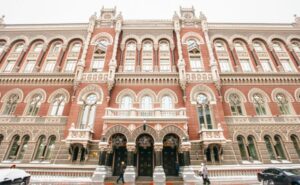
In December 2025, the state-owned Oschadbank was fined UAH 5.5 million by the National Bank of Ukraine for violating financial monitoring legislation.
As noted by the regulator, the violations identified concerned the application of a risk-based approach and proper customer verification in the area of AML/CFT. In addition, the NBU issued a written warning to the bank.
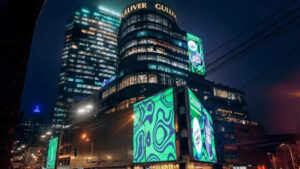
The state-owned Oschadbank has reported the seizure of technical premises in the parking lot of the Gulliver shopping and office complex (TOK) in Kyiv, calling the incident a raid.
According to the bank’s statement, on December 17, a group of men broke into the TOK Gulliver parking lot, seized the technical premises, and barricaded themselves inside. “The group of fighters was accompanied by people who introduced themselves as lawyers and managers of Avtopark Center LLC, a legal entity associated with sanctioned citizen V.S. Polischuk,” the statement said.
Oschadbank notes that prior to the transfer of ownership of the complex to the consortium of Oschadbank and Ukreximbank on July 26, 2025, the debtor entered into a long-term parking lease agreement with Avtopark Center LLC. According to the bank, the debtor thus attempted to retain control over part of the building, but the lease agreement was terminated due to mortgage legislation, and “this legal entity has no rights to the premises.”
To justify their actions, the participants in the seizure referred to the ruling of the Commercial Court of Kyiv dated December 16, 2025 (judge Spichak O.M.), the bank reported. At the same time, Oschadbank emphasizes that the seizure “was not and could not be” the execution of a court decision: no enforcement proceedings were opened, and the state executor did not present any enforcement documents to the management of state banks.
The consortium of state-owned banks also stated that it does not consider the aforementioned court ruling to be justified, which, according to the banks’ assessment, restricts the rights of owners “in favor of a person subject to sanctions,” and intends to appeal this decision. “All persons involved and organizers of this action will be held personally liable for illegal actions and damages caused,” the statement said.
The banks added that the parking lot was being prepared for full-scale operation amid the gradual launch of TOK Gulliver after its temporary closure due to the threat of an emergency, and the proceeds from its operation were planned to be used to finance the economy and the defense industry.
Oschadbank and Ukreximbank are state-owned banks of Ukraine with a 100% state share. TOK Gulliver is located in the center of Kyiv (1-A Sportivna Square).
According to public reports, on July 26, 2025, ownership of TOK Gulliver was registered to a consortium of state-owned banks (Oschadbank – 80%, Ukreximbank – 20%) as collateral for the debtor’s credit obligations.
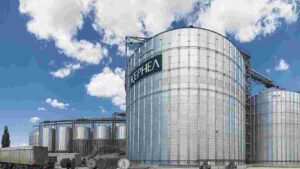
The state-owned Oschadbank has signed a series of loan agreements with companies belonging to the Kernel Group for a total amount of $77 million, which, according to the bank, is the largest amount of lending to private businesses among Ukrainian banks in 2025.
“The development of Ukraine’s agricultural export potential is an important aspect of strengthening the state’s economy. This is the main focus of Kernel’s business and one of Oschadbank’s priorities,” said Yuriy Katsion, deputy chairman of Oschadbank’s board responsible for corporate business, on Facebook.
According to a press release from the bank, almost half of the lending volume may be directed toward investment needs: these are non-revolving credit lines of $36.7 million with a term of seven years.
It is noted that the funds may also be used to upgrade the fleet of agricultural machinery and equipment to ensure uninterrupted cultivation of agricultural land, as well as to finance and refinance capital expenditures related to the reconstruction of the Transbalkterminal grain terminal (Chornomorsk), which was damaged as a result of a Russian missile attack in 2023.
Another feature of the agreement is the borrower’s right to draw down the entire credit limit of $77 million during the term of the agreement to replenish working capital, provided that the limits provided for investment lending are reduced, the bank said.
It is specified that the replenishment of working capital may be carried out by the group’s companies, in particular, for the purchase of grain, fertilizers, plant protection products, fuels and lubricants, other goods, works, and services.
Before the war, Kernel was the world’s leading producer of sunflower oil (about 7% of global production) and its exporter (about 12%). It is one of the largest producers and sellers of bottled oil in Ukraine. In addition, it is engaged in the cultivation and sale of agricultural products.
In fiscal year 2025 (FY, July 2024 – June 2025), Kernel earned $238 million in net profit, which is 42% more than in FY 2024. Kernel’s consolidated revenue in FY2025 reached $4.115 billion, an increase of 15% compared to the previous fiscal year.
The company’s debt obligations at the end of September amounted to $726 million, including bank credit lines of $104.5 million, compared to $146.7 million at the beginning of the year.
As reported, in October 2025, Oschadbank’s corporate segment loan portfolio grew by 2.6%, or UAH 26.9 billion, to UAH 970.1 billion. Hryvnia loans to businesses added 1.7%, or UAH 11.5 billion, reaching UAH 689.7 billion, while foreign currency loans increased by 4.2%, or $267 million, to $6.68 billion.
According to the NBU, at the beginning of November this year, Oschadbank, with total assets of UAH 456.23 billion, ranked second among 60 banks in terms of this indicator.
Fintonik LLC (Kyiv) won the auction held by the state-owned Oschadbank on December 10 for the sale of a pool of loans to the Ukrlandfarming group of companies (Ukrlandfarming, ULF), offering the minimum possible price of UAH 1.13871 billion at a starting price of UAH 5.03852 billion.
According to data from the Prozorro.Prozori system, Fintonik, 80% of which is owned by Andriy Shpylka from Kryvyi Rih and 20% by former SCM director of new business development Mykola Nesterenko, was the only participant in the auction.
According to the protocol, the remuneration of the electronic platform SKOMPANI LLC, through which the application was submitted, amounted to UAH 17.08 million and will be paid from the UAH 75.58 million guarantee deposit.
Earlier, Oschadbank noted that this stage of the sale, at which the minimum price was reduced by 44%, was the final one, because after a series of previous auctions with a gradual reduction, the possibility of further price adjustments had been exhausted.
The auction included claims under loan agreements and related collateral agreements of borrowers — the ULF group of companies (PJSC Raise-Maksymko, PJSC Agroholding Avangard, Imperovo Foods LLC) and Pakko Holding LLC.
“The current auction is the last chance for potential investors to purchase a pool of secured loans, which includes production assets throughout Ukraine: elevators, poultry farms, an egg processing plant, etc., as well as guarantees from individuals and legal entities,” Oschadbank emphasized. It noted that if the auction is unsuccessful, it will proceed with the active implementation of a liquidation scenario to collect the debt.
In early December this year, the Antimonopoly Committee of Ukraine (AMCU) fined TNA Corporate Solutions LLC (USA) and American citizen Nicholas Piazza (Nicholas Piazza) for violating the law when concentrating shares in the authorized capital of 14 enterprises of the Ukrlandfarming group, which was one of the largest agricultural holdings in Eurasia.
The agricultural holding claims that it remains one of the largest in Ukraine despite $1.2 billion in losses due to Russia’s military aggression. A significant portion of ULF’s financial obligations have been in default since 2017. In November 2017, a group of international creditors of Ukrlandfarming and Avangard estimated the total amount of ULF’s debt obligations at approximately $1.65 billion in a letter to the Ukrainian government: about $1.25 billion in debt obligations to international creditors and about $400 million to Ukrainian banks (including state-owned banks). In turn, according to their data, the debt to international creditors at that time consisted of approximately $775 million in Eurobonds and $475 million in credit debt to European and American banks (and their respective credit risk insurers).
In October last year, Ukrlandfarming announced that the lawsuits filed by Gramercy Funds Management LLC and its affiliates against Bakhmatyuk, Piazzi, Oleksandr Yaremenko, SP Capital Management LLC, TNA Corporate Solutions LLC, and/or Maltofex Ltd had been voluntarily withdrawn with a final waiver of claims, and the parties had entered into a confidential settlement agreement in connection therewith.
“Now that the litigation against Mr. Bakhmatyuk has been concluded, the company can more freely negotiate with creditors and focus on growing and rebuilding its business after losing approximately half of its value due to Russia’s invasion of Ukraine,” the release said at the time.
According to the NBU, as of early September this year, Oschadbank, with total assets of UAH 479.1 billion (12.3% of the total), ranked second among 60 banks in terms of this indicator.



