
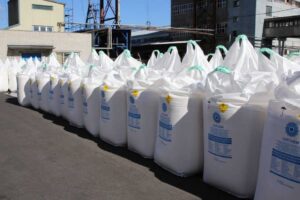
The plants of nitrogen holding Ostchem produced 1.33 million tons of mineral fertilizers in January-September 2024, down 15.3% from the same period in 2023, the holding said in a statement on Thursday.
According to the report, Cherkasy-based Azot produced 1.06 million tons of mineral fertilizers, down 13.11% year-on-year, and Rivne Azot produced 304.9 thousand tons, down 12.2%.
Production declined for all major types of nitrogen fertilizers.
Ammonium nitrate production decreased by 16.09% to 547.6 thousand tons. UAN production, which had previously shown the highest growth rate, fell by 11.68% to 417.9 thousand tons. The biggest drop in Ukrainian production was for such fertilizers as urea, down 20.17% to 263 thousand tons, and UAN, down 48.9% to 18.9 thousand tons. Production of commercial ammonia also decreased by 11.4% to 43 thousand tons.
“Today we produce as much as the market is ready to consume. Our plants were unevenly loaded in 2024 and are still not operating at full capacity. However, the hot season has now begun, and production capacity is being utilized more. Despite rising gas prices, blackouts, and increased imports from Russia-friendly countries, we are on track to meet our production targets. Ukrainian fertilizers for the agricultural sector are produced in accordance with commercial contracts, and not a single delivery has been disrupted this year,” said Sergiy Pavlyuchuk, Chief Operating Officer of Ostchem.
He added that Cherkasy Azot and Rivne Azot continue to improve the production process and implement modern energy saving solutions. In particular, the installation of an in-house power generation system helped reduce electricity consumption by 40%.
As reported, on April 12, 2024, Group DF International and South Korean Hyundai Engineering signed a large-scale agreement to build a chemical hub in Rivne. The project envisages the construction of green ammonia and hydrogen plants based on renewable energy sources; new enterprises and production sites for the production of nitrogen fertilizers and chemical derivatives.
Ostchem is a nitrogen holding of Dmitry Firtash’s Group DF, which unites the largest mineral fertilizer producers in Ukraine. Since 2011, it has included Rivne Azot and Cherkasy Azot, as well as Severodonetsk Azot and Stirol, which are out of operation and located in the occupied territories.
Cherkasy Azot PJSC (Cherkasy, Ukraine) is one of the largest Ukrainian chemical enterprises. The design production capacity is 962.7 thousand tons of ammonia per year, 970 thousand tons of ammonium nitrate per year, 891.6 thousand tons of urea, and one million tons of UAN per year.
Rivne Azot is one of the largest Ukrainian chemical companies in Western Ukraine. On April 12, 2024, Group DF and South Korean Hyundai Engineering signed an agreement to build a chemical hub in Rivne. The project envisages the construction of green ammonia and hydrogen plants based on renewable energy sources; new enterprises and production sites for nitrogen fertilizers and chemical derivatives.
The plants of the nitrogen holding Ostchem produced 918.5 thousand tons of mineral fertilizers in the first half of 2024, which is 4.3% less than in the same period last year, the holding said in a statement on Monday.
“Uncontrolled imports cause the greatest damage to the chemical industry. Due to the dominance of cheap fertilizers from countries friendly to Russia, production volumes fell by 4.3%,” the release quoted Sergiy Pavlyuchuk, production director of Ostchem’s nitrogen business, as saying.
It also notes that the impact was caused by energy supply restrictions and a shortage of personnel.
“In addition to power outages due to the destruction of the energy infrastructure, there is also a shortage of staff: since the beginning of the full-scale war, almost 20% of employees have been mobilized at the plants, there is a staff shortage of about 15%, and we are forced to retrain staff who are learning new specialties,” Pavlyuchuk said.
According to the release, Cherkasy Azot produced 717.8 thousand tons of fertilizer in the first half of the year and remained Ukraine’s largest producer of mineral fertilizers, while Rivne Azot maintained its production at the same level as last year – 200.7 thousand tons.
High levels of dumped imports resulted in a decline in domestic production of the most popular fertilizers in Ukraine – ammonium nitrate and urea. In particular, the volume of ammonium nitrate production by Ostchem plants decreased by 9% compared to the same period last year – from 398.7 thousand tons to 362.9 thousand tons, the holding noted.
Ostchem also noted uncontrolled imports, which provoked a 10.8% decline in urea production: production fell from 205.9 thousand tons to 183.6 thousand tons.
At the same time, the holding was able to strengthen its position in the urea-ammonia mixture (UAN) market. In the first half of the year, UAN production at Ostchem’s plants increased by 11.4%, from 277.7 thousand tons to 309.2 thousand tons. The holding explains this by the high popularity of this fertilizer and the logistical advantages of Ukrainian producers. To meet the growing demand, new UAN production sites are being set up at Cherkasy Azot (capacity of 1 million tons per year) and Rivne Azot (capacity of 300 thousand tons per year).
According to the holding, the total volume of nitrogen fertilizer imports to Ukraine in 1H2024 amounted to 1.298 million tons. At the same time, imports of ammonium nitrate amounted to 176.6 thousand tons, urea – 311.3 thousand tons, NPK – 108.5 thousand tons, sulfate – 159.8 thousand tons, NP – 77.71 thousand tons, and UAN – 50.8 thousand tons.
Ostchem is the nitrogen holding of Dmitry Firtash’s Group DF, which unites the largest mineral fertilizer producers in Ukraine. Since 2011, it has included Rivne Azot and Cherkasy Azot, as well as Severodonetsk Azot and Stirol, which are out of operation and located in the occupied territories.
Cherkasy Azot PrJSC (Cherkasy, Ukraine) is one of the largest Ukrainian chemical companies. The design production capacity is 962.7 thousand tons per year of ammonia, 970 thousand tons per year of ammonium nitrate, 891.6 thousand tons of urea, and 1 million tons per year of UAN.
Rivne Azot is one of the largest Ukrainian chemical companies in Western Ukraine. On April 12, 2024, Group DF and South Korean Hyundai Engineering signed an agreement to build a chemical hub in Rivne. The project envisages the construction of green ammonia and hydrogen plants based on renewable energy sources; new enterprises and production sites for nitrogen fertilizers and chemical derivatives.
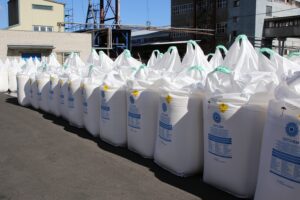
The plants of nitrogen holding Ostchem produced 520.6 thousand tons of mineral fertilizers in the first quarter of 2024, which is only 1% more than in the first quarter of 2023 (515.5 thousand tons), the holding said in a statement on Wednesday.
“The growth in production of the Ukrainian chemical industry has stopped due to the uncontrolled growth in fertilizer imports from Poland, as well as Russia-friendly Azerbaijan and Turkmenistan,” the company said.
According to the company, in the first quarter of 2024, fertilizer imports increased by 35% to 701.2 thousand tons.
It is specified that Cherkasy Azot produced 404.3 thousand tons in January-March this year, while Rivne Azot produced 128 thousand tons of fertilizers.
According to the report, the production structure remains fairly stable: ammonium nitrate is the leader (246 thousand tons produced), followed by urea-ammonium nitrate (UAN) (123.8 thousand tons) and urea (123.5 thousand tons). Production of limestone-ammonium nitrate (LAM) increased slightly year-on-year to 15.8 thousand tons, and ammonia to 9.08 thousand tons.
Ostchem noted that it met its obligations in full during the spring sowing season, but in 2024 the negative industry trend intensified, with fertilizer imports significantly exceeding domestic production.
“In the first quarter of 2024, imports amounted to 701.2 thsd tonnes, exceeding domestic production by 35%. Imports continue to kill domestic production: four fertilizer producers have already been shut down – OPP, Dniproazot, Rivneazot and Sumykhimprom,” commented Oleg Arestarkhov, Head of Corporate Communications at Group DF.
It is noted that Ukrainian producers continue to lose ground in the Ukrainian market in most fertilizer segments, except for UAN.
“First of all, Ukrainian chemical plants are dramatically losing the urea market: in the first quarter, Ukraine produced 123.5 thousand tons of urea, while imports amounted to 181 thousand tons. 88% of all imported urea came from Azerbaijan and Turkmenistan, countries friendly to Russia,” Arestarkhov added.
According to him, Poland is also strengthening its position as the largest importer of fertilizers to Ukraine, as it is currently flooded with cheap Russian and Belarusian fertilizers that are not subject to EU sanctions, which is why all the excess fertilizers from the Polish market are being redirected to Ukraine.
According to Ostchem, in 2023, Poland imported 1.016 million tons of urea, of which urea from Russia accounted for 34% (345 thousand tons). At the same time, in the first quarter of 2024, Poland has already become the undisputed leader among importers of such fertilizers as ammonium nitrate (52 thousand tons out of 109.7 thousand tons of total imports), ammonium sulfate nitrate (7.9 thousand tons out of 9.4 thousand tons), UAN (17.4 thousand tons), and NPK (63.2 thousand tons out of 144.3 thousand tons) in the Ukrainian market.
In the first quarter, Ukraine imported 121.9 thousand tons of sulphate (China is the leader with 75.3 thousand tons) and 74.6 thousand tons of superphosphate (Bulgaria – 37.3 thousand tons and Greece – 27.4 thousand tons),
“Unfortunately, behind the loud slogans of Ukrainian government officials within the Buy Ukrainian campaign, there are no practical steps to reduce imports and protect the Ukrainian fertilizer producer,” Arestarkhov emphasized, recalling the specific proposals of the Ukrainian Chemists Union to protect the domestic market that were submitted to the government.
Ostchem is the nitrogen holding of Dmitry Firtash’s Group DF, which unites the largest mineral fertilizer producers in Ukraine. Since 2011, it has included Rivne Azot and Cherkasy Azot, as well as Severodonetsk Azot and Stirol, which are out of operation and located in the occupied territories.
Cherkasy Azot PrJSC (Cherkasy, Ukraine) is one of the largest Ukrainian chemical companies. Its design production capacity is 962.7 thousand tons per year of ammonia, 970 thousand tons per year of ammonium nitrate, 891.6 thousand tons of urea, and 1 million tons per year of UAN.
Rivne Azot is one of the largest Ukrainian chemical companies in Western Ukraine. On April 12, 2024, Group DF and South Korean Hyundai Engineering signed an agreement to build a chemical hub in Rivne. The project envisages the construction of green ammonia and hydrogen plants based on renewable energy sources; new enterprises and production sites for nitrogen fertilizers and chemical derivatives.
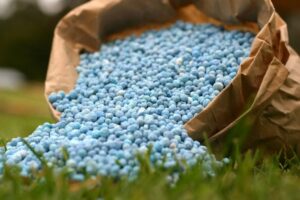
In 2023, the plants of Ostchem, a nitrogen holding company that unites Group DF’s nitrogen business, produced 2.1 million tons of mineral fertilizers, up 19.51% year-on-year.
According to a Group DF press release, Azot, the group’s Cherkasy-based plant, produced 1.56 million tons of mineral fertilizers in 2023, up 39.63% year-on-year, while Rivne Azot produced 528 thousand tons (-10.81%).
Urea, UAN and ammonium nitrate were the key fertilizers produced by Ostchem’s businesses, Group DF said.
According to the group, in 2023, it produced 835.9 thousand tons of ammonium nitrate, up 60.47% year-on-year, UAN – 572.7 thousand tons (+130%), and urea – 447.1 thousand tons (+145%). Production of UAN, a traditionally exported fertilizer produced by Rivne Azot, halved to 102 thousand tons.
“The fertilizer market is recovering, but imports of nitrogen fertilizers, which have increased significantly, do not allow us to fully utilize our plants. Despite the difficult situation in the agricultural sector, forced shutdowns of plants due to the hostilities, still high gas prices and abnormally high volumes of imports to Ukraine at dumping prices, Ostchem started to restore production in 2023. We fully met the demand from farmers even during peak periods,” said Sergiy Pavliuchuk, Production Director of Ostchem’s nitrogen business.
In 2023, Ostchem Holding doubled its production of UAN, the most promising fertilizer in Ukraine, to meet the demand. UAN was ranked second in terms of production, and its share in Ostchem’s product portfolio amounted to 27.3%, according to Group DF.
“It is no secret that we are negotiating with global players to develop several industrial sites. Our strategic plans include the construction of new workshops and enterprises. We are talking about investing in new, energy-efficient fertilizer production facilities and launching new products such as AdBlue, industrial gases, and petrochemicals,” added Pavliuchuk.
Commenting on the state of the domestic fertilizer market in Ukraine, Group DF said that the main feature of 2023 was the critical growth in imports imported at dumping prices. Compared to 2022, imports of mineral fertilizers to Ukraine increased 1.9 times, reaching 1.99 million tons. For example, urea imports increased 3.7 times over the year, reaching 501 thousand tons.
“A huge flow of cheap Belarusian and Russian fertilizers enters Ukraine through two channels: the first is from the former Soviet Union countries friendly to the aggressor. The second new channel is the re-export of Belarusian and Russian fertilizers from the EU. According to Eurostat, the total volume of nitrogen fertilizer imports to the EU increased by 34% in 2022-2023, while Russia accounted for about a third of these imports. Despite the sanctions and the existing embargo, a significant portion of these fertilizers is also entering Ukraine, slowly “killing” the Ukrainian producer and Ukrainian jobs,” emphasized Oleg Arestarkhov, Group DF’s Head of Corporate Communications.
In his opinion, the new trend is driven not only by Russia’s desire to expand its sales markets, but also by its strategic plan to make the EU and Ukraine dependent on its fertilizers.
Unable to compete with cheap imports, many EU companies are shutting down, and Ukrainian chemical companies such as Odesa Port and Sumykhimprom are also idle.
“The US and EU countries have already developed measures to ‘reduce dependence’ on fertilizers, grain and other food products from Russia. Formally, Ukraine has an embargo on imports of Russian and Belarusian fertilizers. However, fertilizers from these countries, as well as countries that buy cheap gas from Russia, continue to be supplied. As a result, our market is flooded with cheap imports, and Ukraine is facing critical dumping. Unfortunately, in 2023, we did not see any clear, tough economic actions by the authorities to protect the Ukrainian market and national producers. Fertilizer imports to the country are growing much faster than domestic production. Domestic production grew by about 20%, while imports grew by almost 100%,” stated Arestarkhov, adding that Ukraine needs to learn to better protect its interests.
Group DF consolidates Dmitry Firtash’s assets in the gas distribution, chemical, titanium and port industries, as well as in agriculture and media.
Ostchem is Group DF’s nitrogen holding company that unites the largest mineral fertilizer producers in Ukraine. It includes Rivne Azot, Cherkasy Azot, as well as Sievierodonetsk Azot and Stirol, which are not operating and are located in the occupied territories.
Cherkasy Azot PrJSC (Cherkasy, Ukraine) is one of the largest Ukrainian chemical companies and has been part of Group DF’s nitrogen business since 2011. The design production capacity of Cherkassy Azot is 962.7 thousand tons of ammonia, 970 thousand tons of ammonium nitrate, 891.6 thousand tons of urea, and 1 million tons of UAN per year.
Rivne Azot is one of the largest Ukrainian chemical companies in Western Ukraine and has been a part of Group DF’s Ostchem nitrogen holding since 2011. Since its acquisition, Firtash has invested over UAH 1.3 billion in Rivne Azot.
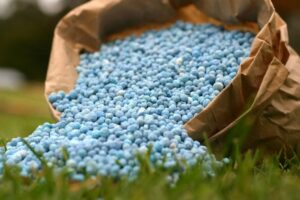
The plants of Ostchem nitrogen holding, which unites Group DF’s nitrogen business, produced 1.57 million tons of mineral fertilizers in 9M2023, up 92% year-on-year, Group DF said in a press release on Tuesday.
“At the same time, we have not yet managed to reach the pre-war level: the utilization of the main capacities of the plants did not exceed 70-80% during the year. The reason for the underutilization is a critical increase in fertilizer imports to Ukraine,” said Sergey Pavlyuchuk, Head of Ostchem’s nitrogen business.
According to him, the production plans for January-September were fully met, and the plants’ capacities were loaded more evenly than last year. During the reporting period, Cherkasy Azot increased production by 148% year-on-year to 1.22 million tons, while Rivne Azot increased production by 7% to 347.3 thousand tons.
According to the company’s release, urea (up 3 times), UAN (up 2.5 times) and ammonium nitrate (up 89%) were the most dynamic in terms of production. At the same time, production of UAN decreased by 72% to 36.9 thousand tons.
“Our plants operated smoothly and fulfilled contracts with Ukrainian farmers on time. In the future, the utilization of our plants will depend on the demand for mineral fertilizers. We are ready for the peak demand in November-December and the start of procurement for the spring planting season in 2024,” emphasized Pavliuchuk.
Ostchem cited high consumer activity in the spring and summer of 2023, when mineral fertilizers were more affordable, as one of the main factors influencing the mineral fertilizer market in Ukraine, which satisfied a significant part of consumer demand.
At the same time, according to the leading fertilizer producer, the market is experiencing a decline in the purchasing power of farmers due to the suspension of the grain deal and low prices for agricultural products amid a sharp increase in imports from countries friendly to Russia.
“The volume of imports is growing, which hurts the domestic chemical industry. In the third quarter of 2023, the increase in imports of mineral fertilizers was 46.6%. Since the beginning of the year, the total volume of fertilizers imported to Ukraine amounted to 1.71 million tons. This means that imports exceed domestic production. Fertilizers continue to be imported from countries that are “friendly” to Russia – repackaged Belarusian fertilizers are brought to Ukraine via Poland and Romania. Imports of urea from Turkmenistan are growing at a critical pace,” said Oleg Arestarkhov, Director of Corporate Communications at Group DF, as quoted by the holding’s press service.
He emphasized that often the selling price of fertilizers from post-Soviet countries, including logistics costs, “contradicts all market laws.” “There is reason to believe that fake certificates of origin for fertilizers from Russia and Belarus are entering Ukraine,” the top manager added.
In addition, Group DF pointed out that Ukrainian producers are losing the urea market. The company cited data from Derzhzovnishinform and the State Customs Service of Ukraine, according to which 22.7 thousand tons of urea were imported from Turkmenistan in 2021, 55 thousand tons in 2022, and 230 thousand tons in 9 months of 2023.
“In two years, the volume of urea imported from Turkmenistan has increased almost 12 times. At the same time, the largest Ukrainian chemical companies producing urea have been idle for two years. This shows the quality of the industrial policy, which needs to be urgently adjusted to stimulate production growth,” explains Arestarkhov.
Group DF consolidates Dmitry Firtash’s assets in the gas distribution, chemical, titanium and port industries, as well as in agriculture and media.
Ostchem is Group DF’s nitrogen holding company that unites the largest mineral fertilizer producers in Ukraine. It includes Rivne Azot, Cherkasy Azot, as well as Sievierodonetsk Azot and Stirol, which are not operating and are located in the occupied territories.
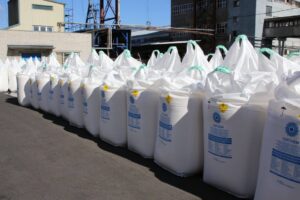
Plants of nitrogen holding Ostchem, which unites enterprises of nitrogen business of Group DF, produced 959.7 thousand tons of mineral fertilizers in the first half of 2023, which is 60.9% more than in the same period last year, when 596.3 thousand tons were produced.
According to the press release of Group DF on Wednesday, Rivneazot produced 201.2 thousand tons, Cherkassy Azot 758.6 thousand tons, including in May it reached the maximum since the beginning of the war – 138.6 thousand tons.
It is specified that the structure of production in the first half of the year corresponded to the structure of demand for nitrogen fertilizers, taking into account the prices of competitors and the margins of individual products. The key products were: ammonium nitrate – 398.7 thousand tons (313.3 thousand tons in 6M 2022); urea-ammonia mixture (UAN) – 277.7 thousand tons (116.8 thousand tons); urea – 205.9 thousand tons (76.4 thousand tons). At the same time, production of limestone-ammonium nitrate (UAN) dropped almost fourfold to 17.2 thousand tons.
“Ostchem’s enterprises have adapted to work under war conditions. Under the conditions of war risks, logistical problems, blackouts and unscheduled shutdowns, the plants managed to pass peak load periods and ensure timely shipment of fertilizers to agrarians clearly in accordance with the concluded agreements,” the report quotes Ostchem’s nitrogen business head Sergiy Pavliuchuk as saying.
According to him, at the moment the main task is to prepare production facilities for the fall season, and after the completion of repairs key workshops will be launched, and the load of plants in August will increase.
It is noted that the main factors that contributed to a successful spring season and the implementation of the production plan are increased demand from farmers and large agricultural holdings and increased sales due to soft loans, acceptable gas prices and lower fertilizer selling prices, as well as the spring sowing season delayed due to weather conditions.
“Our companies are ready to produce as much fertilizer as the market can buy. Illegal imports of repackaged Russian fertilizers are holding back the development of the domestic chemical industry,” said Oleg Arestarhov, Head of Corporate Communications at Group DF.
According to him, Russian fertilizers are imported to the customs territory of Ukraine from five countries of the former Soviet Union. In particular, Arestarhov specified, since the beginning of this year, 382.8 thousand tons of urea were imported into Ukraine, including 269.5 thousand tons from Turkmenistan, Uzbekistan and Azerbaijan, while domestic production amounted to 205.9 thousand tons.
“With such a volume of imports, it will be much more difficult for urea producers such as Dniprazot and OPZ, which are now standing, to start up,” said the head of Group DF’s corporate communications department.
The release also notes that Ostchem will continue to increase production volumes in new sectors of chemistry. In particular, the company counts on AdBlue – a liquid reagent for diesel cars, the production volume of which amounted to 4.2 thousand tons in the first half of the year.
In addition, production of carbon dioxide in the first half of 2023 amounted to 10.1 thousand tons, while during this period Cherkassy Azot has been increasing its output on a monthly basis, and Ostchem has started to develop its logistics infrastructure to ensure stable supplies of industrial gases both in Ukraine and Europe.
Group DF consolidates Dmytro Firtash’s assets in the gas distribution, chemical, titanium and port industries, as well as in agriculture and media.
Ostchem is the nitrogen holding company of Group DF, which unites the largest mineral fertilizer producers in Ukraine. It includes Rivneazot, Cherkasy Azot, as well as Severodonetsk Azot and Stirol, which are out of operation and located in the occupied territories.



