

French President Emmanuel Macron announced the dissolution of the National Assembly and the scheduling of early parliamentary elections for June 30 and July 7, French newspaper Le Figaro reported.
“I have decided to give you back the choice of your parliamentary future. It is a serious and weighty decision, but above all, it is an act of trust,” Macron said in a video message posted on social network X.
The first round of elections will be held on June 30, with the second round on July 7.
Macron’s list was defeated in the European Parliament elections, taking half as many as the right-wing National Union.
According to Macron, this result “is not a good result for parties defending Europe.” He added that the far-right was gaining popularity everywhere on the continent.
“I cannot act as if nothing has happened….. That is why, having carried out the consultations required by Article 12 of our Constitution, I have decided to once again give you the choice of our parliamentary future by voting. In a few minutes, I will sign a decree calling parliamentary elections to be held on June 30, the first round, and July 7, the second round,” the French leader said.
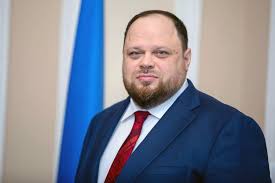
Verkhovna Rada Speaker Ruslan Stefanchuk has signed a decree on the admission of journalists to the parliament building under martial law.
According to the press service of the Verkhovna Rada, the decree allows media representatives to cover the activities of parliament directly in the premises of the legislative body.
The order approves the regulation “On accreditation of media at the Verkhovna Rada of Ukraine of the ninth convocation for the period of martial law in Ukraine”.
Stefanchuk and the head of the parliamentary staff Vyacheslav Shtuchny met with journalists and informed them about the peculiarities of media work in the press center of the Verkhovna Rada, in particular, about actions during the announcement of an air alert. The media representatives were shown the simplest shelter of the parliament building, where they will be obliged to go down during an air alert.
Stefanchuk said that despite the restrictions during martial law, it is important for journalists to be able to cover the activities of the legislative body. He also informed that given the need to comply with security requirements, a maximum of 30 people can work in the press center.

A Swiss parliamentary committee voted late on Thursday night in favor of allocating 5 billion Swiss francs ($5.5 billion) in aid to Ukraine, Reuters reports.
“A Swiss parliamentary committee voted late on Thursday night to allocate 5 billion Swiss francs ($5.5 billion) in aid to Ukraine as part of a broader package aimed at boosting the defense capabilities of neutral Switzerland. Backed by lawmakers from center-left and center-right parties, the upper house’s security committee approved the package, which provides 10.1 billion francs in additional funds for the army, along with the amount for Ukraine,” it said.
The plan was adopted by 8 votes to 5, with right-wing parties opposed. It is noted that it will have to pass a number of parliamentary hurdles before the plan becomes law.
“The parliament statement said the multi-billion dollar package was conceived as an extraordinary contribution to Swiss security and ‘peace in Europe’ in the wake of the war Russia is waging against Ukraine,” the statement said.
The parliament also said that the Ukrainian part of the package is aimed at supporting the reconstruction and repair ofeveryday infrastructure necessary for life in Ukraine.
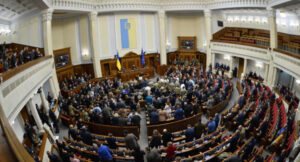
The Verkhovna Rada has amended the Criminal and Criminal Procedure Codes of Ukraine to criminalize smuggling of goods and excisable goods, which is one of the conditions for the last tranche of the EU’s EUR 1.5 billion macro-financial assistance to Ukraine.
According to MP Yaroslav Zheleznyak (Holos faction), the committee’s version of the draft law was adopted, which was amended in accordance with the letters from the Ministry of Finance that the business insisted on.
“1) It is proposed to raise the thresholds for smuggling 5 times. 2) The thresholds for excisable goods are to be raised by 2 times. 3) The entry into force (criminalization) of commodity smuggling is postponed until mid-2024. As I said, this is the deadline under the (memorandum with the) IMF on the BES reboot,” the MP listed the changes.
He added that the numerous wishes of the business community have also been taken into account, and that actions can only be classified as a crime if there is intent.
“Possible cases of prosecution under ‘smuggling’ articles for submitting documents with false information have been significantly limited – in the amended version, they must be the basis for the movement of goods, be subject to mandatory declaration under customs law, and have an impact on determining the amount of customs payments or compliance with non-tariff regulation measures,” Zheleznyak said.
During the voting, no amendments were made to the text submitted by the committee to the Rada for the second reading, but the text itself is not yet available on the parliament’s website.
According to the representative of the relevant committee, Oleksandr Bakumov (Servant of the People), the threshold for criminal liability for smuggling is set at UAH 6.71 million, which is 50 times higher than in the draft law adopted as a basis (UAH 113.5 thousand – IF-U). He added that the threshold for smuggling excisable goods (except for electricity) has been increased by “thirty-three and three and a half times” compared to the original draft (UAH 56.75 thousand).
Members of the European Solidarity and Batkivshchyna parties, who criticized the draft law, called the main problems of the law the presence of law enforcement agencies in the customs control zone with the addition of the Bureau of Economic Security (BES) and the unresolved problems that led to the adoption of the law on smuggling decriminalization in 2011.
“Ukraine is the only country in Europe and in the World Customs Organization whose customs authorities are not vested with pre-trial investigation functions… We could have left only what is transported outside the customs posts to be considered smuggling,” says MP Nina Yuzhanina (European Union). According to the current legislation, only the illegal transportation of cultural property, poisonous, potent, explosive substances, radioactive materials, weapons or ammunition, parts of firearms, as well as special technical means of covertly obtaining information is considered smuggling.
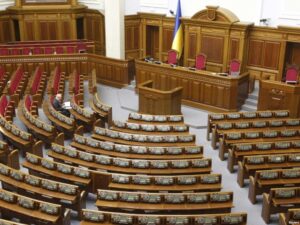
The Verkhovna Rada on Friday, 31 months after its registration, adopted as a whole the government bill “On regulating the activity of separate subdivisions of a legal entity formed in accordance with the legislation of a foreign state” (No. 4482).
According to information on the website of the Rada, 254 people’s deputies voted in favor of it with the necessary minimum of 226 votes.
“The bill provides a comprehensive approach to the regulation of all aspects of legal relations (civil, labor, financial) related to the creation and termination of separate subdivisions of a legal entity formed in accordance with the laws of a foreign state”, – commented on the adoption of the document government representative in the Rada Taras Melnychuk in Telegram.
According to him, the requirements of Directive (EU) 2017/1132 of June 14, 2017, concerning certain aspects of corporate law (Codification), in particular, the rules of disclosure of information applicable to branches of companies from other Member States, are also taken into account.
As Melnychuk noted, according to the draft law, branches and representative offices of foreign enterprises are subject to state registration under the same rules as Ukrainian legal entities and public formations that do not have the status of a legal entity, and their termination is carried out by liquidation.
Data on establishment and termination are entered into the Unified State Register of Legal Entities, Physical Entrepreneurs and Public Formations.
The Law also prohibits the establishment of a branch or representative office of a company from an aggressor state or occupant state.
The fee for state registration is set at 1 living wage for able-bodied persons, and for the registration of changes – 0.3 living wage.
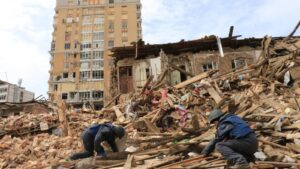
The Verkhovna Rada of Ukraine has adopted in general draft law No. 7198 on the creation of a state register of housing damaged and destroyed as a result of Russia’s armed invasion of Ukraine, and the procedure for compensation for it.
The bill was supported by 275 people’s deputies at Thursday’s meeting, Yaroslav Zheleznyak, a member of the Golos faction, said in a Telegram feed.
According to the draft law, compensation will be provided only for residential property damaged or destroyed since February 24, 2022. At the same time, the law does not apply to the objects that on the date of martial law were located in the temporarily occupied territories.
Owners of apartments and other residential premises will be able to receive a housing certificate confirming guarantees of the state to finance the purchase of housing (including those built in the future) within a certain amount, while owners of private houses will have a choice between receiving a certificate and monetary compensation. Such monetary compensation will be accrued in a special regime to finance construction.
The bill does not set a limit on the amount of compensation, as well as limits on the location, type and size of new housing financed by the certificate. At the same time, if the cost of housing will be lower than the amount specified in the certificate, the balance of compensation will be paid only at the expense of funds received from the Russian Federation for the reimbursement of damages.
The term for applying for compensation is during martial law and within one year after its cancellation. It is possible to use the certificate within five years from the date of its issue, and it is prohibited to alienate housing (except inheritance) for five years.
The applications will be considered by the commissions for consideration of compensation established by the executive bodies of local councils, military or civilian-military administrations.
According to the draft law, sources of financing of compensations can be state and local budgets; funds from international financial organizations, creditors and investors; international technical and/or refundable or non-refundable financial aid; reparations or other recoveries from Russia and others.
As reported, Ukrainians have already submitted more than 325,000 reports of destruction or damage to housing through Diya



