

Demand for “ready-to-eat” products in the Metro Cash & Carry chain of shopping centers has grown due to a shortage of staff among professional customers and limited time for food preparation among end consumers due to power outages, according to the chain’s CEO Olena Vdovychenko.
“For professional customers, the growth in demand for ready-made products is due to the fact that they have a severe shortage of staff, as many young people left after 18-24-year-olds were allowed to leave the country. Support for small and medium-sized businesses is very important because HoReCa (Hotel-Restaurant-Cafe/Catering – IF-U) is very difficult to work with,“ she said during ”EBA Global outlook: Success in Adversity,” organized by the European Business Association (EBA) in Kyiv on Tuesday.
According to her, for the end consumer, the choice in favor of semi-finished products is due to the reduction in time between power outages. At the same time, the “ultra-fresh” category (meat, fish, vegetables, fruit) grew by 20% in hryvnia terms compared to last year (12% in quantitative terms).
“Consumer sentiment has certainly changed over the past four years. Demand is quite restrained, limited to essential goods. Non-food products have declined significantly, and household chemicals are purchased at promotional prices in 80% of cases,” Vdovichenko noted.
She added that the chain is also seeing growth in demand for “psychological anchors”: salty and sweet snacks added 12% in hryvnia, coffee, despite rising prices, added 30%, and liqueurs added 40%.
The company currently works with three groups of customers: the hotel and restaurant business (22% growth), end consumers (19%), and traders (kiosks and small retail stores). According to Vdovichenko, the growth of the latter is insignificant due to the general contraction of the market in connection with the loss of territory and the expansion of large retailers.
As for the situation with electricity at Metro Cash & Carry itself, in order to ensure autonomy, eight shopping centers have established imported power supplies and are installing solar panels. The chain uses artificial intelligence as an auxiliary tool for pattern recognition and has introduced “fastline” scanners for customers to pay for their purchases independently in the app, which also helps to avoid queues and cope with staff shortages.
At the end of 2025, Metro Cash & Carry’s growth was 18% in monetary terms (UAH). For 2026, the company forecasts a figure of 20%, noting that the results for January and February of this year are in line with the plan.
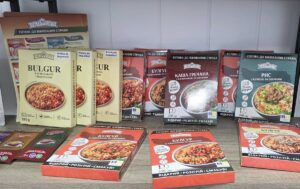
The Dnipro-based Sol Union group of companies has begun construction of the Neo Food System factory in the Kyiv region. The project capacity of the enterprise will allow it to produce 60,000 ready-made meals per day. The factory will produce ready-to-eat chilled, pasteurized, sterilized, and deep-frozen meals. The group’s investment in this project amounts to UAH 220 million.
This was announced by Dmytro Kysilevsky, Deputy Chairman of the Verkhovna Rada Committee on Economic Development. He noted that Sol Union took advantage of several programs of the “Made in Ukraine” policy for the development of Ukrainian manufacturers to implement its current investment projects. In particular, the group took advantage of a state grant of UAH 8 million for processing, purchasing autoclaves manufactured by the Rozfood plant in Kyiv. In addition, the group attracted loans from the “5-7-9” program. It plans to further expand its loan portfolio.
The launch of the plant will create 260 new jobs in the Kyiv region. The production area is 4,000 square meters.
To implement the Neo Food System factory project, the group purchased a ready-made industrial premises that already has the necessary connected electricity, water supply, treatment facilities, and drainage. The installation of the enterprise’s equipment will begin in April 2026. The launch of production is scheduled for June, and the project is expected to reach its design capacity in September 2026. The first exports to EU countries are planned for 2027.
The Sol Union group of companies includes two food production and packaging factories, a vegetable storage facility with a capacity of 5,000 tons, and warehouses with a total area of 17,000 square meters. Until now, all of the group’s enterprises were located in Dnipro.
The “Made in Ukraine” development policy for Ukrainian manufacturers combines state programs aimed at developing production, attracting investment, and stimulating exports.
FACTORY, FOOD, Kysilevsky, PRODUCTION, semi-finished product

In January-September this year, Ukraine reduced exports of semi-finished carbon steel products in physical terms by 44.5% year-on-year to 924,463 thousand tons.
According to the statistics released by the State Customs Service (SCS), exports of carbon steel semi-finished products amounted to $476.690 million in monetary terms over the period (down 54.8%).
The main exports were to Bulgaria (35.56% of supplies in monetary terms), Poland (26.50%) and Italy (9.88%).
In January-September, Ukraine imported 92 tons of semi-finished products from China worth $169 thousand, while no imports were made in September.
As reported, in 2022, Ukraine decreased exports of carbon steel semi-finished products in physical terms by 72% compared to the previous year – to 1 million 899.729 thousand tons, and in monetary terms by 70.9% – to $1 billion 191.279 million. The main exports were made to Bulgaria (26.55% of supplies in monetary terms), Poland (13.97%) and Italy (12.13%).
In addition, Ukraine imported 5,558 thousand tons of similar products in 2022, which is 85.7% less than in 2021. In monetary terms, imports decreased by 86% to $3.634 million. Imports were carried out from the Russian Federation (96.92% of supplies before the war), China (1.84%), and Romania (1.21%).



