

The widespread use of unmanned systems in Russia’s war against Ukraine represents not just a technological evolution, but a profound change in the logic of warfare, for which most European countries are not yet prepared, according to participants in the panel discussion “The Russia–Ukraine Drone War: Innovation on the Front Line and Beyond. What Can We Learn for Our Own Defense?” at the Ukraine Recovery Forum in Bucharest.
Panel VIa was moderated by Greg Melcher, Chief Operating Officer of the New Generation Warfare Centre (USA). The discussion was attended by Andriy Sirko-Galushchenko, an expert in the development of UAVs for military applications; Terry Jamison, International Director of Boeing’s Vertical Takeoff and Landing Aircraft Division; Mustafa Nayem, Director of Public Communications at GTX; former Prime Minister of Romania, retired General Nicolae Ciucă, and Deputy Chief of Staff for Operations and Training, Lieutenant General Julian Berdila.
According to the speakers, what until recently was perceived as a “distant technological horizon” has already become an everyday operational reality. The development of unmanned systems, open architectures, and the rapid integration of new capabilities indicate that the “future of warfare” has arrived much sooner than many Western players expected. Ukraine’s combat experience has shown that accelerated innovation cycles are leading to a structural transformation in the planning of air, ground, and joint operations.
Participants emphasized that the combined use of manned and unmanned platforms, as well as immediate technical interoperability between them, are becoming a basic requirement for the adaptation of modern armed forces. Drones are already being used systematically for reconnaissance, high-precision strikes, logistics, mining and demining, artillery fire correction, and special operations support. Massive coordinated attacks on critical infrastructure have demonstrated the limitations of purely reactive defense and highlighted the need to neutralize threats “at the source.”
At the same time, counter-drone systems are rapidly developing, combining existing surveillance and electronic warfare capabilities with new solutions to counter large numbers of small, low-altitude targets. “This is no longer an episodic tool, but a full-fledged layer of the modern battlefield that requires a separate doctrine, forces, and means,” Berdila noted.
A separate emphasis in the discussion was placed on Europe’s vulnerability to hybrid forms of aggression. According to experts, traditional threat assessments do not correspond to the realities in which the enemy acts mainly with asymmetric, scattered, and difficult-to-attribute methods. Incidents involving the appearance of unknown drones near critical infrastructure in various European countries, they said, expose the gap between public perception, the level of institutional preparedness, and the actual nature of the risks.
Following the discussion, the participants concluded that “drone” warfare is not only a technical issue but also a challenge for institutional capacity and defense planning. Adapting to the new operational environment requires flexible institutions, short innovation cycles, coordinated investments, and a doctrine capable of quickly integrating the lessons learned from Ukraine’s experience. Modern warfare, they emphasized, has become a space where speed of adaptation, integration of systems, and simultaneous readiness for offensive and defensive actions are key elements of strategic resilience.
The forum “Rebuilding Ukraine: Security, Opportunities, Investments” is being held on December 11-12 in Bucharest under the auspices of the Romanian Ministry of Foreign Affairs and the Ukrainian Ministry of Foreign Affairs and organized by the New Strategy Center. According to the organizers, more than 30 panel discussions and parallel sessions are planned over two days with the participation of representatives of governments, international organizations, the private sector, financial institutions, and experts from Europe, North America, and Asia. The topics of the panels cover security and defense, infrastructure, financing and investment, green energy, digitalization, human capital, and cross-border cooperation.
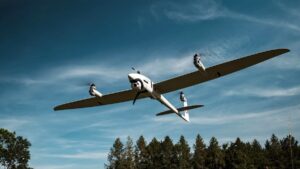
German unmanned aerial vehicle manufacturer Quantum-Systems has opened an unmanned aerial vehicle (UAV) plant in Ukraine, the press service of Quantum-Systems reports.
“The new plant will be the company’s second facility in Ukraine and is expected to employ about 100 people by the end of the year,” the company said in a statement.
According to the information, it will be able to produce up to 1 thousand UAVs per year.
“The new plant is expected to increase production capacity to 1,000 drones per year, including the production of spare parts,” Quantum-Systems said.
It is also indicated that the company will invest up to EUR6 million over the next two years in the production of UAVs in Ukraine.
As reported, Quantum-Systems’ Vector medium-range drones have been in operation in Ukraine since May 2022. So far, 212 systems have been provided with funding from the German government. The company said that 500 UAVs are expected to be delivered to Ukraine by the end of the year.
Quantum-Systems has been operating a service, support, training, and logistics center in Ukraine since last year, employing 25 Ukrainian employees. They train drone pilots and implement technological advances in reconnaissance systems on-site.
Quantum Systems is a dual-purpose company with about 250 employees. The production facility in Ukraine is the fourth of the company’s seven plants located around the world.



