
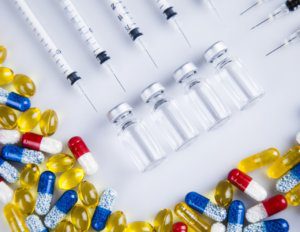
Research and Industrial Center Borschahivka chemical and pharmaceutical plant (Kyiv) has won a tender of the United Nations Development Program (UNDP) to supply anti-tuberculosis medicine Rifampicinum using budget funds. According to the contract signed by the plant and the UNDP, the total amount of medicines worth UAH 6 million is to be handed over to the international organization no later than January 2019.
“The victory of the enterprise in the tender confirms that any pharmaceutical manufacturer that is able to provide high-quality products at an affordable price has a chance to win. We have already delivered the first batch of drugs for tuberculosis treatment in the tender,” the press service reported, citing Director General Yulia Zdarevska.
As reported, Borschahivka chemical and pharmaceutical plant in 2017 won the tender of UNDP for the supply of two anti-tuberculosis drugs Rifampicinum and Aethambutolum for UAH 3.6 million.
ANTI-TUBERCULOSIS MEDICINE, BORSCHAHIVKA CHEMICAL PLANT, TENDER, UNDP
The United Nations Development Program (UNDP) will transfer its long-term contracts for medicine procurement to the national procurement agency after its creation. UNDP Coordinator Zafar Yuldashev told Interfax-Ukraine that at present, the international organization has around 20 agreements signed with medicine manufacturers.
“At the stage of the transfer of medicine procurement from international organizations to the respective national agency, we also plan to transfer long-term contracts, but the necessary condition for this transfer is the legislative possibility of signing and conducting procurement under these contracts by the newly established procurement agency,” he said.
The expert said that long-term contracts make it possible to simplify the procurement procedure and allow the manufacturer to plan production of the required quantities of medicines by the approved deadline.
“As a result, the period between the announcement of procurement and the direct delivery of medicines to patients is reduced to a minimum, and these contracts allow providing reasonable prices and saving budget funds, as the manufacturer can more efficiently plan the purchase of raw materials and loading of production facilities,” he said.
Commenting on the opportunities for lower prices for budget procurement of medicines, Yuldashev said that “competition is the key to price reduction and a global trend, including in developed countries, as well as the increase in the share of generic drugs in procurement, which makes it possible to use the allocated funds more efficiently on procurement of medical products.”
He recalled that “UNDP has strict quality criteria and procures only those drugs, the quality of which is undoubted and that meets international criteria.”
“These drugs can be both originate and generic. Thanks to the lower price, generic drugs often allow more treatment to be available for more patients,” he said.
As reported, the UNDP signed long-term contracts with four international manufacturers – Teva Pharmaceuticals (Israel), Pfizer (Netherlands), Novo Nordisk (Denmark) and Sanofi Genzyme (France) – for the supply of 11 drugs, including medicines for rare diseases such as multiple sclerosis, Gaucher’s disease, mucopolysaccharides, cystic fibrosis, other orphan diseases, hemophilia, as well as medicines to stop bleeding.



