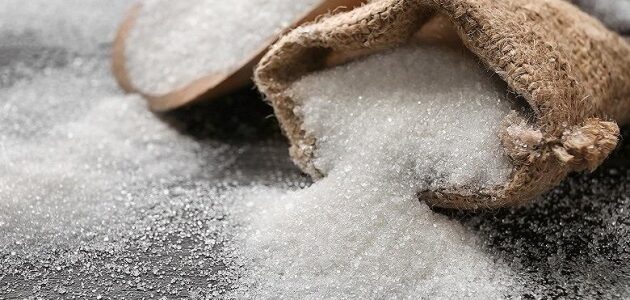
Ukrainian sugar in 2025 turned out to be a very bitter topic and a sore point in negotiations on trade in agricultural products with the European Union. The industry’s plans for 2026 are to increase the share of Ukrainian sugar on the European market, said Yana Kavushevska, head of the National Association of Sugar Producers of Ukraine “Ukrtsukor,” Yana Kavushevska at the conference “Agribusiness in Ukraine” in Kyiv on Thursday.
She noted that during the preparation of the updated trade agreement, the Ukrainian side was not prepared to deal with the powerful sugar lobby and its stakeholders in the EU, along with their strong support at the political level.
Another surprise was the European community’s bias against Ukrainian agricultural products. Among the most absurd myths, Kavushevska named the inexhaustible potential of the Ukrainian agricultural sector, the dominance of agricultural oligarchs, etc. Both Ukrainian agricultural associations and government officials had to refute these myths.
“One of the areas of our communication was to explain to Europeans that the Ukrainian sugar industry is a continuation of the European one. We use all the inputs that we purchase in the European Union in our work. (…) For every hectare of sugar beet, we purchase approximately $1,000 worth of goods in the EU. Accordingly, this year we have 200,000 hectares of sugar beet in Ukraine, for which we have purchased $200 million worth of products from the EU,” said the head of Ukrtsukor, adding that such arguments either surprise or are ignored by her European colleagues.
Speaking about the quotas that Ukraine received for sugar supplies to the EU under the updated trade agreement, Kavushevska noted that they had increased fivefold compared to the previous ones.
“Indeed, the results we have achieved with the quota received in the European Union for sugar show a fivefold increase — from 20,000 tons to 100,000 tons. Is this a lot or a little? Probably no one could be satisfied. But I am sure that if there had been no effective agricultural and social communication, this quota could have been smaller,” said the head of Ukrtsukor.
She stressed that the EU likes predictability, balance, and foreseeability. This is how she explained the need for Ukraine to introduce internal licensing for sugar exports to the European Union. In her opinion, this mechanism will allow Ukrainian sugar producers to eventually become not just technical suppliers of products to the EU, but gradually transform into full-fledged members of the European market.
“Yes, it costs producers who want to export additional expenses for obtaining documents, complications, and delays in possible deliveries. But this (internal quotas – IF-U) is what demonstrates to Europeans that we know how to work and regulate the market,” the expert explained.
Kavushevska named another complication of the updated trade agreement for sugar producers as the European Union’s application of the concept of a “critical quota” to Ukrainian sugar. It provides for the importer to deposit financial guarantees into special accounts, which will be returned to them 3-30 days after customs clearance of goods received from Ukraine. According to the expert, this mechanism is one of the ways to prevent the uncontrolled spread of Ukrainian sugar in the EU. At the same time, it is an unpleasant moment for European buyers, who have to freeze their own working capital for a certain period.
Speaking about the sugar producers’ plans for 2026, the head of the association said that the industry will continue to establish contacts with the European sugar industry and hopes that licensing will continue as an export mechanism. In addition, benchmarks will be developed for key production indicators so that the industry can prepare for integration into the European market.
“For Ukrainian sugar producers, the European market is virtually the only option. We cannot compete for Africa because Brazil will always dominate there logistically. Our task is to gain a foothold in Europe, increase Ukraine’s share as much as possible, and eventually ensure the European Union’s self-sufficiency in sugar,” Kavushevska concluded.