
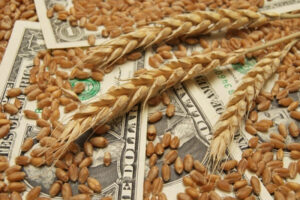
Astarta, Ukraine’s largest sugar producer, saw revenue from sales of its key products decline by 28.6% in July–September 2026 compared to the same period in 2025: growth in sales of sugar, soybean oil and meal, and corn was not enough to offset the decline in sales of wheat, rapeseed, and milk.
According to data released by the holding company on the Warsaw Stock Exchange on Thursday evening, the company sold a total of 3.78 billion UAH worth of its main products in the third quarter of 2026, compared to 5.29 billion UAH in the third quarter of 2025.
Specifically, sugar sales in July–September increased by 13.8% in volume terms compared to the same period a year ago—reaching 71.51 thousand metric tons—while the average selling price remained virtually unchanged at 22.23 thousand UAH (per metric ton, here and below).
At the same time, Astarta’s wheat sales volume in the third quarter fell 21-fold—to 9,420 metric tons—and the average price dropped by 16.9%, to 8,211 UAH.
Corn sales, on the other hand, increased 13.9-fold, but to significantly lower volumes—9.67 thousand metric tons—while the price remained at 9.36 thousand UAH.
In addition, Astarta reduced its sales of sunflower seeds in July–September by 30.7%—to 1.72 thousand metric tons—although the selling price rose by 17.8%—to 27.40 thousand UAH.
Sales of rapeseed fell by 34.4% to 7.18 thousand metric tons, but the price rose by 27.4% to 29.03 thousand UAH.
Sales of soybean oil in the third quarter rose by 11.8% to 12,570 metric tons, with the price increasing by 17.1% to 54,910 UAH, while sales of soybean meal fell by 20.2% to 27,700 metric tons, with the price rising by 32.5% to 20,380 UAH.
The agricultural holding’s milk sales in July–September 2026 rose by 3.7% to 30,720 metric tons, but the price of this product fell by 12% to 16,750 UAH.
Overall, in the first nine months of 2026, Astarta increased sales of its core products by 2.3%—to 14.7337 billion UAH—thanks to higher sales of sugar, corn, sunflower seeds, soybean oil, and meal, which offset the decline in sales of wheat and milk.
In particular, sugar sales increased by 17.2%—to 248,82 thousand metric tons—while the average selling price fell by 11.3%—to 20.51 thousand UAH.
Astarta’s stock price fell by 3.57% on Friday from the opening bell to PLN 29.7 per share.
Astarta is a vertically integrated agro-industrial holding company operating in eight regions of Ukraine. It comprises six sugar refineries, agricultural enterprises with a land bank of 220,000 hectares, dairy farms with 22,000 head of cattle, an oil extraction plant in Hlobine (Poltava Oblast), seven grain elevators, and a biogas complex.
In the first half of 2026, the Astarta agricultural holding reported a net loss of EUR14.07 million, compared to a net profit of EUR42.27 million for the same period last year. Consolidated revenue for the first half of this year decreased by only 0.1% to EUR226.47 million, with export sales accounting for 62% compared to 61% in the first half of last year.

In September 2026, 1,457 new trucks and specialty vehicles were added to Ukraine’s fleet, which is 31% more than in September of last year, according to a report by “Ukravtoprom” on its Telegram channel.
Compared to August of this year, demand for these vehicles increased by 39%.
“This is a record monthly result for this market segment since January 2022,” the association noted.
Renault remains the market leader with 422 units, a 69% increase from a month ago.
Fiat took second place, increasing sales by 76% compared to August 2026—to 118 units—while Mercedes-Benz came in third, with 114 registrations compared to 121 in August.
Next were Hyundai with 93 units and Volkswagen with 90 units (neither was among the top five in August).
As previously reported, in September of last year, the top five were Renault, Ford, Citroën, MAN, and Scania, with sales rising by 6% compared to September 2024—to 1,068 units.
According to data from “Ukravtoprom,” over the first nine months of 2026, the growth rate of sales of trucks and specialty vehicles accelerated to 17% compared to the same period last year, reaching 10,083 thousand new vehicles (for January–August, the sales growth rate was 14%).
As reported, citing data from “Ukravtoprom,” registrations of new trucks and specialty vehicles in 2025 fell by 5% compared to 2024—to nearly 12,300 vehicles.
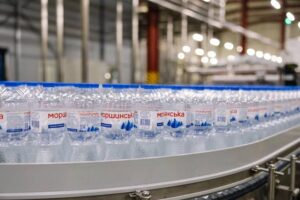
According to the results of the first half of 2026, the IDS Ukraine group of companies increased its share of the Ukrainian bottled water market by 0.9 percentage points in volume terms—to 40.7%, said the group’s CEO, Marko Tkachuk, in an interview with the Interfax-Ukraine news agency.
In monetary terms, the company’s share grew by 1.3 percentage points to 39.9%. In the still water segment, IDS Ukraine holds about 60% of the market in monetary terms and approximately half in volume terms. The market share of its flagship brand, “Morshynska,” stands at 30.3% in liters.
In the first half of the year, IDS Ukraine generated nearly 3.95 billion UAH in revenue. Net profit totaled approximately 188 million UAH, and EBITDA was 440.5 million UAH. The company paid 534.9 million UAH in taxes and fees, an increase of 8.6% compared to the previous year. These figures were also published by IDS Ukraine on August 28, 2026.
However, actual sales in the first half of the year were 7% lower than the initial plan. Compared to the same period in 2025, bottled water sales rose by 2%, and net revenue increased by 11%. By August, the company had already exceeded its monthly sales target by 15%.
IDS Ukraine is one of the largest bottled water producers in Ukraine. The group’s portfolio includes the brands “Morshynska,” “Myrhorodska,” “Alaska,” and others. The group’s history in its current form dates back to the merger of a number of producers and distribution companies in 2004.
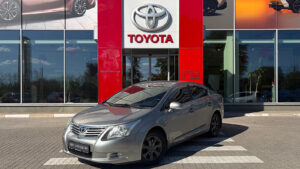
Sales of new passenger cars in August of this year fell by 27% compared to the same month in 2025—to nearly 5,000 units, which is also 14% less than the figure for July of this year, Ukravtoprom reported on its Telegram channel.
According to the association, the most popular brand remains Japan’s Toyota, which increased sales by 9% compared to August of last year—to 1,092 units.
Skoda holds second place with 600 units (+47%), while Renault took third with 361 units (-32%).
The top ten also included BYD—229 units (-69%), which ranked second last year amid rising demand for electric vehicles; Hyundai—261 units (-34%); Volkswagen—260 units (-51%); Mazda—187 units (+7%); BMW—186 units (-45%); Suzuki—156 units (-32%); and Mitsubishi—122 units (-2%).
The best-selling vehicle of the month was the Toyota RAV-4 crossover (in August 2025, it was the Renault Duster).
According to “Ukravtoprom,” a total of over 43,700 new passenger cars were sold in the country from January through August, which is 5% less than last year.
As previously reported, according to “Ukravtoprom,” the new passenger car market grew by 17% in 2025 compared to 2024, reaching 81,300 units.
auto market, CAR, SALES, TOYOTA, UKRAINE

Pharmacy sales of drugs in Ukraine from January through June 2026 increased by 19.52% in monetary terms compared to the same period last year, reaching nearly 97.918 billion UAH.
According to a report by Business Credit to the Interfax-Ukraine news agency, citing research findings, sales of medicines in volume terms also rose—by 4.9%, to nearly 418.711 million packages.
The weighted average retail price of pharmaceuticals for the first half of the year was 233.85 UAH per package, which is 13.96% higher than the figure for January–June 2025.
Thus, the pharmaceutical segment demonstrated growth not only due to higher prices but also thanks to an increase in the number of packages sold. This distinguishes it from the pharmacy market as a whole, where sales in physical terms declined by 5.8% over the six-month period.
In the first quarter of 2026, pharmaceutical sales rose by 13.9% in monetary terms—to over 48.426 billion UAH—and by 4.85% in volume terms—to nearly 211.947 million packages.
In 2025, Ukrainian pharmacies sold medicines worth 170.318 billion UAH, which is 12.79% more than the previous year. The volume of sales then decreased by 0.2% to 808.546 million packages.

Pharmacy sales in Ukraine from January to June 2026 increased by 15% in monetary terms compared to the same period in 2025—reaching nearly 121 billion hryvnia—while in volume terms, they decreased by 5.8%—to approximately 533.955 million packages.
The company “Business Credit” reported this to the Interfax-Ukraine news agency, citing the results of a study it conducted.
The weighted average price of items in the pharmacy basket for the first half of the year was 226.65 UAH per package, which is 22.15% higher than in January–June 2025.
Thus, the growth of the pharmacy market in monetary terms occurred against the backdrop of a decline in the total number of packages sold and a significant increase in the average cost of pharmacy products.
At the same time, the market’s growth rate in monetary terms accelerated compared to the first quarter. In January–March, pharmacy sales increased by 11.13%—to 60.245 billion UAH—while the volume of sales decreased by 4.8%, to approximately 270.958 million packages.
At the end of 2025, pharmacy sales in Ukraine totaled over 220.287 billion UAH, which is 14.23% more than in 2024. In volume terms, they declined by 2.25% during that period.



