
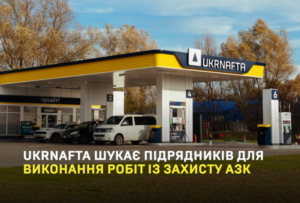
UKRNAFTA is conducting an open market survey and invites qualified contractors to submit commercial proposals for performing security work at the company’s gas stations.
This involves 72 facilities in the Kyiv, Odesa, Mykolaiv, Zaporizhzhia, Kirovohrad, Chernihiv, Poltava, Zhytomyr, and Kharkiv regions.
The tender is being conducted on the SmartTender platform.
Proposals will be accepted until 3:00 PM on October 19, 2026.
Technical documentation and detailed terms of participation are published on the SmartTender platform.
For more details, see this link.
We look forward to receiving your proposals!
JSC “Ukrnafta” is Ukraine’s largest oil-producing company and operates the country’s largest national network of gas stations—UKRNAFTA. In 2024, the company entered into an asset management agreement with Glusco. In 2025, it finalized a deal with Shell Overseas Investments BV to acquire the Shell network in Ukraine. In total, it operates approximately 650 gas stations.
The company is implementing a comprehensive program to resume operations and modernize the format of the gas stations in its network. Since February 2023, it has been issuing its own fuel vouchers and “NAFTACard” cards, which are sold to legal entities and individuals through Ukrnafta-Postach LLC.
The largest shareholder of Ukrnafta is NJSC Naftogaz of Ukraine, with a stake of 50% plus one share.
In November 2022, the Supreme Commander-in-Chief of the Armed Forces of Ukraine decided to transfer to the state the portion of the company’s corporate rights previously held by private owners; the company is now managed by the Ministry of Defense.
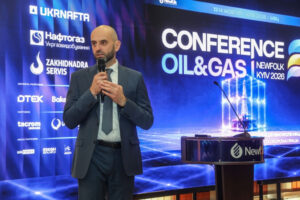
In 2026, Russia significantly intensified its attacks on Ukrnafta’s facilities. Production infrastructure and the network of gas stations are under attack.
The company is responding to this in a systematic manner and, despite everything, continues to grow. Bogdan Kukura, Chairman of the Board of JSC “Ukrnafta,” spoke about this on the sidelines of the Newfolk Conference.
“This year, we are allocating approximately 2.9 billion UAH to defense and security: we are relocating some facilities underground, constructing protective structures, building up equipment reserves, and strengthening our autonomy and alternative power supply schemes,” noted Bohdan Kukura. “We are continuing drilling operations. In 2026, we plan to drill and commission 15 new wells. Another area of focus is our cooperation with Ukrgazvydobuvannya: this year, we have jointly completed three new wells.”
At the same time, we are scaling up technologies that improve the reliability of our well fleet. Over the past eight months, 63 electric centrifugal pump units have been installed in wells, bringing the active fleet to 226 units. The interval between well maintenance for wells equipped with modern electric centrifugal pumps has increased from 214 days in 2024 to 410 days in 2026, and for new systems, it reaches 786 days.
The company is developing remote monitoring and control of wells. As of September, 420 wells were connected to such systems. This allows for real-time monitoring of operating parameters, faster response times, and prompt adjustments to operating modes.
The main objective is to maintain operational control, modernize production, and continue the company’s development.JSC “Ukrnafta” is Ukraine’s largest oil producer and operates the country’s largest national network of gas stations—UKRNAFTA. In 2024, the company entered into an asset management agreement with Glusco. In 2025, it finalized a deal with Shell Overseas Investments BV to acquire the Shell network in Ukraine. In total, it operates approximately 650 gas stations.
The company is implementing a comprehensive program to restore operations and modernize the format of the gas stations in its network. Since February 2023, it has been issuing its own fuel vouchers and “NAFTACard” cards, which are sold to legal entities and individuals through Ukrnafta-Postach LLC.
The largest shareholder of “Ukrnafta” is NJSC “Naftogaz of Ukraine,” with a stake of 50% plus one share.In November 2022, the Supreme Commander-in-Chief of the Armed Forces of Ukraine decided to transfer to the state the portion of the company’s corporate rights that belonged to private owners; this portion is now managed by the Ministry of Defense.
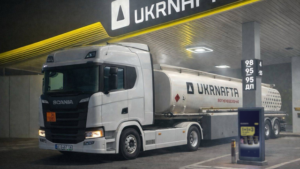
In September 2026, Ukrnafta became the largest importer of diesel fuel to Ukraine for the first time, supplying 105.3 thousand metric tons of the fuel, according to data from the A-95 Consulting Group and its analysis by the Experts Club.
The company’s import volume was 3.3 times higher than in September of last year.
OKKO took second place among the largest importers with 57,500 metric tons, while UPG came in third with 47,000 metric tons.
The top five also included AT Energo Trade with 44,000 metric tons and WOG with 42,500 metric tons.
Next came ZPEK with 29,400 metric tons, “Paid” with 28,900 metric tons, D.Trading with 26,500 metric tons, “Martin Trade” with 18,100 metric tons, and “Gaztrim” with 12,000 metric tons.
Among the largest players, the ZPEK Group showed the most significant growth compared to last year. Over the first nine months of 2026, its imports rose by 228% and approached 250,000 metric tons.
Total diesel fuel imports into Ukraine in September amounted to 537,000 metric tons, which is 21% less than a year earlier.
According to Serhiy Kuyun, director of the A-95 Consulting Group, changes among the largest importers are occurring against the backdrop of logistics transformation, high volatility in global prices, and the need for companies to establish more stable supply channels.
“The fuel market continues to face unprecedented challenges caused by Russian attacks. Importers are actively developing new logistics channels and expanding their vehicle fleets,” notes “A-95”.
The A-95 consulting group has been researching the Ukrainian motor fuel market for over two decades and monitors prices, supplies, and market infrastructure.
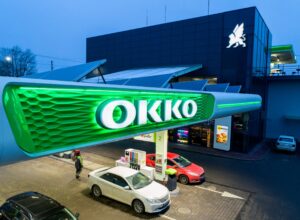
OKKO maintained its leadership among the largest importers of automotive gasoline into Ukraine, importing 51,000 metric tons of fuel in September 2026, according to data from a special study by the A-95 Consulting Group and calculations by the Experts Club analytical center.
Thus, OKKO accounted for about 35% of total gasoline imports in September, which amounted to 145,000 metric tons.
From January through September, the company imported 375,000 metric tons of gasoline—about 30% of the total volume of shipments to Ukraine since the beginning of the year, which reached 1.26 million metric tons.
Ukrnafta took second place among importers in September with a volume of 19,500 metric tons. WOG recorded virtually the same figure—19,000 metric tons.
UPG imported 15,900 metric tons of gasoline. Thus, the four largest companies—OKKO, Ukrnafta, WOG, and UPG—accounted for a total of 105,400 metric tons, or nearly 73% of all gasoline imports into the country for the month.
Next came BRSM-Nafta with 5,300 metric tons, Avantage with 3,400 metric tons, BVS and SOCAR with 2,600 metric tons each, KLO with 2,300 metric tons, and VST with 1,900 metric tons. Other companies collectively imported 21,300 metric tons.
In September, gasoline imports into Ukraine fell by 5% compared to August—to 145,000 metric tons. The A-95 Consulting Group attributes the decline in supplies to a seasonal drop in consumption and this year’s record-high retail gasoline prices, which encouraged drivers to conserve fuel.
At the same time, compared to September 2025, imports rose by 3%, and over the first nine months of this year—by 15%, to 1.26 million metric tons.
Source: “A-95” Consulting Group.
On September 24, PJSC “Ukrnafta” (Kyiv) announced its intention to enter into a liability insurance agreement with Guardian Insurance Company covering holders of special permits for the use of oil and gas-bearing subsoil during the development of such resources in cases provided for by the Law “On Oil and Gas.”
According to the Prozorro electronic public procurement system, the company’s bid amounted to 527,000 UAH, compared to the expected cost of purchasing the services of 952,000 UAH.
Insurance Company “Ultra Alliance” also participated in the tender with a bid of 850,000 UAH.
As previously reported, Guardian Insurance Company was the winner of a similar tender a year ago.
On September 24, PJSC “Ukrnafta” (Kyiv) announced its intention to enter into an insurance contract with Guardian Insurance Company to cover the liability of holders of special permits for the use of oil and gas-bearing subsoil resources during the development of such resources, in cases provided for by the Law “On Oil and Gas.”
According to the Prozorro electronic public procurement system, the company’s bid amounted to 527,000 UAH, compared to the expected cost of 952,000 UAH for the services.
Insurance Company “Ultra Alliance” also participated in the tender with a bid of 850,000 UAH.
As previously reported, Guardian Insurance Company was the winner of a similar tender a year ago.



