The International Liberty Institute (ILI) has presented its updated 2026 Common Sense Economy Index, a ranking that assesses the quality of governments’ economic policies and the adequacy of their decisions in terms of basic development axioms. According to this year’s results, Ukraine scored 24 points, dropping from 89th to 95th place and remaining in the fourth group of countries.
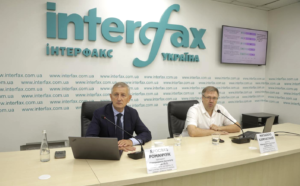
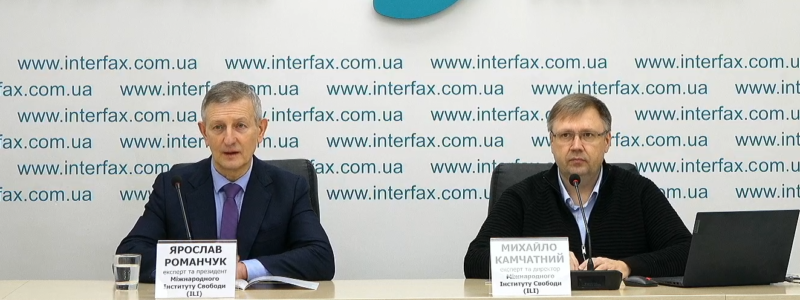
“The Common Sense Economy Index is a unique development for Ukraine, which makes it possible to assess the ”economic IQ” of public administration. In this case, by government, we mean not only the Cabinet of Ministers, but the entire decision-making process, which includes central and local authorities, legislators, the executive branch, politicians, deputies, and policymakers, i.e., everyone who actually influences the country’s economic policy,” said Mykhailo Kamchatnyi, director of the International Institute for Liberty, at a press conference at Interfax-Ukraine on Wednesday.

In total, 144 countries were included in the 2026 Index, which were structured into five groups based on their final scores. Ukraine received 581 points, a 24-point decline from the previous year. In the final ranking, it found itself between Rwanda and Gambia. At the presentation itself, this was described as a “diagnosis” of economic policy: the country is in the fourth group – the group of “rare manifestations of intelligence,” that is, in an area where individual decisions may be rational, but the systemic quality of policy remains weak.
“For Ukraine, this index is primarily a diagnosis, because we are in 95th place out of 144 countries, in the group with rare manifestations of wisdom in economic policy, and this is a signal that the economy must be taken much more seriously, even during wartime. If we want to be competitive with Central and Western European countries, attract capital, investment, and jobs, we must not reinforce misguided tax and regulatory decisions, but rather make institutions more attractive and consistently change economic policy,” emphasized Yaroslav Romanchuk, president of the International Liberty Institute.
In their presentation, ILI representatives emphasized that the Common Sense Economy Index is an aggregate indicator based on 15 axioms (e.g., it is better to be free than unfree; rich than poor; healthy than sick) and six international indices covering key parameters of a country’s development. These include human freedom, economic freedom, protection of property rights, rule of law, prosperity, and innovation. The presentation also separately mentioned the business climate, competition, quality of public administration, social protection, environment, and infrastructure as components of the assessment logic.
The speakers also explained the technical principle whereby a lower score means a better result, and the model’s range is from a conditional ideal of 6 points to 902 points (the worst positions in all indicators). After that, all countries are divided into five groups, from “smart decision-making governments” to the group with the worst results.
Switzerland became the new leader in the ranking, which the ILI calls an example of a government focused on science, facts, and a qualitative assessment of the country’s potential. Ireland, which rose five positions at once, is also among the top three leaders. Finland, New Zealand, the Netherlands, and Sweden have fallen in the top 10, while Luxembourg and Australia have improved their results. According to the ILI, the US and Germany have maintained their positions.

During the presentation, the speakers also highlighted Switzerland, Denmark, and Ireland as examples of countries where high positions in the index correlate with quality of life, institutional stability, and long-term economic growth.
In his speech, Yaroslav Romanchuk stressed that Ukraine needs not only to focus on security and defense capabilities, but also on a “common sense economy” framework that would not conflict with the goal of development even during wartime. He directly linked this to competition for capital, participation in value chains, and the creation of conditions under which Ukrainians would be motivated to work and develop business in Ukraine.
Among the problem areas mentioned in the presentation were Ukraine’s low rankings in certain international indicators, particularly the Human Freedom Index and the Economic Freedom Index, while its position in terms of property rights protection was assessed as relatively better (within the top 100). At the same time, the speakers drew attention to the weak parameters of public administration and regulatory policy.
The speakers also cited Estonia and the Czech Republic, post-socialist countries that are among the top performers, as important benchmarks for Ukraine. Their experience was presented as an example of a long, consistent course toward liberalization, competitive institutions, and integration into European production chains.
The presentation also focused on inflation, debt burden, public sector size, regulatory pressure, and quality of public administration as factors that directly affect investment and long-term growth. For Ukraine, these issues were presented as part of a broader problem—a lack of systemic economic rationality in policy-making.
“The 2026 Common Sense Economy Index is, in essence, a universal tool for assessing socio-economic development, economic growth, and the quality of institutions that any government can use. We see it both as a tool for economic education and as a practical guide for policymakers to see how specific institutional and regulatory factors affect the country’s development and social indicators,” Yaroslav Romanchuk concluded.