
Ukrainians demonstrate strong demand for freedom of speech, personal autonomy and protection of private property, while at the same time, on issues of economic and social policy, a significant part of society expects an active role from the state, according to the results of the nationwide sociological study “Values of Freedom in Ukraine,” presented by the International Liberty Institute (ILI).
According to the study, 85% of respondents supported citizens’ right to criticize the authorities without fear of persecution, while 67% supported guaranteeing freedom of expression even for views that may be considered unacceptable or offensive. Almost half of respondents – 49% – opposed internet censorship even under wartime conditions, while 57% opposed punishment by the state for statements or opinions if they do not pose a direct physical threat.
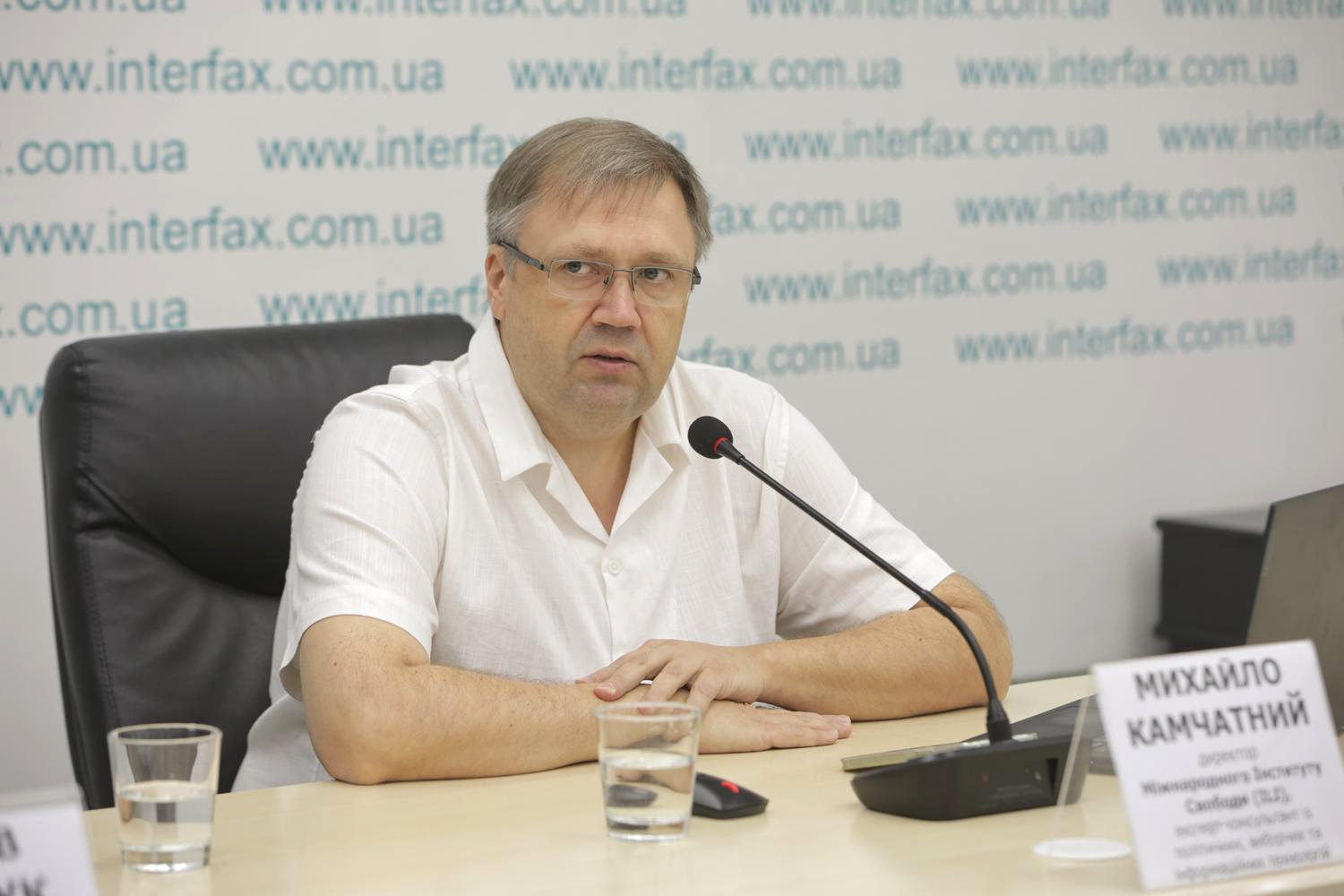
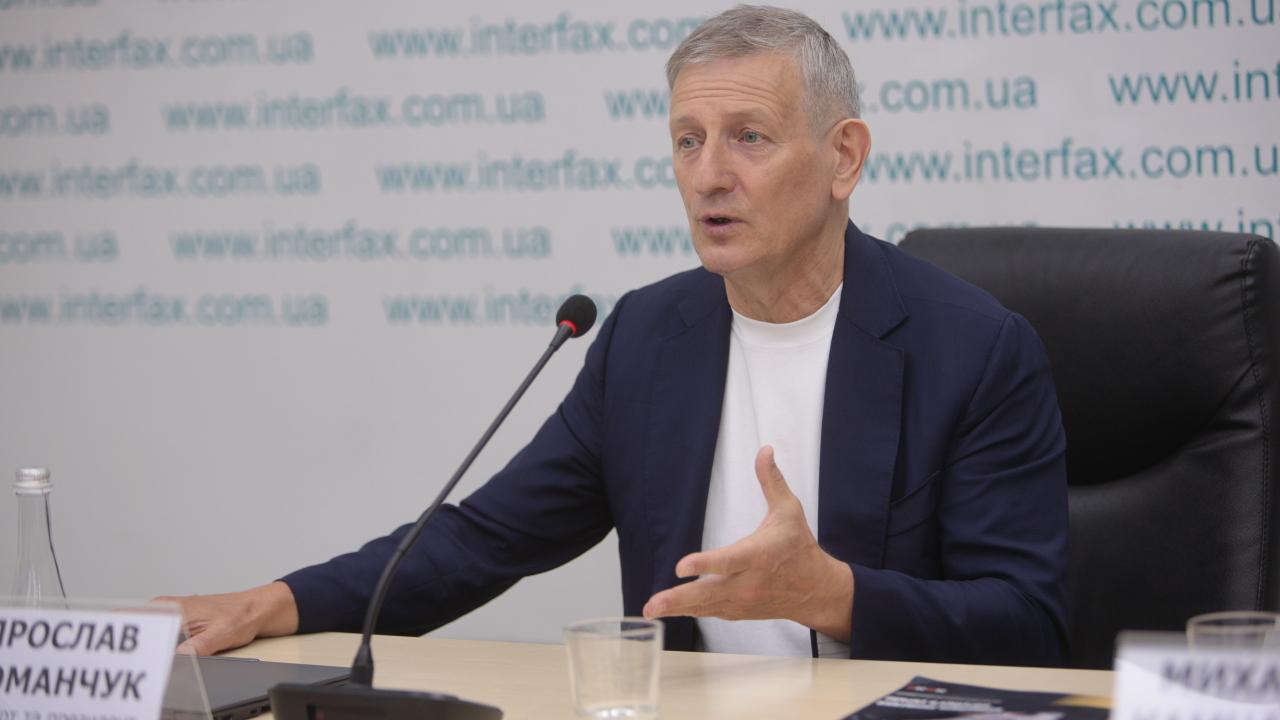
“Almost 85% of Ukrainians, if we combine the responses ‘completely agree’ and ‘rather agree,’ support the right to publicly criticize the authorities without fear of persecution. At the same time, around two-thirds believe that freedom of speech should be guaranteed even for views that are perceived as wrong or offensive. For us, this is one of the clearest indicators of society’s demand for personal freedom,” Director of the International Institute for Liberty Mykhailo Kamchatnyi said at a press conference at the Interfax-Ukraine agency on Wednesday.
Another 68% of respondents opposed a situation in which the majority can impose its values on a minority. ILI believes that the combination of these indicators demonstrates a clear demand for limiting state interference in the sphere of personal beliefs and expression.
At the same time, respondents’ ideological self-identification proved to be significantly less liberal. A total of 52% primarily defined themselves as free individuals with their own values who are personally responsible for their lives, while 31% primarily identified themselves as citizens of Ukraine. Only 13% described themselves as supporters of liberal or libertarian views, while 46.5% gravitate toward ideologies that envisage a more active role for the state. Almost half – 48% – reported that their political and ideological beliefs had changed or been formed under the influence of the war and its consequences.
A separate section of the study concerned language policy. According to the data presented, 65% of respondents named Ukrainian as their native language, 23.6% identified themselves as bilingual, and 11% named Russian as their native language. At the same time, 76% supported the mandatory use of the Ukrainian language in the public state sphere, while about two-thirds agreed that people should have the right to communicate in their native language in public life without state restrictions.
The human right to self-defense also received considerable support. About half of respondents supported the right to legally carry weapons for self-defense, while around 80% supported the right to use them to protect life and private property in the event of an unlawful intrusion into a home.
More than 80% of respondents agreed that even during martial law the authorities should not go beyond the limits established by the Constitution. A total of 53% supported a substantial revision of the current Constitution or the adoption of a new one. Some 77% of respondents agreed that closing media outlets or blocking internet resources may be justified only if cooperation with the enemy or coordination of military strikes has been proven.
One of the most sensitive issues was the principle of staffing the Armed Forces. A total of 46% of respondents supported an exclusively professional or voluntary army, while almost half favored a mixed model combining a professional contract-based core with mandatory training for young people in peacetime. The traditional mobilization model was supported by 3% of respondents, while more than 80% approved attracting professional military personnel through high salaries and benefits.
“We see that the traditional mobilization model does not enjoy citizens’ support – only around 3% of respondents chose it. Instead, society is much more oriented either toward a professional volunteer army or toward a mixed model with a professional core and training of citizens in peacetime. More than 80% also support attracting military personnel through competitive salaries and a system of benefits,” Kamchatnyi said.
In the economic part of the study, society proved to be significantly more polarized. A total of 44% of respondents supported an expanded role for the state in the economy and in providing social services, including 29% who took the strongest position in favor of active state regulation. At the same time, 44% of respondents said that they rely primarily on their own efforts to ensure their well-being, while 43.5% expect the state not to interfere with their personal risks.
ILI President Yaroslav Romanchuk, in turn, drew attention to the fact that Ukrainians’ attitudes toward private property and entrepreneurship are more market-oriented than their formal ideological self-identification. In particular, 69% of respondents demonstrated an understanding of the concept of private property, while almost 70% agreed with the statement that excessive bureaucracy and regulation hinder business development.
“Ukrainians as a whole do not reject private property – on the contrary, in many responses we see an understanding that a private owner manages an enterprise more efficiently than a manager appointed by the state. This is fundamentally important for future economic policy: the country’s strategic development should not automatically mean the dominance of state ownership. Private initiative, competition and protected owners’ rights are needed,” Romanchuk stressed.
He also linked problems in the business environment to excessive discretionary powers granted to officials.
“When an official, law enforcement officer or inspector is given the opportunity to interpret a vaguely written rule at their own discretion, a source of discretion arises, and with it a corruption risk. Almost 70% of respondents directly say that excessive bureaucracy and regulation are a brake on business development. Therefore, laws must be as clear as possible and leave as little room as possible for arbitrary interpretation,” the ILI president added.
According to Romanchuk, the results regarding knowledge of economic concepts also indicate the need to update economic education. A total of 46% of respondents had heard or read about Marxism, 12% about monetarism, and 4% about the Austrian School of Economics. A free-market economic model without state intervention was chosen as the most desirable for Ukraine by 18%, a model of active state regulation by 10%, and socialism by 6.5%.
Romanchuk separately advocated preserving and developing the institution of FOP individual entrepreneurship as a form not only of taxation, but also of self-employment and entrepreneurial culture. He noted that microbusiness should be regarded as an important component of citizens’ economic and social independence.
In the social sphere, the ILI president called for a transition toward more targeted assistance that would take into account not only a person’s current income, but also savings, assets, health status and other criteria of need. In his opinion, after the war, the issue of combining the state’s substantial social obligations with the need to preserve conditions for business development will become one of the key issues for fiscal policy.

“Ukraine will have to find a balance between the needs of people who will require social support and rehabilitation and the economy’s ability to finance this. If social obligations are formed without taking into account the tax burden that business is capable of bearing, we will get neither investment nor modernization. Therefore, assistance must be as targeted and transparent as possible and tied to the real needs of a specific person,” Romanchuk stressed.
He also advocated developing alternatives to an exclusively state pension system and making broader use of funded mechanisms, while in education and healthcare he called for competition between public and private service providers. According to Romanchuk, a market model in these sectors does not imply the state’s complete withdrawal from financing, but primarily a change in the mechanisms for distributing funds and greater accountability of providers for results.
During the discussion following the presentation, Romanchuk separately drew attention to the connection between freedom, responsibility and the quality of legal institutions.
“Freedom does not exist without responsibility. If the right to private property formally exists, but no one bears responsibility for violating it, then in practice that property is not protected. The same applies in other areas: a right works only when there is a clear mechanism of responsibility for its violation,” he summarized.
The study covered issues of personal freedom, the state and politics, the economy, the social sphere, private property and entrepreneurship, taxes, elections, military service, education, healthcare, pension provision, individual responsibility and social solidarity.
New Image and Marketing Group conducted the sociological survey in July 2026 at the request of the International Liberty Institute. A total of 1,600 respondents who were living in Ukrainian government-controlled territory at the time of the study took part in the online survey.
FREEDOM OF SPEECH, ILI, PERSONAL RESPONSIBILITY, PRIVATE PROPERTY, SOCIOLOGY, UKRAINE
The International Liberty Institute (ILI) presented a concept for destroying corruption in Ukraine, which is based on an analysis of state failures in the economy, the functioning of the entrepreneurial growth model, as well as conclusions from studies of economic freedom, the institution of private property and the principles of a small state.
“We want to present a slightly different view of how to destroy corruption in Ukraine. To put it in two words, we propose an approach to destroy the causes of corruption, rather than constantly fighting their consequences,” ILI Director Mykhailo Kamchatnyi said at a press conference at the Interfax-Ukraine agency on Wednesday.
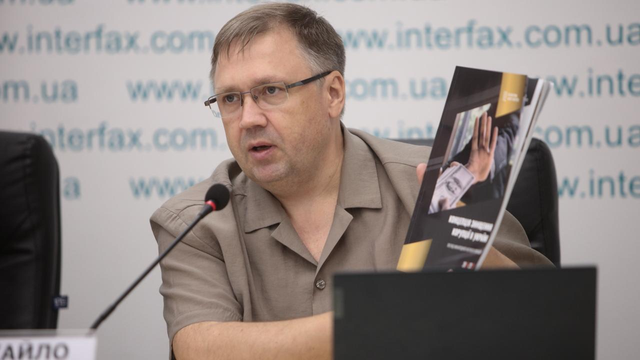
According to him, the presented concept should become a reference point for government bodies, the anti-corruption infrastructure and civil society, since the current model is mainly focused on responding to individual corruption episodes, but does not dismantle the conditions under which they arise.
For his part, ILI President Yaroslav Romanchuk emphasized that corruption is primarily a problem of economic policy, institutions and the theory of public administration.
“Our approach differs from the traditional one in that we built it on the foundation of the theory of state failures. Without such an approach, any architecture for fighting corruption turns into a permanent chronic process. Corruption restrains Ukraine’s European integration, investment, protection of property rights, defense capability and the country’s competitiveness. According to Romanchuk, if Ukraine sets itself the goal of economic growth at the level of 6-7% per year for 15-20 years, then without the systemic elimination of corruption sources it will be impossible to achieve this,” Romanchuk noted.
The expert emphasized that accession to the European Union in itself does not guarantee the automatic disappearance of corruption. In his opinion, Ukraine must take into account that corruption risks also exist in EU countries, in particular in the areas of public procurement, public investment, regulation, the judicial system and the interaction of business with government bodies.
“There is a point of view that when we become part of the European Union, corruption will automatically disappear. This is not so. It will not disappear, it can only be rebooted if Ukraine does not do its own homework. Among the key factors of corruption are the excessive size of the state, the high share of public expenditures in GDP, the discretionary powers of officials, a complex regulatory environment, tax and customs benefits, unequal conditions for business, state ownership of assets and the centralization of resources,” Romanchuk added.
The expert emphasized that in Ukraine the state, through military and non-military expenditures, regulatory burden and transaction costs, in fact takes an excessively large part of the economy’s resources, which, in turn, stimulates business and citizens to seek informal ways of survival.
“The sources of corruption are objectively built into the model of a state of general interventionism. This is when the state regulates, controls and disposes of many things and resources. It is precisely on this discretion that the sources of corruption arise. Even if we put 30% of deputies and 70% of ministers in prison, corruption will not disappear, because its sources will remain. What matters is not which person heads this or that body, but what system of resource functioning exists in the state,” Romanchuk stressed.
ILI analysts propose placing a deep political, institutional, administrative and legal reform at the basis of the anti-corruption strategy. This concerns, in particular, a radical reduction of the state’s functions, limiting its commercial role, strengthening the protection of property rights, demonopolization, decriminalization of the economy and the creation of universal and neutral rules for all market participants.
“A new state from our point of view means the rule of law, personal and political rights and freedoms, reforming the system of public administration and regulation, as well as decriminalizing the economy on the foundation of a radical reduction of the state in the economy. We do not need only formal checkmarks. We need to move, not polish the dashboard. When we merely copy laws and the regulatory framework from the European Union or OECD countries, this does not mean that they will automatically work in Ukrainian conditions,” the president of the institute noted.
Among practical solutions, Romanchuk proposes reducing public expenditures after victory to a level that will not create corruption rent, decentralizing budget resources, simplifying the customs and tax system, eliminating preferential regimes, limiting state ownership and creating equal rules of competition.
Mykhailo Kamchatnyi, for his part, emphasized that the presented concept is a framework document that should change the focus of the public discussion about corruption.
“These are the beacons that can be used as guidance in order to destroy corruption in Ukraine. The concept will be useful primarily for those engaged in the fight against corruption, especially for civil society, so that it adjusts its focus. It is necessary to move from general rhetoric about fighting corruption to specific road maps in the areas where the state creates the greatest corruption incentives. It is necessary to destroy not the consequences, but the causes and sources of corruption. For this purpose, road maps should be created for each recommendation in one sphere or another: what exactly needs to be changed, how to reduce the influence of the state, how to carry out decentralization and how to reduce corruption phenomena,” the ILI director said.
Answering journalists’ questions, Yaroslav Romanchuk said that ILI plans to present the concept to the Cabinet of Ministers, the Office of the President, NABU and other institutions related to the formation of economic and anti-corruption policy.
“Our proposal will be sent to the government, the Office of the President, NABU and the entire infrastructure for fighting corruption. We do not see any contradiction between our approaches and the declared goal of making Ukraine a country with an economy of about one trillion dollars and GDP growth of more than 6% per year,” he noted.
Romanchuk also rejected the thesis that the document is merely an ideological declaration. According to him, the concept relies on economic science, in particular on the approaches of the Austrian school of economics, which ILI considers as the basis of the entrepreneurial growth model.
In conclusion, representatives of the International Institute of Liberty stated that a systemic reduction of corruption in Ukraine is possible only under the condition of changing the economic model, limiting the functionality of the state, protecting private initiative and forming equal rules for business.
“When we do this, we will have faster economic growth, more investment, and the shadow economy will not amount to 50-55% of GDP. It is necessary to approach this phenomenon systemically, and then Ukraine will be the best country for real business,” Romanchuk summed up.
The International Liberty Institute (ILI) has presented its updated 2026 Common Sense Economy Index, a ranking that assesses the quality of governments’ economic policies and the adequacy of their decisions in terms of basic development axioms. According to this year’s results, Ukraine scored 24 points, dropping from 89th to 95th place and remaining in the fourth group of countries.
“The Common Sense Economy Index is a unique development for Ukraine, which makes it possible to assess the ”economic IQ” of public administration. In this case, by government, we mean not only the Cabinet of Ministers, but the entire decision-making process, which includes central and local authorities, legislators, the executive branch, politicians, deputies, and policymakers, i.e., everyone who actually influences the country’s economic policy,” said Mykhailo Kamchatnyi, director of the International Institute for Liberty, at a press conference at Interfax-Ukraine on Wednesday.

In total, 144 countries were included in the 2026 Index, which were structured into five groups based on their final scores. Ukraine received 581 points, a 24-point decline from the previous year. In the final ranking, it found itself between Rwanda and Gambia. At the presentation itself, this was described as a “diagnosis” of economic policy: the country is in the fourth group – the group of “rare manifestations of intelligence,” that is, in an area where individual decisions may be rational, but the systemic quality of policy remains weak.
“For Ukraine, this index is primarily a diagnosis, because we are in 95th place out of 144 countries, in the group with rare manifestations of wisdom in economic policy, and this is a signal that the economy must be taken much more seriously, even during wartime. If we want to be competitive with Central and Western European countries, attract capital, investment, and jobs, we must not reinforce misguided tax and regulatory decisions, but rather make institutions more attractive and consistently change economic policy,” emphasized Yaroslav Romanchuk, president of the International Liberty Institute.
In their presentation, ILI representatives emphasized that the Common Sense Economy Index is an aggregate indicator based on 15 axioms (e.g., it is better to be free than unfree; rich than poor; healthy than sick) and six international indices covering key parameters of a country’s development. These include human freedom, economic freedom, protection of property rights, rule of law, prosperity, and innovation. The presentation also separately mentioned the business climate, competition, quality of public administration, social protection, environment, and infrastructure as components of the assessment logic.
The speakers also explained the technical principle whereby a lower score means a better result, and the model’s range is from a conditional ideal of 6 points to 902 points (the worst positions in all indicators). After that, all countries are divided into five groups, from “smart decision-making governments” to the group with the worst results.
Switzerland became the new leader in the ranking, which the ILI calls an example of a government focused on science, facts, and a qualitative assessment of the country’s potential. Ireland, which rose five positions at once, is also among the top three leaders. Finland, New Zealand, the Netherlands, and Sweden have fallen in the top 10, while Luxembourg and Australia have improved their results. According to the ILI, the US and Germany have maintained their positions.

During the presentation, the speakers also highlighted Switzerland, Denmark, and Ireland as examples of countries where high positions in the index correlate with quality of life, institutional stability, and long-term economic growth.
In his speech, Yaroslav Romanchuk stressed that Ukraine needs not only to focus on security and defense capabilities, but also on a “common sense economy” framework that would not conflict with the goal of development even during wartime. He directly linked this to competition for capital, participation in value chains, and the creation of conditions under which Ukrainians would be motivated to work and develop business in Ukraine.
Among the problem areas mentioned in the presentation were Ukraine’s low rankings in certain international indicators, particularly the Human Freedom Index and the Economic Freedom Index, while its position in terms of property rights protection was assessed as relatively better (within the top 100). At the same time, the speakers drew attention to the weak parameters of public administration and regulatory policy.
The speakers also cited Estonia and the Czech Republic, post-socialist countries that are among the top performers, as important benchmarks for Ukraine. Their experience was presented as an example of a long, consistent course toward liberalization, competitive institutions, and integration into European production chains.
The presentation also focused on inflation, debt burden, public sector size, regulatory pressure, and quality of public administration as factors that directly affect investment and long-term growth. For Ukraine, these issues were presented as part of a broader problem—a lack of systemic economic rationality in policy-making.
“The 2026 Common Sense Economy Index is, in essence, a universal tool for assessing socio-economic development, economic growth, and the quality of institutions that any government can use. We see it both as a tool for economic education and as a practical guide for policymakers to see how specific institutional and regulatory factors affect the country’s development and social indicators,” Yaroslav Romanchuk concluded.



