
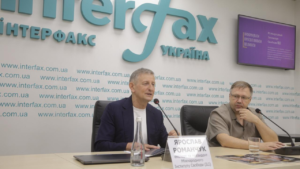
The International Liberty Institute (ILI) presented a concept for destroying corruption in Ukraine, which is based on an analysis of state failures in the economy, the functioning of the entrepreneurial growth model, as well as conclusions from studies of economic freedom, the institution of private property and the principles of a small state.
“We want to present a slightly different view of how to destroy corruption in Ukraine. To put it in two words, we propose an approach to destroy the causes of corruption, rather than constantly fighting their consequences,” ILI Director Mykhailo Kamchatnyi said at a press conference at the Interfax-Ukraine agency on Wednesday.
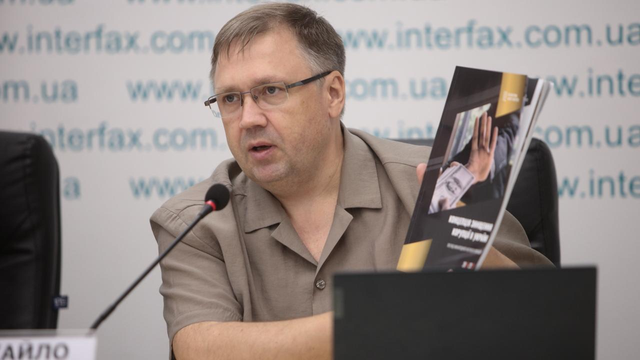
According to him, the presented concept should become a reference point for government bodies, the anti-corruption infrastructure and civil society, since the current model is mainly focused on responding to individual corruption episodes, but does not dismantle the conditions under which they arise.
For his part, ILI President Yaroslav Romanchuk emphasized that corruption is primarily a problem of economic policy, institutions and the theory of public administration.
“Our approach differs from the traditional one in that we built it on the foundation of the theory of state failures. Without such an approach, any architecture for fighting corruption turns into a permanent chronic process. Corruption restrains Ukraine’s European integration, investment, protection of property rights, defense capability and the country’s competitiveness. According to Romanchuk, if Ukraine sets itself the goal of economic growth at the level of 6-7% per year for 15-20 years, then without the systemic elimination of corruption sources it will be impossible to achieve this,” Romanchuk noted.
The expert emphasized that accession to the European Union in itself does not guarantee the automatic disappearance of corruption. In his opinion, Ukraine must take into account that corruption risks also exist in EU countries, in particular in the areas of public procurement, public investment, regulation, the judicial system and the interaction of business with government bodies.
“There is a point of view that when we become part of the European Union, corruption will automatically disappear. This is not so. It will not disappear, it can only be rebooted if Ukraine does not do its own homework. Among the key factors of corruption are the excessive size of the state, the high share of public expenditures in GDP, the discretionary powers of officials, a complex regulatory environment, tax and customs benefits, unequal conditions for business, state ownership of assets and the centralization of resources,” Romanchuk added.
The expert emphasized that in Ukraine the state, through military and non-military expenditures, regulatory burden and transaction costs, in fact takes an excessively large part of the economy’s resources, which, in turn, stimulates business and citizens to seek informal ways of survival.
“The sources of corruption are objectively built into the model of a state of general interventionism. This is when the state regulates, controls and disposes of many things and resources. It is precisely on this discretion that the sources of corruption arise. Even if we put 30% of deputies and 70% of ministers in prison, corruption will not disappear, because its sources will remain. What matters is not which person heads this or that body, but what system of resource functioning exists in the state,” Romanchuk stressed.
ILI analysts propose placing a deep political, institutional, administrative and legal reform at the basis of the anti-corruption strategy. This concerns, in particular, a radical reduction of the state’s functions, limiting its commercial role, strengthening the protection of property rights, demonopolization, decriminalization of the economy and the creation of universal and neutral rules for all market participants.
“A new state from our point of view means the rule of law, personal and political rights and freedoms, reforming the system of public administration and regulation, as well as decriminalizing the economy on the foundation of a radical reduction of the state in the economy. We do not need only formal checkmarks. We need to move, not polish the dashboard. When we merely copy laws and the regulatory framework from the European Union or OECD countries, this does not mean that they will automatically work in Ukrainian conditions,” the president of the institute noted.
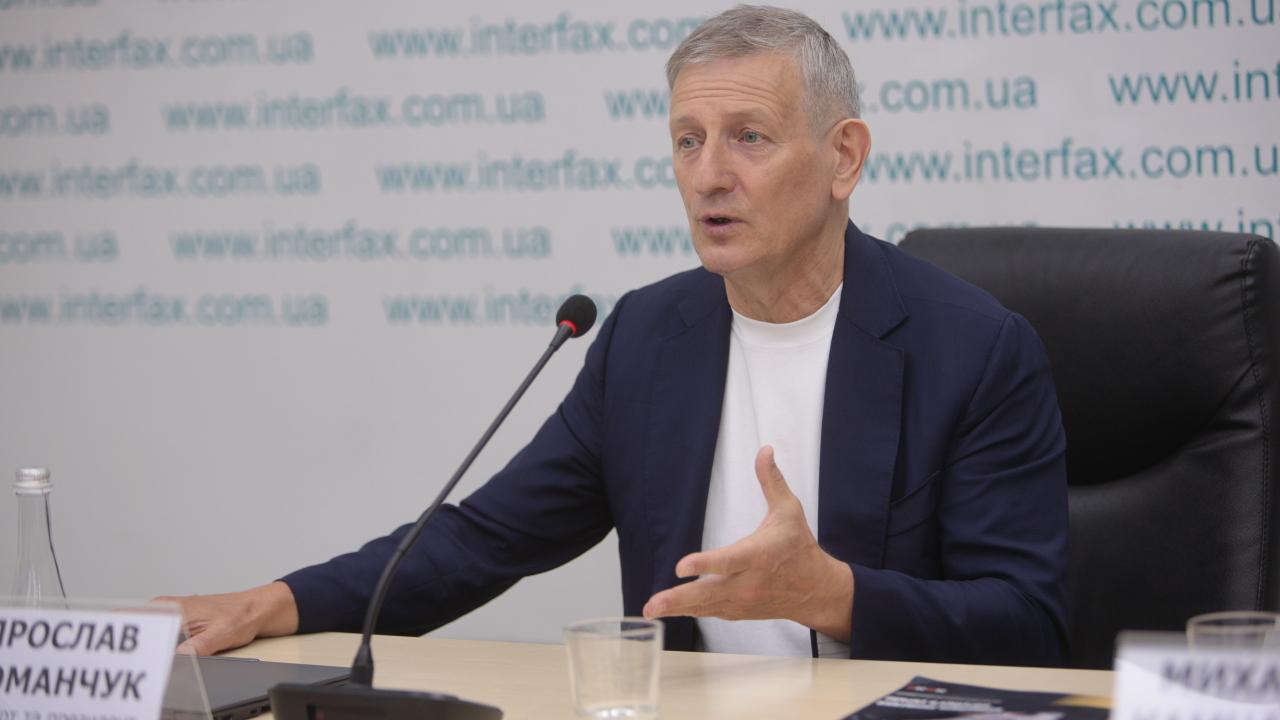
Among practical solutions, Romanchuk proposes reducing public expenditures after victory to a level that will not create corruption rent, decentralizing budget resources, simplifying the customs and tax system, eliminating preferential regimes, limiting state ownership and creating equal rules of competition.
Mykhailo Kamchatnyi, for his part, emphasized that the presented concept is a framework document that should change the focus of the public discussion about corruption.
“These are the beacons that can be used as guidance in order to destroy corruption in Ukraine. The concept will be useful primarily for those engaged in the fight against corruption, especially for civil society, so that it adjusts its focus. It is necessary to move from general rhetoric about fighting corruption to specific road maps in the areas where the state creates the greatest corruption incentives. It is necessary to destroy not the consequences, but the causes and sources of corruption. For this purpose, road maps should be created for each recommendation in one sphere or another: what exactly needs to be changed, how to reduce the influence of the state, how to carry out decentralization and how to reduce corruption phenomena,” the ILI director said.
Answering journalists’ questions, Yaroslav Romanchuk said that ILI plans to present the concept to the Cabinet of Ministers, the Office of the President, NABU and other institutions related to the formation of economic and anti-corruption policy.
“Our proposal will be sent to the government, the Office of the President, NABU and the entire infrastructure for fighting corruption. We do not see any contradiction between our approaches and the declared goal of making Ukraine a country with an economy of about one trillion dollars and GDP growth of more than 6% per year,” he noted.
Romanchuk also rejected the thesis that the document is merely an ideological declaration. According to him, the concept relies on economic science, in particular on the approaches of the Austrian school of economics, which ILI considers as the basis of the entrepreneurial growth model.
In conclusion, representatives of the International Institute of Liberty stated that a systemic reduction of corruption in Ukraine is possible only under the condition of changing the economic model, limiting the functionality of the state, protecting private initiative and forming equal rules for business.
“When we do this, we will have faster economic growth, more investment, and the shadow economy will not amount to 50-55% of GDP. It is necessary to approach this phenomenon systemically, and then Ukraine will be the best country for real business,” Romanchuk summed up.



