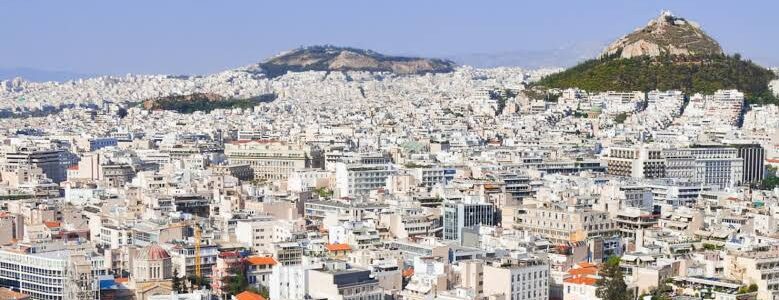
Greece has more than 2.2 million vacant homes, accounting for 34.5% of the country’s total housing stock—one of the highest rates in Europe, according to a study by the Parliamentary Budget Office based on data from the 2021 ELSTAT census.
The study’s authors note that the problem in the Greek housing market is linked not only to a lack of new construction but also to the low utilization rate of existing housing stock. While the total number of residential properties increased by 3.5% between 2011 and 2021, the number of homes available for long-term rent decreased by 10.4%, and those listed for sale fell by 33.1%. The number of inactive vacant properties—those not offered for either rent or sale—rose to 1.81 million.
The category of vacant housing includes not only potential properties for purchase or rent, but also second homes, summer cottages, older housing stock, properties in rural areas and on islands, as well as real estate taken off the market due to legal, inheritance, or technical issues. Among the reasons why housing does not return to the market, the study cites inheritance disputes, unclear ownership status, legal complications, high renovation costs, low energy efficiency, and limited demand in certain regions.
For investors, this market structure creates opportunities primarily in the segments of older housing stock, redevelopment, and renovation. Properties that remain vacant due to owners’ reluctance to invest in modernization may enter the market at a discount; however, their investment appeal depends on the total cost after renovation and the potential market price upon sale or long-term lease.
Government support for renovation could be an additional factor. Greece is preparing a housing modernization program worth approximately 500 million euros, which is intended to help return some of the vacant properties to the housing market. According to Greek media reports, the program provides subsidies for repairs and energy efficiency, and eligibility checks are to be conducted via the gov.gr platform.
At the same time, investors should factor in the risk of price adjustments. According to the study’s authors, if the share of vacant and inactive housing returns to 2001 levels within approximately six years, real housing prices in Greece could fall by 15.5–24.6%. This does not imply an automatic collapse of the entire market; however, overvalued properties and locations with limited demand may prove to be the most vulnerable.
The Greek real estate market continues to appreciate for now, but the pace of growth is slowing. According to the Bank of Greece, apartment prices rose by 5.7% year-over-year in the first quarter of 2026, following increases of 8.1% in 2025 and 9.1% in 2024. In Athens, growth in the first quarter was 5.2%, and in Thessaloniki, 6.4%.
Relying solely on short-term rentals and the Golden Visa program as the sole rationale for a transaction remains a risk. Research indicates that the impact of short-term rentals on the market as a whole may be limited; however, in central areas of Athens and Thessaloniki, as well as popular tourist destinations, they are increasing pressure on the long-term housing market. Therefore, a high-quality asset is not a property purchased solely for a residence permit or Airbnb purposes, but rather a property with a clear legal history, an estimated renovation cost, and sustained demand once it is brought to market.