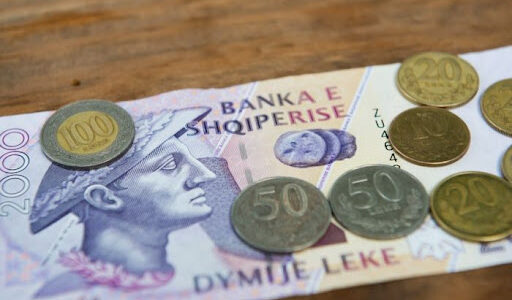
According to The Serbian Economist, foreign direct investment inflows into Albania rose by 3.4% in 2025 to 1.63 billion euros, up from 1.58 billion euros in 2024, the country’s central bank reported. Amid a decline in FDI in several countries in the region, Albania became one of the few markets in Southeast Europe where foreign investment continued to grow.
The Netherlands was the largest source of investment, contributing 201.9 million euros. Next were Italy with 186.9 million euros and Kosovo with 186.4 million euros. This geographic distribution differs from that of Montenegro, where the largest sources in 2025 were Serbia, Turkey, and Germany.
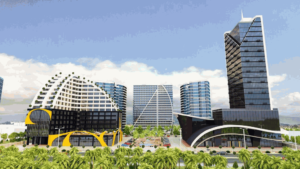
The main sector for foreign capital in Albania is real estate. In 2025, it attracted 560.9 million euros, or approximately one-third of total FDI. Insurance and financial services ranked second with 291.14 million euros, while wholesale and retail trade ranked third with 161.89 million euros.
The Albanian example demonstrates the same regional trend as Montenegro, but on a larger scale: foreign investors are actively investing in real estate, especially against the backdrop of growing interest in the coast, tourism, relocation, and infrastructure development. For Tirana and coastal cities, this means an increase in construction activity and prices, but at the same time, it exacerbates the issue of housing affordability for the local population.
Until recently, the Albanian market was viewed as peripheral, but now it is competing for capital with Montenegro, Croatia, Greece, and other Southern European destinations. At the same time, the volume of foreign direct investment in Albania already significantly exceeds that of Montenegro: 1.63 billion euros versus 531 million euros in net inflows in Montenegro.
Albania’s strengths lie in the size of its market and growing interest in real estate, tourism, financial services, and trade. Its weakness lies in the high concentration of investment in sectors that do not always ensure rapid productivity growth. As in Montenegro, the key question for long-term development is whether the country will be able to transform interest in real estate and services into more substantial greenfield projects, industry, logistics, and export capacity.
Albania is cementing its position as one of the most dynamic investment markets in the Balkans. But growth driven by real estate creates the same dilemma as in Montenegro: money flows in quickly, but the lasting impact on employment, exports, and productivity depends on whether more complex investment projects follow construction.
https://t.me/relocationrs/3162

Related: