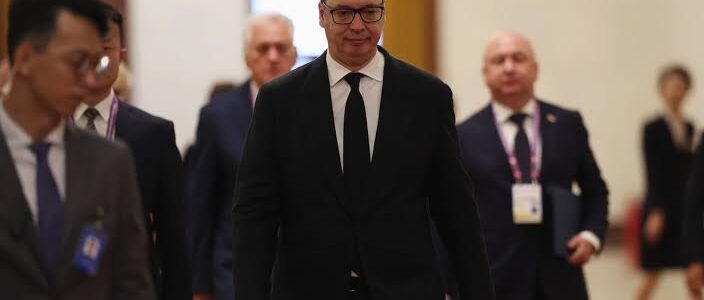
According to “Serbian Economist”, Serbia does not expect candidate countries to join the European Union anytime soon, but believes that the European path remains the best option for the region, Serbian President Aleksandar Vučić said at a conference of the speakers of the parliaments of EU candidate countries in Belgrade.
According to him, the EU is unlikely to be able to make quick decisions on enlargement in the coming years. However, Vucic emphasized that this does not mean Serbia and other candidate countries should halt their reforms.
The Belgrade Format is also important from an economic standpoint: Serbia is effectively promoting the idea that candidate countries should be partners rather than competitors. This is particularly relevant for the Western Balkans, Ukraine, Moldova, and Georgia, where European integration is increasingly viewed not only as a political project but also as a trade and logistics initiative.
Vucic placed special emphasis on Ukraine. He stated that Ukraine has demonstrated resilience and that Europe has much to gain from its potential. For Serbia, this also presents an opportunity to strengthen economic ties with Kyiv without waiting for formal EU membership.
Trade between Serbia and Ukraine in 2025 returned to roughly pre-war levels and, according to Serbian data, amounted to approximately $442 million. Serbian exports to Ukraine reached $202.9 million, while imports from Ukraine totaled $239.3 million. Electricity, mineral and chemical fertilizers, tires, and industrial goods play a significant role in the structure of Serbian exports. Ukraine supplies Serbia with iron ore, semi-finished rolled steel products, metal products, and agricultural goods, including frozen raspberries. In the first quarter of 2026, trade turnover had already reached $152.8 million, and Serbia recorded a trade surplus of $36.8 million. The parties have also resumed negotiations on a free trade agreement, which could become a key instrument for further growth in trade volumes.