
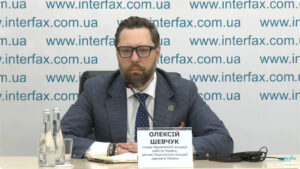
The competition to fill vacant administrative positions at the Specialized Anti-Corruption Prosecutor’s Office (SAPO) has officially begun; applications from candidates will be accepted from August 19 through September 21, 2026. This was announced by Oleksiy Shevchuk, a member of the selection committee and attorney, on Facebook.
“For over a month, our selection committee has been working practically nonstop to establish the highest-quality, clear, and equitable conditions for all candidates. We have developed a methodology, procedures for conducting the competition, and rules and evaluation criteria,” he wrote.
According to Shevchuk, potential candidates should monitor official announcements on the Office of the Prosecutor General’s website, familiarize themselves with the established requirements, and prepare the necessary documents in advance.
He noted that the main principles of the competition should be transparency, openness, professionalism, and equal conditions for all candidates, while the key evaluation criteria should be professionalism, integrity, and compliance with the established requirements.
Shevchuk also highlighted the participation of a representative of the bar association on the selection committee and urged attorneys who meet the established criteria to participate in the competition.
“If you meet the established requirements, prepare your application, submit your documents, and participate in the competition. The legal community has plenty of strong, independent, and professional lawyers capable of working within the anti-corruption prosecutor’s office,” he emphasized.
As previously reported, the selection committee responsible for organizing and conducting the competition for administrative positions at the SAP officially began its work on July 6, 2026. Laura Oana Stefan, nominated based on recommendations from international and foreign organizations, was elected chair of the committee, and Serhiy Shmalenya, delegated at the recommendation of the Council of Prosecutors of Ukraine, was elected deputy chair.
The commission is responsible for selecting candidates for senior administrative positions at the SAPO, specifically the positions of first deputy and deputy head of the Specialized Anti-Corruption Prosecutor’s Office.
Source: https://www.facebook.com/share/1LZ3kLSn1y/?mibextid=wwXIfr
CANDIDATE, COMPETITION, integrity, PROSECUTOR'S OFFICE, SAPO
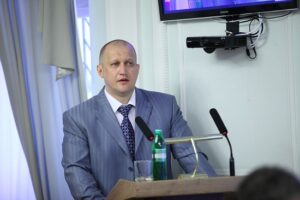
Lev Kishakevich, a judge of the Grand Chamber of the Supreme Court, who was selected as Ukraine’s primary candidate for election as a judge of the International Criminal Court (ICC) following a competitive selection process, does not possess the required proficiency in the ICC’s working languages—French and English—according to an ICC document.
A report by the Advisory Committee on the Nomination of Judges, dated August 5, 2026, and posted on the ICC website, notes in particular that the Rome Statute requires candidates for judgeship to be fluent in the ICC’s working languages, and that the candidate from Ukraine does not speak French and does not possess the required level of English to perform the duties of a judge of the Court.
“The Committee regrets that the candidate’s language skills, as demonstrated during the interview, did not allow the Committee to properly assess his qualifications and suitability for the position in accordance with Article 36 of the Rome Statute,” the document states.
The Committee concluded that “the candidate does not meet the qualification requirements for appointment as a judge of the International Criminal Court.”
According to the ICC’s statement, the overall assessment of the candidate’s readiness for the position of judge was therefore incomplete due to the candidate’s language limitations.
“The Committee determined that the candidate’s language limitations would prevent him from making an immediate contribution to the work of the Court,” the document notes.
The “Interfax-Ukraine” news agency contacted the Supreme Court requesting comment on this situation.
On January 1, 2025, Ukraine officially became the 125th State Party to the Rome Statute of the ICC. Thus, in accordance with the Statute, Ukraine, like every State Party, may nominate one candidate to the ICC.
As reported by the Supreme Court, on April 8, 2026, the selection committee responsible for choosing Ukraine’s candidate for election as an ICC judge—based on the results of interviews with the candidates held on March 24–26—selected Ukraine’s primary candidate for election as an ICC judge. That candidate is Lev Kishakevich, a judge of the Grand Chamber of the Supreme Court.
Source: https://asp.icc-cpi.int/sites/default/files/asp_docs/Report%20ACN.05Aug26.1000.pdf
https://asp.icc-cpi.int/sessions/documentation/25th-session#documentation
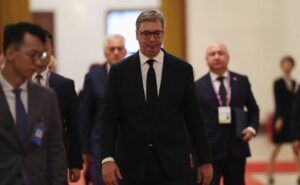
According to “Serbian Economist”, Serbia does not expect candidate countries to join the European Union anytime soon, but believes that the European path remains the best option for the region, Serbian President Aleksandar Vučić said at a conference of the speakers of the parliaments of EU candidate countries in Belgrade.
According to him, the EU is unlikely to be able to make quick decisions on enlargement in the coming years. However, Vucic emphasized that this does not mean Serbia and other candidate countries should halt their reforms.
The Belgrade Format is also important from an economic standpoint: Serbia is effectively promoting the idea that candidate countries should be partners rather than competitors. This is particularly relevant for the Western Balkans, Ukraine, Moldova, and Georgia, where European integration is increasingly viewed not only as a political project but also as a trade and logistics initiative.
Vucic placed special emphasis on Ukraine. He stated that Ukraine has demonstrated resilience and that Europe has much to gain from its potential. For Serbia, this also presents an opportunity to strengthen economic ties with Kyiv without waiting for formal EU membership.
Trade between Serbia and Ukraine in 2025 returned to roughly pre-war levels and, according to Serbian data, amounted to approximately $442 million. Serbian exports to Ukraine reached $202.9 million, while imports from Ukraine totaled $239.3 million. Electricity, mineral and chemical fertilizers, tires, and industrial goods play a significant role in the structure of Serbian exports. Ukraine supplies Serbia with iron ore, semi-finished rolled steel products, metal products, and agricultural goods, including frozen raspberries. In the first quarter of 2026, trade turnover had already reached $152.8 million, and Serbia recorded a trade surplus of $36.8 million. The parties have also resumed negotiations on a free trade agreement, which could become a key instrument for further growth in trade volumes.
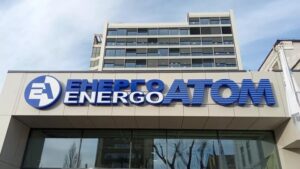
The Cabinet of Ministers has announced a competition for candidates for the positions of independent members of the supervisory board of NAEK Energoatom, according to the Ministry of Economy, Environment, and Agriculture.
“The competition for candidates for the supervisory board of Energoatom announced today is unscheduled. On November 11, 2025, the Cabinet of Ministers terminated the powers of the supervisory board ahead of schedule. At the time of this decision, there were two independent members on the board, and the competitive selection of independent candidates for two more vacant positions was ongoing. The new competition will allow the positions that became vacant due to the early termination of the supervisory board to be filled,” the ministry said in a statement on its website.
The relevant order was adopted at a government meeting on Tuesday.
In addition, by protocol decision, the government instructed the Ministry of Economy to submit to the Committee for the Appointment of Heads of Enterprises of Particular Importance to the Economy proposals for candidates for state representatives to the Supervisory Board of Energoatom.
As noted on his Facebook page by the head of the Ministry of Economy, Alexei Sobolev, the ministry will soon submit to this Committee the candidacies of state representatives to form the full composition of the supervisory board of Energoatom.
Earlier, with reference to Prime Minister Yulia Sviridenko, it was reported that on Tuesday, November 18, the government decided to announce a competition for positions on the supervisory board of Naftogaz of Ukraine (four independent members – ER).
“The contracts of the current members expire in January. Accordingly, we are launching the competition now in order to approve the new composition of the supervisory body in a timely manner and ensure the continuity of its work. We expect the new composition of the Naftogaz supervisory board to be formed by January 20, 2026,” Sviridenko wrote on Telegram.
On August 15, 2025, the Cabinet of Ministers amended the charter of Energoatom, increasing the number of members of the supervisory board from five to seven. Before its dissolution on November 11, following the publicity surrounding the Midas case, the company’s supervisory board consisted of four people: its chairman, Jarek Niewierowicz, and deputy chairman, Michael Elliott Kirst, as well as state representatives Timofey Milovanov and Vitaly Petruk. The third independent member of the supervisory board, Timothy Stone, refused to sign the contract.
On September 15, the government announced a competition to select two independent members of the Energoatom supervisory board by order No. 983-r.
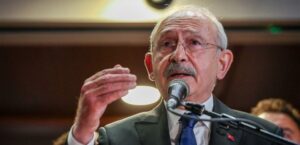
Turkey’s opposition bloc has nominated Kemal Kılıçdaroğlu, head of the Republican People’s Party, as a candidate in the upcoming presidential election, the Sabah newspaper reported Monday.
According to it, the six parties of the opposition bloc made a statement to this effect after a meeting in Ankara.
In turn, Al-Monitor reported that the leader of the Happiness Party, Temel Karamollaoğlu, announced the candidacy on behalf of the entire opposition bloc.
Earlier on Monday, thousands of opposition supporters gathered outside the headquarters of the “Party of Happiness” to find out who will run in the elections from the opposition.
“Sabah” notes that Turkey’s Good Party leader Meral Akshener, who announced last week that she was leaving the opposition bloc, has rejoined it and also attended a meeting in the Turkish capital. Akshener left the bloc over disagreement over a presidential candidate.
In January, Turkish leader Recep Tayyip Erdogan announced that presidential and parliamentary elections would be held in Turkey on May 14.
The elections were originally scheduled for June 18, but Erdogan has repeatedly stated that the vote could take place earlier. His party has pointed out that the elections in June will coincide with the peak of the tourist season, so it would be better to postpone them.
Pre-election polls show that the battle in both the presidential and parliamentary elections will be fierce.
Western media call the upcoming elections “the biggest test” for Erdoğan in the last 20 years.
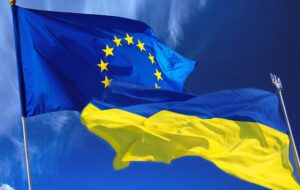
French President Emmanuel Macron said that granting the status of EU candidate countries to Ukraine and Moldova is a political signal in these circumstances, the entry itself will drag on for years.
“With regard to Moldova and Ukraine, it is quite clear that this (the decision of the European Candidates’ Status Council) is contextual. Yes, this is a political signal. I fully recognize this. And I said quite frankly today that it will take time (… ) that it will last for years,” Macron said Thursday evening at a press conference in Brussels after the decision of the European Council to grant candidate status to Ukraine and Moldova.
According to him, this decision is justified by the fact that we are talking about the neighboring environment of the European Union, which needs to be stabilized. Today, the “geopolitical response” in the context of hostilities is to provide such a perspective to these countries, the French president believes.
“Is this a good geopolitical prospect in the long run? I will answer you sincerely (…): no,” Macron continued, referring to the “fatigue phenomenon” of joining the European Union, which is a complex and time-consuming process. “The road is long,” he said.
That is why, the president explained, he proposed the initiative of the “European political community”, which he considers the right answer, in order to “stabilize the neighborhood” of the EU, offering close cooperation to European countries that are not members of the European Union, having different standards and situations, but sharing common values. .
And this is just being discussed at this EU summit, Macron said. “We need to build something: we can cooperate in terms of defense, geopolitics, energy, infrastructure, projects for the movement of people – a lot of specific things that will make it possible to change the lives of citizens (…) and build the wider geopolitical Europe that we need” – said the head of the French state.
But at the moment, Macron believes, “after NATO said “no” to Ukraine’s accession for good reasons, we would make a political mistake and leave a void if we didn’t reach out to Ukraine and Moldova.” And this justifies the recognition of the status of candidates for these two countries, the French president explained.



