
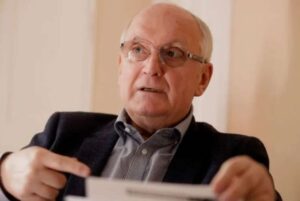
András Baku has become Hungary’s new president, according to Hungarian media reports.
“On Tuesday, the Hungarian Parliament elected 73-year-old lawyer and former Chief Justice of the Supreme Court András Baku as the country’s new president,” the reports state.
It is noted that 140 lawmakers voted in favor of his candidacy, while six voted against it. Representatives of the former ruling coalition, Fidesz—the Christian Democratic People’s Party—had announced in advance that they would not participate in the vote.
Hungary’s new Prime Minister, Péter Magyar, has repeatedly stated since his election in May that he intends to reform the Hungarian government; in particular, he has sought the resignation of President Tamás Szujók. Magyar believes that Szujók was not fulfilling his role and was serving the interests of former Prime Minister Viktor Orbán and his government.
Szujok refused to step down voluntarily, stating that he saw neither constitutional nor legal grounds for doing so. Later, in July, the Hungarian parliament approved a package of constitutional reforms that, among other things, provided for the president’s resignation. As a result, last week Szujok signed the constitutional amendments and stepped down from his post.
Magyar nominated renowned Hungarian chess grandmaster Judit Polgár for the position of the country’s new president, but she declined the offer.
The president in Hungary performs mainly ceremonial functions. The government is headed by the prime minister.
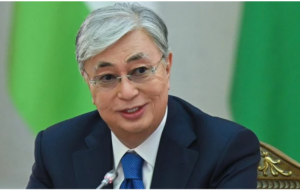
Kazakhstan’s Constitutional Court ruled that individuals who held the highest state offices under the 1995 Constitution may be re-elected or appointed to the corresponding posts after the new 2026 Constitution takes effect.
The decision was issued on July 7 in response to a request from President Kassym-Jomart Tokayev, who asked the court to provide an official interpretation of the provisions regarding the number of terms for which one may be elected or appointed to a number of top government positions, including the presidency.
The court noted that the new Constitution does not contain provisions requiring that terms served under the previous Constitution be taken into account. Therefore, the fact of holding office prior to July 1, 2026, does not in itself constitute an obstacle to re-election or appointment after the new Constitution takes effect.
In practice, this means that Tokayev’s term, which began after the 2022 election, will not be counted toward the new presidential term limit. A new election following the 2026 Constitution’s entry into force will be considered his first for the purposes of applying these limits.
Reuters notes that the decision effectively resets the count of Tokayev’s presidential terms. However, it is not yet clear whether he will seek a new term in early presidential elections or remain in office until 2029.
Kazakhstan’s new Constitution took effect on July 1, 2026. It retains the limit of one seven-year presidential term, but, according to the Constitutional Court’s interpretation, this limit applies only to elections held under the new Constitution.
Thus, Tokayev has been legally permitted to run for president again, despite the previously existing limit of a single seven-year term.
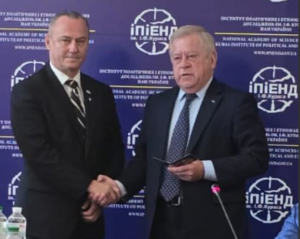
Eduard Burash, Transcarpathia’s Ambassador to Slovakia, has become an advisor to Anatoliy Kinakh, President of the Ukrainian Union of Industrialists and Entrepreneurs (USPP), on issues of trade, economic, and investment cooperation between Ukraine and the Slovak Republic, Eduard Burash himself told Open4Business.
Burash is actively involved in organizing humanitarian aid for the Zakarpattia region and other regions of Ukraine.
In his new capacity as advisor to the USPP president, Burash has already participated in a meeting of the Council on the Reconstruction of Ukraine, which operates as part of the global organization of world leaders Lives Amplified. The meeting took place at the I.F. Kuras Institute of Political and Ethno-National Studies.
Eduard Burash has been involved in the development of Ukrainian-Slovak cooperation for many years. He is the ambassador of Zakarpattia to Slovakia; previously, he served as an advisor to the Prime Minister of Slovakia on cross-border cooperation with Ukraine, an advisor to the Slovak Ombudsman on child protection, and the authorized representative of the city of Košice for the development of cross-border cooperation with Uzhhorod and Zakarpattia Oblast. Burash also heads the FEMAN association and has been a long-time organizer of the Days of Ukraine in Košice. In addition, for over 10 years he has been the organizer of the Days of Ukraine in
Košice, which have featured meetings, conferences, and events involving Ukrainian and Slovak entrepreneurs.
The Ukrainian Union of Industrialists and Entrepreneurs is a nationwide public organization that brings together representatives of business, industry, entrepreneurial structures, and employers. The organization is headed by former Prime Minister of Ukraine Anatoliy Kinakh.
ADVISOR, AMBASSADOR, PRESIDENT, SLOVAKIA, Transcarpathia, UUIE, Едуард Бураш
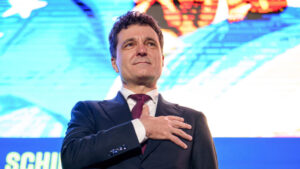
Romanian President Nicușor Dan stated that he would not propose a candidate for prime minister without a pre-agreed parliamentary majority, following the dismissal of Ilie Bolojan’s government via a vote of no confidence.
According to Digi24, Dan intends to invite parliamentary parties for consultations on Thursday or next Monday. He emphasized that he does not want to “experiment” with appointing a prime minister who would then be unable to secure a majority in parliament.
The president also did not rule out the option of a technocratic government, which could be led by an independent expert. At the same time, he said, there are “relatively few” options capable of securing a stable majority, as the parties’ positions remain rigid following the fall of Bolojan’s cabinet.
The political crisis in Romania began after parliament passed a no-confidence vote against the Bolojan government on May 5. A total of 281 deputies voted for the cabinet’s resignation, significantly exceeding the required minimum of 233 votes. The motion was supported by the Social Democratic Party and the right-wing nationalist Alliance for the Union of Romanians.
After the vote, Bolojan’s National Liberal Party announced its move to the opposition and its refusal to form a new coalition with the Social Democrats. This sharply narrows the scope for the rapid formation of a government, as it will be difficult to secure a stable majority without the PSD or a portion of its votes.
Among the scenarios being discussed are Bolojan’s return to the post of prime minister, the formation of a technocratic cabinet, a new agreement between pro-European parties, or a more complex configuration involving the PSD. UDMR leader Hunor Kelemen stated that the option of a technocratic prime minister could be acceptable if the ministers remain political appointees of the parties that secure the majority.
For Romania, a prolonged crisis carries economic risks. The country needs to continue fiscal consolidation and meet the conditions for receiving EU funds, whereas a caretaker government has limited powers. Bolojan previously warned that the absence of a full-fledged cabinet could complicate access to European funding.
Romania remains one of the key countries on the eastern flank of the EU and NATO, as well as an important logistical partner for Ukraine on the Danube and the Black Sea.

On January 16, 2026, the current President of the Czech Republic, Petr Pavel, visited the NGO “Feel” together with the Ambassador of the Czech Republic to Ukraine, Luboš Veselý, and with the participation of Vasyl Zvarych, Ambassador of Ukraine to the Czech Republic. The visit was aimed at familiarizing them with the practical results of supporting hearing rehabilitation programs for veterans in Ukraine.
The meeting took place in the format of informal communication with veterans — participants in the project “Can you hear? Plus. Plus.”, which is implemented by the NGO “Feel” with the financial support of the Czech Embassy. The project is a systematic program of comprehensive support for veterans and covers hearing aids, rehabilitation, and further support.
During the visit, the President of the Czech Republic spoke with two veterans, Vadym and his son Danylo Goncharenko, who received comprehensive support from the NGO “Vidchuy” as part of the project “Hear? Plus. Plus.” The meeting provided an opportunity to hear directly about their experiences and discuss the importance of hearing rehabilitation as a key factor in returning to a full and active life.
During the visit, special attention was paid to the approach of the public organization “Vidchuy” to comprehensive support for veterans, which combines hearing rehabilitation, individual selection of hearing solutions, and work with families.
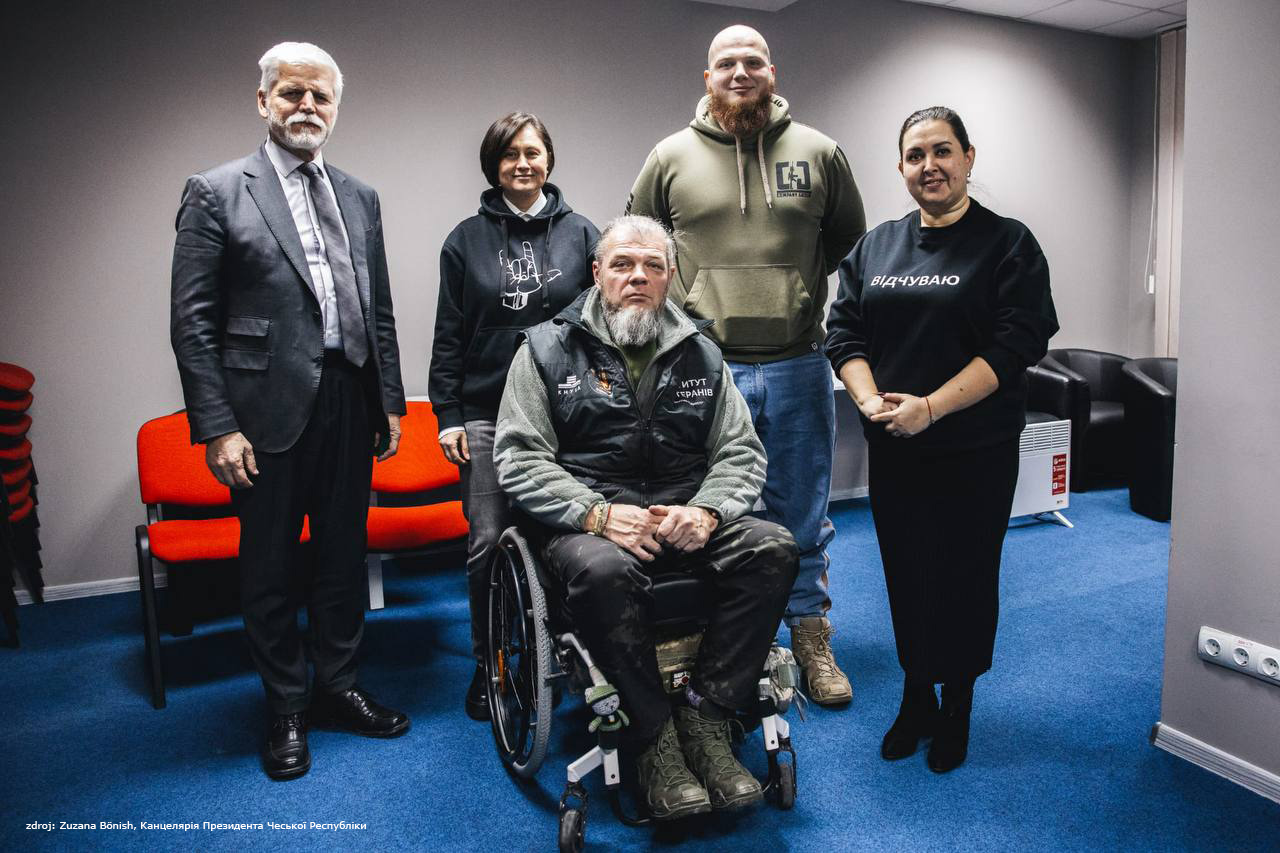
The founder of the NGO “Vidchuy,” Lyudmila Pyshna, and the CEO of the organization, Daria Gerasymchuk, thanked the Czech side for its consistent support of the “Chuyeš? Plus. Plus.” project and noted the importance of international partnership in the development of hearing rehabilitation and recovery programs in Ukraine.
The visit of the President of the Czech Republic confirmed solidarity with Ukraine and a shared vision of the need for long-term support for initiatives aimed at improving the quality of life of veterans.
The public organization “Vidchuy” is a Ukrainian non-profit organization that has been working systematically since 2011 in the field of hearing rehabilitation, support, and socialization of children and adults with hearing impairments, as well as their families.
The organization implements early intervention, hearing rehabilitation, hearing aid fitting, psychosocial support, and educational initiatives aimed at overcoming barriers and stigma against people with hearing impairments. A separate area of work is supporting veterans, in particular, restoring their hearing and accompanying them in the process of returning to active life.
The NGO “Vidchuy” cooperates with state institutions, international organizations, and donors to implement sustainable solutions in the field of rehabilitation and inclusion in Ukraine.
The project “Chuyeš? Plus. Plus.” was implemented by the NGO “Vidchuy” with the support of the Embassy of the Czech Republic in Ukraine.

According to Serbian Economist, Serbia is discussing the possibility of holding presidential and parliamentary elections on the same day, although the next elections are scheduled for 2027.
Political experts link the possible appointment of elections to an earlier date, including 2026, with the political calculations of Serbian President Aleksandar Vučić and the results of regular public opinion polls, rather than with formal calendar frameworks.
Combining the presidential and parliamentary elections could give Vučić the opportunity to head the parliamentary list and position himself as a candidate for prime minister, but the nomination of a strong candidate in the presidential election potentially creates a separate center of political capital within the ruling coalition.
At the same time, the leader of the Serbian Progressive Party, Miloš Vučević, has previously stated that combining parliamentary and presidential elections “is not an issue” on which there is currently a decision or a specific plan, and that such issues are resolved “in accordance with the law and the Constitution,” taking into account the overall political and social situation.



