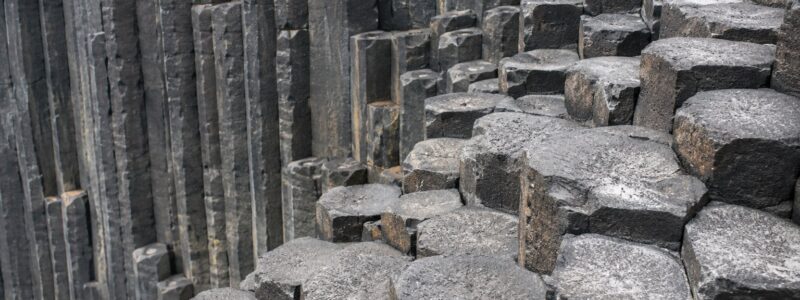
The large-scale reconstruction of Ukraine could serve as the foundation for creating a modern basalt fiber and composite materials industry, which would integrate the extraction of domestic raw materials, the production of construction materials, and the manufacture of high-value-added products.
This was written by Volodymyr Khaustov, Scientific Secretary of the Institute of Economics and Forecasting of the National Academy of Sciences of Ukraine and Honored Economist of Ukraine, in a column for the Interfax-Ukraine news agency published on July 29, 2026.
According to him, future reconstruction efforts will require significant quantities of cement, metal, glass, thermal insulation, and other construction materials. At the same time, this could create a market for more durable, lightweight, and corrosion-resistant composite products.
According to the fifth joint assessment by the Ukrainian government, the World Bank, the European Commission, and the UN, the country’s reconstruction and rehabilitation needs as of the end of 2025 amount to nearly $588 billion over the next ten years. The greatest needs are in transportation, energy, and housing.
Basalt can be used in roads, bridges, and municipal infrastructure
Basalt fiber is produced by melting prepared rock and then forming it into fibers. It is used to manufacture thermal and acoustic insulation, technical fabrics, reinforcing mesh, concrete fiber, composite reinforcement, profiles, and pipes.
These products can be used in the construction of roads and bridges, the rehabilitation of utility networks, industrial flooring, energy facilities, and buildings. Their advantages include resistance to corrosion, high temperatures, and aggressive chemical environments, as well as relatively low weight.
In a study published in 2026 by the European Commission’s Joint Research Center, basalt fibers are identified as among the advanced and innovative construction materials capable of increasing the durability of structures and supporting the construction industry’s transition to more sustainable technologies. At the same time, European researchers point to the need for testing, standardization, and full life-cycle assessment of new materials.
Ukraine has deposits and scientific expertise
The most well-known basalt raw material deposits in Ukraine are located in the Rivne region. Specifically, these are the Berestovtse and Ivano-Dolynske deposits. Rock types promising for fiber production have also been studied in the Zakarpattia and other regions.
Ukrainian scientific institutions were involved in developing technologies for the production of basalt fibers as early as the second half of the 20th century. In the 1980s, dozens of enterprises involved in the production of basalt materials were operating in the country; however, following the collapse of the Soviet industrial system, most of these facilities ceased operations or significantly scaled back their activities.
Khaustov believes that the first step should be an audit of the Ukrainian basalt industry. This audit should cover the condition of deposits, enterprises, equipment, technologies, patents, and scientific developments.
In addition, Ukraine needs modern standards and testing of basalt materials for strength, durability, fire resistance, and resistance to moisture and chemicals. It would be advisable to harmonize national requirements with European standards.
The next step could be the launch of demonstration projects during the restoration of roads, bridges, utility networks, industrial facilities, and damaged public buildings. Support for the industry could include research grants, preferential financing for equipment, investment insurance, and the involvement of European technology partners.
However, the availability of raw materials alone does not guarantee the competitiveness of production. The industry’s development requires a stable energy supply, modern smelting furnaces, high-quality equipment, product certification, trained specialists, and a guaranteed market for the finished products.
The economic efficiency of each product type must be compared with steel, fiberglass, and other traditional materials, taking into account production costs, energy consumption, logistics, maintenance, and the entire service life.