

According to Interfax-Ukraine, Valery Kirilko, CEO of the “Industrial Parks of Ukraine” group of companies, believes that one solution for changing Ukraine’s warehouse logistics model—given the enemy’s destruction of warehouse and logistics infrastructure—is to create a decentralized network of small warehouses, particularly within industrial parks.
“The war has shown just how vulnerable large distribution centers are. Therefore, we may need to partially move away from concentrating large volumes of goods in a single location and transition to a decentralized network of small warehouses,” –he wrote on Facebook.
According to his proposal, this could mean replacing a single large warehouse spanning tens of thousands of square meters with many smaller ones—ranging from 1,000 to 5,000 square meters—located in different regions and logistically convenient locations.
“That is precisely why we are currently developing the ‘HELP.Warehouse’ program. We are creating several standard designs for small warehouse complexes that can be quickly adapted to a specific plot of land and implemented simultaneously in different regions of Ukraine,” Kirilko noted.
He emphasized that the company is ready to take on the design of standard warehouse facilities, the search for and acquisition of land plots, matters related to utilities and infrastructure, the selection of construction contractors, the organization of construction, and the coordination of project implementation.
“With proper organization, such facilities can be built in approximately 3–5 months. And today, there is another important factor at play—the Ukrainian construction market is going through a challenging period. But that is precisely why many construction companies are willing to work with minimal profit margins, quickly assemble teams, and carry out projects at competitive costs,” he believes.
Kyrylko added that industrial park sites across Ukraine are being considered separately.
“Some of them are already prepared to provide land plots for such projects on preferential or even free terms during the initial period. We can begin restoring warehouse and logistics infrastructure right now,” he notes.
Kirilko invited those who are able to finance such projects—including those who own a land plot that can be leased free of charge for a year, industrial parks that can provide a small plot free of charge for a year, and construction companies acting as investors—to join the initiative.
The company “Industrial Parks of Ukraine” has been active in the development of industrial parks since 2019. According to its data, nearly one in three industrial parks established or registered in Ukraine is or has been supported by the company’s specialists.
According to information on its website, the company manages seven industrial parks, has developed 56 industrial park concepts, and has facilitated the registration of 37 industrial parks.
INDUSTRIAL PARK, INFRASTRUCTURE, LOGISTICS, UKRAINE, WAREHOUSE
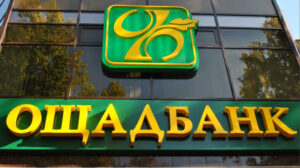
Oschadbank and the Lviv City Council signed a five-year loan agreement for 582.6 million UAH to finance projects aimed at modernizing the city’s critical infrastructure, the financial institution announced on Friday.
“The new 582.6 million hryvnia loan will enable Lviv to continue upgrading its housing, utilities, and road infrastructure, modernizing its heat supply system, and strengthening energy security,” said Serhiy Chernikov, deputy chairman of Oschadbank’s board of directors responsible for corporate business.
It is noted that the funds will be directed toward nine critical infrastructure projects in the city.
Taking this new agreement into account, the total amount of loans provided to Lviv by Oschadbank over the past three years has reached 2.09 billion UAH: in 2024, the bank provided the city with 840.0 million UAH, and in 2025—668.0 million UAH.
Since the start of the full-scale invasion, Oschadbank has entered into loan agreements with Ukrainian municipalities totaling 7.8 billion UAH. As of August 1, 2026, the bank accounted for over 64% of municipal lending.
According to the National Bank, as of July 1, 2026, Oschadbank, with total assets of 518.87 billion UAH, ranked second among Ukraine’s 59 banks. The bank’s total loan portfolio grew by 6.7% in the first half of the year, reaching 136.83 billion UAH.

According to The Guardian, the United Kingdom will gain access to Ukrainian battlefield data to train artificial intelligence systems that are planned to be used to protect military facilities and critical infrastructure from sabotage, drones, and other threats.
Ukraine and the UK signed a partnership agreement on artificial intelligence on August 24, 2026. The UK will become the first foreign partner to gain access to the Ukrainian platform Avengers AI Labs, the British government reported.
Avengers AI Labs aggregates a vast amount of real-world data collected by thousands of daytime cameras and infrared sensors on the battlefield. The system contains data on millions of objects, including tanks, artillery, air defense systems, personnel, and aerial targets—such as Shahed strike drones and reconnaissance drones. This data is used to train artificial intelligence models.
According to The Guardian, one of the first British pilot projects will be a system to protect a military facility using underground fiber-optic cables, which, with the help of AI, will be able to recognize characteristic movements of people and vehicles. In the future, such technologies could be applied at airports, railways, energy facilities, and prisons.
Three British technology companies—Sintela, Mind Foundry, and Skyral—have already been involved in the pilot projects. In particular, Sintela specializes in using fiber-optic networks as distributed sensors.
Another area of cooperation will be the development of a new generation of energy-efficient AI chips for drones, robotics, and autonomous systems. It is expected that such solutions will allow these systems to operate autonomously for longer periods and respond more quickly in challenging conditions.
The agreement calls for collaboration among governments, businesses, universities, and research centers in both countries. Ukraine provides unique data and experience in applying technologies under real combat conditions, while the United Kingdom contributes its research infrastructure, universities, and technology companies.
British Prime Minister Andy Burnham stated that combining Ukraine’s combat experience with British expertise in AI will accelerate the development of technologies for both Ukraine’s defense and the protection of critical British infrastructure.
The partnership is part of a 100-year agreement between Ukraine and the United Kingdom. The joint declaration calls for the development of AI models, secure data-sharing mechanisms, autonomous systems, cybersecurity technologies, and solutions for the defense industry.
artificial intelligence, DEFENSE, INFRASTRUCTURE, UKRAINE, UNITED KINGDOM

The Ministry of Economy and Environment of Ukraine has decided to provide a total of 56 million hryvnias in state support to the “ART PACK INDUSTRIAL” industrial park in the Khmelnytskyi region and the “KRONOSPAN RIVNE” industrial park in the Rivne region, the ministry announced on August 21.
The “ART PACK INDUSTRIAL” industrial park will receive 9.699 million UAH to construct access roads to the park’s territory. An additional 46.305 million UAH will be allocated to “KRONOSPAN RIVNE” for the development of energy infrastructure.
“Government incentives are a practical tool that enables the creation of industrial infrastructure, attracts investment, and fosters the development of the manufacturing sector,” said Vitaliy Kindrativ, Deputy Minister of Economy and Environment of Ukraine. According to him, this support will allow the industrial parks in the Khmelnytskyi and Rivne regions to launch new production facilities more quickly.
Following the new decision, four industrial parks have already received state support since the beginning of 2026 to implement four projects totaling approximately 152 million hryvnias. In late May, “SMART TECH INDUSTRY” in the Poltava region and “Sparrow Park Lviv” became the first recipients this year, receiving over 96.5 million hryvnias. Of this amount, 5.5 million UAH was allocated for the construction of gas and water supply networks in the Poltava industrial park, and another 91 million UAH was allocated for the restoration of infrastructure in the Lviv industrial park that was damaged by a rocket strike.
Government funding for industrial parks is provided on a co-financing basis. Typically, the state covers up to 50% of the project cost, while for de-occupied and frontline territories, as well as for the restoration of infrastructure damaged by hostilities, the share of state support can reach 80%. The maximum amount of funding is up to 150 million hryvnias per industrial park.
Recipients of the funds are required to commission at least 5,000 square meters of industrial real estate within three years and attract at least two participants—industrial enterprises—to the park. The Ministry of Economy has extended the deadline for submitting applications for state incentives in 2026 until August 31.
The “ART PACK INDUSTRIAL” industrial park was included in the state register on December 17, 2025. It is located within the Khmelnytskyi city community, covers 10.22 hectares, and was established for a term of 50 years. The park’s primary focus is stated as the production of paper and paper products. In April 2026, “ART PAK SERVICE” LLC became the managing company.
“KRONOSPAN RIVNE” operates in the village of Horodok in the Rivne District and occupies approximately 85 hectares. The park was entered into the registry in July 2021. Its main areas of focus are the woodworking and furniture industries, as well as warehousing. The initial concept calls for the creation of approximately 1,100 jobs.
For “KRONOSPAN RIVNE,” the current funding is not the first instance of state support. In 2025, the park received an additional 55.3 million UAH for the construction of infrastructure for a cogeneration plant. According to the Rivne Regional State Administration, Kronospan has invested over 560 million euros in production in the region over the past few years, and the industrial park is viewed as a core platform for the development of a furniture cluster.
According to the Ministry of Economy, there are currently 123 registered industrial parks in Ukraine. As of the end of 2025, 37 industrial enterprises had been built or were under construction on their territories, and the total volume of attracted investments exceeded 45 billion UAH.
The 2026 state budget allocates 1 billion UAH for the development of industrial infrastructure in industrial parks as part of the “Made in Ukraine” policy to support Ukrainian manufacturers.
government support, INDUSTRIAL PARK, INDUSTRY, INFRASTRUCTURE, INVESTMENT
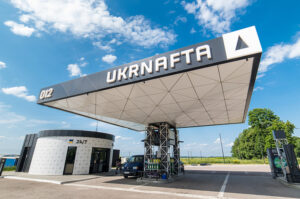
In 2026, Ukrnafta JSC will allocate an additional 2.5 billion hryvnia to protect its production infrastructure from shelling by Russia, which has intensified, said Bogdan Kukura, the company’s chairman of the board.
“We have shifted our priorities toward protecting facilities and ensuring the safety of equipment through underground construction. Therefore, this year we are allocating an additional 2.5 billion hryvnia to protect (production – IF-U) infrastructure; this is a huge investment,” he said in an exclusive interview with Interfax-Ukraine.
According to him, the drilling plan for this year calls for 15 wells to be completed. At the same time, Kukura suggested that, thanks to a balanced drilling program, there is a possibility this figure could increase. (Last year, the company set a drilling record, bringing the total to 25 wells – IF-U).
“A total of 11 wells have already been drilled since the beginning of the year—including those drilled jointly with Ukrgazvydobuvannya. But for us, it is not so much the quantitative figure that matters as, first and foremost, economic efficiency, production rate, and the contribution to increasing output,” Kukura noted.
He noted that the collaboration between “Ukrnafta” and “Ukrgazdobycha” has proven effective, and together the companies have drilled three high-yield wells, each with a depth ranging from 4.5 to 5.6 km.
“This project has confirmed the effectiveness of combining the expertise of state-owned companies, so we plan to continue developing this kind of cooperation in the future,” emphasized the CEO of Ukrnafta.
Kukura also noted that the company has suspended the UKRNAFTA network expansion program in the east due to constant shelling by Russia, which “would render all modernization efforts futile,” and is currently focused on protecting its facilities there. At the same time, he noted that in the west of the country, UKRNAFTA is working as hard as possible to continue modernizing gas stations and is allocating part of the funds received from commercial operations toward this effort.
“Overall, we are trying to maintain a balanced allocation of revenue from both segments—production and commercial operations,” Kukura emphasized.
As previously reported, in this interview, Kukura stated that JSC “Ukrnafta’s” oil production losses for the first half of 2026 amounted to 150,000 metric tons—this includes both physical losses, i.e., oil that burned as a result of shelling, and the volume of oil not produced due to operational shutdowns. According to him, oil losses in the first half of 2026 significantly exceed the figures for the same period of the previous year.
In the first seven months of 2026, Russia destroyed 37 gas stations belonging to the Naftogaz Group; some of them were successfully restored, but the rest sustained critical damage and ceased operations.

The cost of construction and installation work on civil engineering projects in Ukraine in June 2026 rose by 24.3% compared to June of last year—the highest rate among the major construction segments. According to data from the State Statistics Service, nonresidential construction rose in price by 23.8% over the same period, while residential construction rose by 19.2%. On average across the construction industry, the increase was 23.1%.
Civil engineering also led the way in terms of monthly trends. In June, compared to May, prices in this sector rose by another 1.8%, compared to 1.3% in non-residential construction and 0.8% in residential construction.
In the second quarter of 2026, civil engineering and installation work cost 22.4% more than in April–June of the previous year. A similar increase—22.4%—was recorded in non-residential construction, while residential construction prices rose by 18.2%.
The quarterly trends are particularly telling. Compared to the first quarter, prices for engineering work rose by 12.4% in the second quarter, and for non-residential construction by 12%, while the residential sector saw an increase of only 0.4%.
According to Andriy Ozeychuk, owner and director of the engineering and construction company Rauta, the shortage of skilled workers remains one of the key factors driving up construction costs.
“The market is currently short about 30% of construction specialists,” Ozeychuk noted, commenting on the situation in the industry in February 2026.
According to his data, the labor shortage has already led to a noticeable acceleration in wage growth. While wages in the construction sector grew by an average of approximately 15–20% annually between 2022 and 2024, the growth rate reached 25–30% in 2025. Wages rose particularly sharply for concrete workers—by 50%, surveyors—by 44%, and concrete pourers—by 38%.
Thus, the current rise in the cost of construction work is not driven solely by prices for building materials and equipment. The cost of construction work itself and labor is playing an increasingly important role.
Ozeychuk also drew attention to the long-term nature of the labor shortage. According to him, vocational schools are facing both a shortage of students enrolling in construction programs and a high dropout rate as early as the first years of study.
“In the long run, this could lead to an even greater labor shortage and slow down Ukraine’s recovery,” says the owner of Rauta.
According to the company’s estimates, the labor shortage is already forcing the construction industry to seek workers outside Ukraine, particularly in India, Nepal, Bangladesh, and Pakistan.
The rising cost of civil engineering is of particular importance to Ukraine due to the massive need to rebuild energy, transportation, utilities, and other critical infrastructure. According to Rauta’s estimates for 2025, the segment of critical infrastructure restoration and protection already accounted for about 20% of the Ukrainian construction market.
Therefore, further increases in the cost of civil engineering work could directly impact the cost estimates for restoration projects. If the cost of construction and installation work rises by 20–25%, projects whose budgets were established much earlier may require additional funding or a revision of technical solutions and implementation timelines.
At the same time, non-residential and infrastructure construction remain among the most active segments of the market. In 2025, the main targets for investment in commercial real estate were warehouse, industrial, and retail buildings, while the most attractive regions for new construction were the Kyiv, Lviv, and Ivano-Frankivsk regions, Ozeychuk noted.
In the first half of 2026, civil engineering construction costs rose by 16.1% year-over-year, non-residential construction by 16.5%, and residential construction by 13.7%.
“Rauta” operates in the fields of design, construction, and installation of buildings and is a member of the European Construction Industry Association. According to data from the Unified State Register, Andriy Ozeychuk owns 100% of the company’s authorized capital.
CONSTRUCTION, INFRASTRUCTURE, OZEYCHUK, PRICE, RAUTA, RESTORATION, STAFF



