

The Ministry of Communities, Territories, and Internally Displaced Persons of Ukraine (MinRegion) proposes introducing a quality guarantee of at least 10 years for new real estate properties immediately after they are put into operation; the government has already supported this initiative, according to the ministry’s press service.
MinRegion clarified that, to implement these changes, it is proposed to amend the Civil Code of Ukraine and the laws “On the Regulation of Urban Development” and “On the Protection of Consumer Rights.”
“A person who purchases a new property should be protected not only at the time of purchase. We propose introducing a quality guarantee for the property lasting at least 10 years. If, during this period, the owner discovers defects that affect the property’s serviceability, they will be able to require the developer to remedy them. If the owner corrects the defects on their own, the developer must reimburse those costs,” said Deputy Minister Natalia Kozlovska, whose remarks are quoted in the press release.
The construction client or its successor in title will be responsible for the quality of the property during the warranty period.
The new rules will apply to completed properties that have been accepted for use, with the exception of properties built on the basis of a construction passport and certain properties with minor SS1 consequences, where the work was performed in-house.
The ministry’s press service reported that, following the adoption of the amendments, if defects are discovered during the 10-year warranty period, the owner must notify the construction client of them. Defects that affect the normal use of the property must be confirmed by a report from a certified specialist based on the results of an inspection. The construction client must, within 30 days, propose how and by when to remedy the defects, or provide a reasoned refusal. The owner must, within seven days, either agree to the proposed solution or reject it. Once agreed upon, the client must remedy the defects within the specified time frame. The owner may also remedy them independently or engage other specialists. In such a case, the construction contractor must fully reimburse the repair costs.
A similar initiative was included in government bill No. 13607 dated August 7, 2025, but following the resignation of Yulia Svyrydenko’s government, it was withdrawn on July 16, 2026. At that time, experts proposed extending the mandatory warranty to include SS1 buildings (most often private homes) and increasing the warranty period for monolithic-frame buildings to 30 years.

A decree by the President of Kyrgyzstan titled “On Measures to Improve the Tax System and Tax Administration” will provide a range of tax incentives for entities in the IT sector, as well as those engaged in creative and artistic activities, the country’s tax service announced on Friday.
Specifically, IT workers, artificial intelligence and app developers, bloggers, remote workers for foreign companies, and startup founders will be exempt from taxes for a period of 5 years.
In addition, this category will be subject to a preferential income tax rate of 5% and social security contributions of 12%.
This measure will enable Kyrgyzstan to become a regional hub for the development of IT, artificial intelligence, and creative industries, attracting talented professionals, innovative companies, and investments from around the world, the statement emphasizes.
The preferential tax regime will help entrepreneurs allocate more funds to business development, the implementation of new technologies, and the enhancement of domestic companies’ competitiveness.
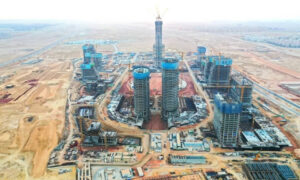
Egypt’s largest developers maintained high sales levels in early 2026, despite cooling demand and the real estate market entering a more cautious phase, according to a report by The Board Consulting.
According to the report, the total value of contracts signed by Egypt’s ten largest developers in the first quarter of 2026 amounted to 271 billion Egyptian pounds, or more than $5 billion. This is 6.5% less than the record 290 billion pounds a year earlier, but the figure remains significantly higher than in previous years and confirms the resilience of the market’s largest players.
In physical terms, sales declined more sharply—by approximately 15%—to about 15,500 units. This reflects more cautious buyer behavior amid rising construction costs, currency volatility, changing financing conditions, and general macroeconomic uncertainty.
However, the market has not collapsed but is rather undergoing a structural shift. The main cash flows are concentrated among the largest and financially stable developers, while small and medium-sized developers face pressure due to the cost of capital, competition, and the need to offer long-term installment plans.
East Cairo remains the geographic leader, generating contracts worth 130 billion pounds over the quarter. Demand is driven by new residential complexes, proximity to the New Administrative Capital, and large-scale infrastructure development in the eastern part of the metropolitan area.
For foreign buyers, Egypt remains one of the most affordable major real estate markets in the region. The weakening of the Egyptian pound has made housing relatively cheaper for buyers holding dollars, euros, or Gulf currencies. According to Global Property Guide, real estate prices in Egypt rose by 13.25% year-over-year in October 2025, but in real terms—adjusted for inflation—growth amounted to only 0.67%.
External demand is driven primarily by several groups. The first consists of investors from Gulf countries, primarily the UAE, Saudi Arabia, Kuwait, Qatar, Bahrain, and Oman. Egyptian developers are actively promoting projects in the GCC, and Gulf buyers have high purchasing power and interest in large resort and urban projects. Invest-Gate notes that buyers from Gulf countries and the Egyptian diaspora already account for about one-third of sales under the “real estate export” initiative.
The second group is the Egyptian diaspora. For Egyptians living in Europe, the U.S., the Gulf states, and other regions, real estate in Egypt remains a way to maintain a connection with the country, protect capital from inflation, and acquire housing for their families or for a future return.
The third group consists of buyers from Arab countries experiencing political or economic instability. Among them, citizens of Syria, Iraq, Sudan, and Palestine are frequently mentioned. For some of these buyers, real estate in Egypt is linked not only to investment but also to residency, obtaining resident status, and long-term security.
The fourth group consists of buyers from Russia, Ukraine, and Kazakhstan, primarily in Red Sea resort locations, including Hurghada, El Gouna, and the areas around Sahl Hasheesh. For them, Egypt is attractive due to its low entry barrier, warm climate, tourist demand, and the opportunity to purchase housing at a lower cost than in Turkey, the UAE, or certain European markets.
The fifth group consists of European buyers, including citizens of Germany, the UK, Italy, and other EU countries, who view Egypt as a market for affordable resort real estate, rentals, and seasonal living.
For foreign buyers, an important feature of the market is the long-term installment plans offered by developers. In Egypt, a significant portion of housing is sold off-plan, and buyers often make a 5–10% down payment and pay the remainder over 7–10 years. This mechanism makes the market accessible but simultaneously increases the importance of choosing a reliable developer and conducting a legal review of the contract.
The Egyptian government is also seeking to more actively develop “real estate exports” as a source of foreign exchange revenue. Authorities view the sector as a tool for attracting foreign capital, especially following the $35 billion Ras El-Hekma deal with Abu Dhabi’s ADQ, which became the largest foreign direct investment agreement in the country’s history.
Thus, the Egyptian real estate market is not entering a crisis phase, but rather a phase of weeding out weaker players. Buyers are becoming more cautious, and the volume of transactions is declining, but the largest developers continue to generate billions of dollars in sales. For foreign investors, the main concern now is not just price, but the reliability of the project, currency risks, the legal soundness of the transaction, and the developer’s ability to complete the project on time.

Administrative barriers are one of the key factors slowing down the entry of new housing into the market, said Yevhen Favorov, head of the Ukrainian Association of Developers, during a roundtable discussion.
According to him, the government has now become one of the key drivers of housing demand in Ukraine: programs offering subsidized mortgages, compensation for destroyed housing, programs for military personnel, and other government initiatives are generating significant effective demand. However, the market cannot respond to demand immediately, since by the time a building is commissioned, 80–90% of the most liquid apartments have usually already been sold.
“If the government wants to secure additional housing stock for its programs, it will take time—at least 2–4 years, a significant portion of which is devoted to the administrative preparation of the project,” Favorov noted.
According to him, the association he heads conducted its first annual industry survey of developers, in which 120 respondents participated—owners, executives, and specialists from development companies, who collectively account for one-third of the total supply in the primary residential construction market. According to the survey results, the average duration of administrative project preparation—from land registration to obtaining a construction permit—is approximately 14.4 months; land rights registration takes 13.3 months; and obtaining urban planning conditions and restrictions (UPC) takes an additional 9.78 months.
Respondents cited problems with obtaining UCRs (35%), difficulties in the area of land and property relations (30%), instability of permits and their revocation (24%), difficulties in obtaining technical specifications (22%), as well as constant changes to rules, requirements, and legislation (20%).
Among the procedures that, according to developers, most need optimization at the state level, the top priorities are cultural heritage protection (49%), cadastral and land procedures (29%), access to urban planning information (28%), and digital services and registries (26%).
During the discussion, Olena Shulyak, Chair of the Parliamentary Committee on the Organization of State Power, Local Self-Government, Regional Development, and Urban Planning, emphasized that the problem with administrative permits is much deeper than simply a matter of administration or the speed of document issuance.
“Urban planning permits have effectively become a quasi-licensing tool that creates corruption risks, reinforces the monopoly of local authorities, and in some cases places developers in a dependent position,” Shulyak believes.
At the same time, she believes a systemic solution to this problem is impossible without up-to-date urban planning documentation—digitized and made public at the national level—so that the market has access to clear and transparent rules. The MP also called for a resolution to be submitted to the government as soon as possible, one that establishes a mechanism to address unjustified refusals by local authorities to issue building permits and empowers the State Architecture and Urban Planning Inspectorate (DIAM) to act as an arbitrator in such situations.
Oleksandr Novytskyi, Head of the State Architecture and Urban Planning Inspectorate (DIAM), added that the set of technical specifications and utility connections requires separate reengineering—with a transition to a unified digital process and a “single window” for the client.
Market representatives, in turn, confirmed that the absence or long-standing rejection of urban planning documentation has not only regulatory but also direct economic consequences: land plots are not being developed, investments are being postponed, and housing supply is not reaching the market in the necessary volume.
The survey results will serve as the basis for the association’s future advocacy work in collaboration with the government and the professional community.

The organizers CREATOR CITY, Kreator-Bud, and the DMNTR media group invite you to a prestigious evening event dedicated to the key values of the modern real estate market—trust and reputation.
Date and time: March 5, 2026, 5:00 p.m. to 9:00 p.m.
Format: closed VIP event (panel discussions, networking, buffet)
Venue: Kyiv (details will be sent to registered participants)
The event will focus on how to build and monetize reputation in the context of high competition, a crisis of trust, and the transformation of the Ukrainian real estate market in 2026.
Experts will discuss:
Reputation as a strategic asset for developers
Tools for restoring and strengthening customer trust
The role of transparency, quality, and communication in attracting investment
Real-life cases of market leaders who turn reputation into a competitive advantage
Moderator:
Dmytro Struk — Development Director, Creator-Bud
Speakers:
Vitaliy Borul — CEO of Credo Development
Yaroslav Korniyachenko — Founder and CEO of Vlasne Misto
Eduard Suprunov — Head of B2B Department, LG Electronics Ukraine
Yevgen Bokiy — Commercial Director of UDP
Olga Arbuzova — Sales Director of Sigma
Anna Iskierdo — Architect, public figure, co-founder and CEO of the architectural and design company AIMM
Serhiy Datsiv — General Director of MIROPLAST LLC (WDS TM)
The event will bring together top managers of development companies, architects, builders, suppliers of materials and equipment, investors, and industry experts.
Participation is by prior registration and invitation only.
About the organizers:
CREATOR CITY — a platform for creative developers and architects.
Creator-Bud — a leading Ukrainian developer that creates modern business-class residential complexes.
DMNTR (Dom i Interier) is an authoritative media brand in the field of architecture, design, real estate, and construction.
Contacts for media and registration:
DMNTR Media Group
Tel.: +38 (044) 461 91 28
Join the discussion that is shaping the future of the Ukrainian real estate market!
Registration:
Interfax-Ukraine – information partner

Developer Perfect Group has commissioned more than 60 thousand square meters of housing in 2025, the press service of the company told the agency “Interfax-Ukraine”.
“In 2025 we actively worked on a number of Residential Complexes within the consolidated portfolio: we completed Residential Complex ”7 KVARTAL“ house 7.2, Residential Complex ”Swan Guest House“ and put into operation lines in Residential Complex ”Likograd”. We are actively working on projects, among which are apart-hotel “VELMY”, Residential Complex ‘Stanford’ and Club House “LA MANCHE”, – said the head of Perfect Group projects Alexey Koval.
In particular, according to his data, the total area of the commissioned house in “7 KVARTAL” is 21 thousand 605,0 sq. m., there are 288 apartments with the area of 16 thousand 18,4 sq. m. in it. Residential Complex “Likograd” total area is 31 thousand 691,9 sq. m., the area of 384 apartments is 25 thousand 199,5 sq. m. LCD “Swan Guest House” – total area of 8 thousand 264.5 sq. m., 163 apartments totaling 7 thousand 889.4 sq. m.
“The peculiarity of the year – realization in conditions of increased requirements to safety and autonomy of houses, therefore a part of technical solutions were specified already in the process of construction”, – Koval emphasized.
According to him, among the practical changes that have become “the new norm”: strengthening of engineering solutions for the operation of the house during power outages (backup power supply of critical systems, optimization of ITP/pumping equipment), additional fire safety measures and for the organization of evacuation, as well as a more systematic approach to barrier-freeness in common areas (entrances without thresholds, convenient routes to elevators, width of passageways, navigation).
“Some of the solutions were refined to take into account the availability of materials/logistics and the safety situation, but the overall concept of project quality was retained,” he says.
Next year, the company expects a cautious increase in market activity, provided the safety situation is relatively stable and demand financing tools are maintained/expanded.
“Our focus is on projects with proven liquidity, phased queues and clear economics. We are planning to fully complete the 7 KVARTAL Residential Complex, bring the LA MANCHE Residential Complex to the final stage, and introduce the first stages of the Standford Residential Complex. From new projects – LCD “New Tone”, – said Koval.
As for prices, he believes, their cost price will be primarily influenced by the wage factor. “We have already faced a catastrophic shortage of labor in the Ukrainian market. We are actively working on labor contracts with foreigners for contract work, including the search for workers in India and a number of other countries,” Koval said.
In addition, the project manager added, the cost of production is pressured by the cost of energy, logistics and import-dependent positions. A separate item is the tightening of requirements for engineering systems and security.
“Our base scenario is cost of production growth within 15-20% y/y, but the range will depend on the exchange rate, material prices and the situation on the labor market. We are building in a margin of safety through longer contracts with contractors, optimizing design solutions without sacrificing quality and planning critical material purchases ahead,” said Kowal.
Founded in 1991, Perfect Group has delivered 45 homes since 2010, with 18 homes under construction.



