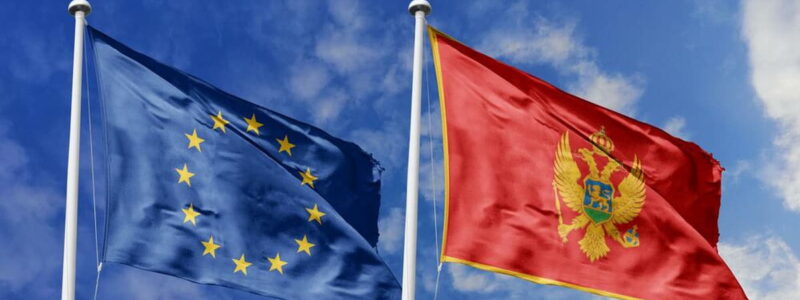
According to the “Serbian Economist,” five EU countries—the Netherlands, Croatia, Estonia, Lithuania, and Latvia—have called for a pause before closing the remaining negotiation chapters with Montenegro, reports the Podgorica-based newspaper Dan, citing diplomatic sources in Brussels.
The Netherlands initiated the move, demanding further analysis of Montenegro’s compliance with European criteria and a more consistent application of established standards. Croatia and the three Baltic countries subsequently joined this position.
This has already affected the negotiation schedule. The EU–Montenegro intergovernmental conference scheduled for September—at which Podgorica had hoped to close new chapters—will not take place.
However, Brussels’ official line is more conciliatory. An EU representative stated that several countries have not yet completed their internal approval procedures, as many negotiation chapters are technically complex.
“The desire to make progress is there. The work is practically complete. It’s more a matter of timing than anything else,” the EU representative said.
The most optimistic scenario at the moment is that the next intergovernmental conference will be held in mid-October in Luxembourg.
Montenegro remains the candidate that has made the most progress in the EU accession process. The country has opened all 33 negotiation chapters, 18 of which have already been provisionally closed. The last conference took place on July 14, when Chapters 8 (“Competition Policy”) and 29 (“Customs Union”) were closed.
Croatia’s position remains a separate issue. In July, Zagreb refused to agree to the closure of Chapter 14, “Transport Policy,” primarily due to issues regarding cabotage and aviation permits. Croatia also continues to block Chapter 31, “Foreign Policy, Security, and Defense,” due to unresolved bilateral issues with Montenegro.
The Council of the EU officially confirms that Montenegro’s progress continues and that work on new negotiating positions is ongoing.
CROATIA, EU, EUROPEAN INTEGRATION, MONTENEGRO, NEGOTIATIONS

Related: