

The updated licensing requirements for motor carriers could take effect in Ukraine by the end of 2026, according to Volodymyr Golubosh, deputy head of the State Service of Ukraine for Transport Safety.
According to “Interfax-Ukraine”, the draft of the new licensing conditions was published by Ukrtransbezpeka on March 18. The agency then collected and reviewed proposals from stakeholders, and the finalized document was resubmitted for approval.
“We expect that after amendments are made to the legislation and the new procedure is approved, the updated conditions will take effect by the end of this year,” Golubosh said during the conference “Regional Dialogues with Business on European Integration: The Transportation Sector” in Lviv.
The changes are part of the harmonization of Ukrainian transportation legislation with European Union standards, specifically EU Regulations No. 1071, No. 1072, and No. 1073. According to a representative of Ukrtransbezpeka, Ukraine must fulfill the relevant European integration obligations by April 2027.
The draft amendments are being developed by Ukrtransbezpeka in collaboration with the Ministry of Community and Territorial Development. Its goal is to modernize the road transport licensing system and bring Ukrainian requirements in line with European market access rules.
The new approach stipulates that a license will confirm more than just a company’s formal right to provide transportation services. Carriers will also be required to demonstrate their ability to organize operations professionally and safely.
Specifically, the right to operate in the licensed road transport sector will be granted to companies and entrepreneurs who can demonstrate professional competence, financial capacity, and integrity.
The introduction of these criteria is intended to bring the operating rules for Ukrainian road carriers in line with the requirements of the EU’s single transport market and serve as one of the steps toward integrating Ukraine’s transport sector into the European space.
EUROPEAN INTEGRATION, LICENSE, ROAD TRANSPORT, TRANSPORTATION, UKRAINE
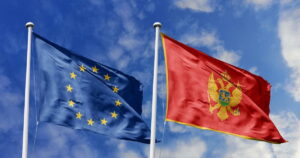
According to the “Serbian Economist,” five EU countries—the Netherlands, Croatia, Estonia, Lithuania, and Latvia—have called for a pause before closing the remaining negotiation chapters with Montenegro, reports the Podgorica-based newspaper Dan, citing diplomatic sources in Brussels.
The Netherlands initiated the move, demanding further analysis of Montenegro’s compliance with European criteria and a more consistent application of established standards. Croatia and the three Baltic countries subsequently joined this position.
This has already affected the negotiation schedule. The EU–Montenegro intergovernmental conference scheduled for September—at which Podgorica had hoped to close new chapters—will not take place.
However, Brussels’ official line is more conciliatory. An EU representative stated that several countries have not yet completed their internal approval procedures, as many negotiation chapters are technically complex.
“The desire to make progress is there. The work is practically complete. It’s more a matter of timing than anything else,” the EU representative said.
The most optimistic scenario at the moment is that the next intergovernmental conference will be held in mid-October in Luxembourg.
Montenegro remains the candidate that has made the most progress in the EU accession process. The country has opened all 33 negotiation chapters, 18 of which have already been provisionally closed. The last conference took place on July 14, when Chapters 8 (“Competition Policy”) and 29 (“Customs Union”) were closed.
Croatia’s position remains a separate issue. In July, Zagreb refused to agree to the closure of Chapter 14, “Transport Policy,” primarily due to issues regarding cabotage and aviation permits. Croatia also continues to block Chapter 31, “Foreign Policy, Security, and Defense,” due to unresolved bilateral issues with Montenegro.
The Council of the EU officially confirms that Montenegro’s progress continues and that work on new negotiating positions is ongoing.
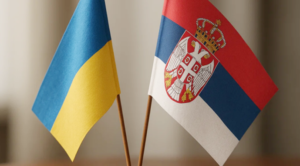
According to the “Serbian Economist,” Serbia’s lack of progress in its EU accession negotiations could create additional challenges for Ukraine and Moldova, as some EU countries are insisting on maintaining a geographical balance between candidates from Eastern Europe and the Western Balkans.
Euronews reports this, citing EU diplomats.
Ukraine has opened two of the six negotiation clusters in recent weeks, but further acceleration of the process may face demands to simultaneously advance Serbia’s application.
“Progress in one direction creates pressure to move forward in the other as well,” one European diplomat told Euronews.
In early July, the European Commission once again recommended opening Cluster 3—dedicated to competitiveness and inclusive growth—for Serbia. Negotiations regarding Serbia have effectively remained stalled since December 2021.
However, eight EU member states opposed opening the chapter: the Netherlands, Sweden, Finland, Belgium, Estonia, Lithuania, Bulgaria, and Croatia. Denmark, Luxembourg, and Latvia are also not yet ready to support this decision. The consent of all 27 EU member states is required to open a negotiation chapter.
Opponents of Serbia’s advancement point to Belgrade’s insufficient progress in the areas of the rule of law, judicial independence, and democratic standards. Another reason is Serbia’s refusal to join the EU’s sanctions against Russia.
The European Commission, on the other hand, believes that Belgrade has implemented some of the recommendations, repealed controversial changes to judicial legislation, improved cooperation with the EU on foreign policy, and strengthened ties with Ukraine. At the same time, Brussels acknowledges that Serbia needs to continue reforming its judicial and prosecutorial systems.
France, Spain, and a group of countries calling themselves the “Friends of the Western Balkans” advocate for preserving Serbia’s membership prospects. They fear that Ukraine’s rapid progress against the backdrop of Belgrade’s prolonged stagnation will be perceived as the application of double standards.
Euronews emphasizes that the negotiation processes for Ukraine and Serbia have not yet been formally merged. However, as Kyiv and Chisinau push to open the remaining clusters by the end of the year, demands for equal treatment of the candidate countries may intensify.

Ukraine’s European integration is entering a new practical stage, at which dialogue between the state and business is becoming one of the key tools for preparing the country for future EU membership.
This is stated in a column by Viktoriia Lobun, adviser to the Deputy Prime Minister for European and Euro-Atlantic Integration of Ukraine, published by the Interfax-Ukraine agency.
According to her, a historic step was the opening on June 15, during the Second Intergovernmental Conference between Ukraine and the EU in Luxembourg, of Cluster 1 “Fundamentals of the EU accession process.” This cluster is fundamental for the entire negotiation process, opens it and will remain open until the completion of the negotiations.
“Today Ukraine faces an ambitious task — to ensure the high-quality preparation of the state for future membership and to implement the changes that will allow it to function fully within the European Union,” Lobun noted.
She emphasized that European integration is not limited to the adoption of legislation or the fulfillment of formal negotiation conditions. It is about how changes will affect the economy, individual sectors, communities, citizens, state institutions, local self-government and business.
Some Ukrainian companies are already effectively operating in a single economic space with the EU: entering European markets, looking for partners, adapting to common rules and changing their own business processes. At the same time, the perception of Ukraine by European business is also changing: Ukrainian partners are increasingly viewed not only as an opportunity, but as a factor of competitive advantage in restructuring supply chains, developing new production facilities and strengthening Europe’s economic resilience.
The EU remains Ukraine’s largest trading partner — accounting for more than 63% of foreign trade in goods. The next step, according to Lobun, should be the transition from perceiving Ukraine as an external partner to perceiving it as part of the common market.
Platforms for discussing Ukraine’s economic integration with the EU play a separate role in this process. In particular, these issues were raised at the EU-Ukraine Business Summit in Brussels and will be discussed during the Ukraine Recovery Conference in Gdańsk. As part of the conference, a workshop is planned on how to combine Ukraine’s recovery with preparation for EU membership.
One of the practical tools for preparing for European integration has been a series of regional dialogues with business. In the first half of the year, such dialogues have already taken place for the agricultural sector, the metallurgical industry and the pharmaceutical industry. They were joined by representatives of business, sectoral associations, authorities, parliament and the expert community from different regions of Ukraine.
In fact, this is about creating a permanent mechanism of interaction between the state and business on issues of European integration.
One of the main questions of such dialogues is what Ukraine’s integration into the EU internal market will look like in practice. The transition from the model of external partnership to the model of the common market requires a new balance between competition and integration.
In some areas, this process already has practical examples — in particular in the energy market and roaming. At the same time, there are more complex areas where Ukraine is a strong player, in particular the agricultural sector and metallurgy. It is precisely here that it is important to ensure integration into the EU internal market without losing the competitive advantages of Ukrainian producers.
Lobun notes that dialogue with business makes it possible to better understand the expectations and concerns of companies regarding individual areas of integration. Meetings in the regions where business operates under conditions of constant risks are especially important. This makes it possible to shape policy focused not only on compliance with European requirements, but also on the real capabilities of the Ukrainian economy.
Ahead, Ukraine is expected to fulfill the conditions and benchmarks of the “Fundamentals” Cluster, as well as to work on opening the next negotiation clusters. They cover a significant part of the economic component of future membership — the internal market, competition policy, freedom of movement of goods and services, and other areas important for Ukrainian business.
Thus, dialogue between the state and business is becoming not only a communication tool, but one of the mechanisms for Ukraine’s practical preparation for membership in the European Union.
The success of the negotiation process, as Lobun emphasizes, will be determined not only by the number of opened or closed clusters. Its real result should be the creation of a modern, competitive and resilient state, ready to function fully as part of the European community.
Source: Interfax-Ukraine, Viktoriia Lobun’s column “European integration is moving into the practical dimension: why dialogue with business is becoming critically important.”
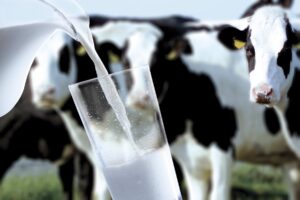
The cow herd in Ukraine will continue to shrink and, as of January 1, 2028, could fall to 917,000 head, compared to an estimated 1.055 million head at the beginning of 2026, while milk production, after many years of decline, will stabilize at around 6.7 million metric tons per year, according to the study “The Dairy Industry of Ukraine in the Context of European Integration.”
Vadym Chagarovsky, Chairman of the Ukrainian Dairy Enterprises Association, noted during the study’s presentation at Agro Ukraine Week 2026 that despite the steady decline in the cow herd in Ukraine, productivity is rising and the volume of milk sent for processing is increasing.
According to the study, the total dairy cow herd across all farm categories decreased from 2.018 million head in 2018 to 1.055 million head in 2026, a decline of 48%.
The largest decline is occurring on private farms, where the herd size decreased by 55% between 2018 and 2026—to 660 thousand head—and may fall to 500 thousand head by 2028.
At the same time, following a prolonged decline, the herd size at agricultural enterprises is projected to grow from 395 thousand head in 2026 to 417 thousand head in 2028.
Milk production in Ukraine has also declined in recent years—from 10.2 million metric tons in 2017 to 6.9 million metric tons in 2025, or by 33%.
At the same time, the study’s authors predict that the long-standing decline in milk production will come to an end and that production will stabilize at 6.7 million metric tons in 2026–2027.
Milk production at agricultural enterprises will continue to grow—from 3.4 million metric tons in 2026 to 3.7 million metric tons in 2027—while production on private farms will decrease from 3.3 million metric tons to 3 million metric tons, respectively. The share of industrial milk production is forecast to increase from 46% in 2025 to 55% in 2027.
Chagarovsky also emphasized that the Ukrainian dairy industry retains its potential for growth thanks to industrial production and the modernization of enterprises.
According to the study, Ukraine’s dairy industry currently produces 6.9 million metric tons of milk per year, accounts for about 0.25% of GDP, and generates 124 billion hryvnia in output. Ukraine’s share of global milk production stands at 0.7%.
To transition to an industrial model of sector development and increase production to 10 million metric tons of milk per year, investments totaling EUR9 billion are needed to establish a raw material base. Specifically, this includes increasing the herd by 750,000 cows and constructing approximately 700 industrial dairy farms. According to the study’s authors, an additional EUR6 billion needs to be allocated to modernizing and expanding processing capacities.
The study “Ukraine’s Dairy Industry in the Context of European Integration” was prepared by the Ukrainian Dairy Industry Association.
Cow, dairy industry, EUROPEAN INTEGRATION, INVESTMENTS, MILK, PRODUCTION
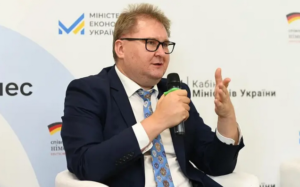
Ukraine has the legal and regulatory capacity to launch programs supporting domestic pharmaceutical manufacturers, but funding is lacking amid the war, according to Taras Kachka, Deputy Prime Minister for European and Euro-Atlantic Integration.
“Let’s just focus on the possibilities for support: the legal framework is there, but as for financial resources—you understand how constrained and limited our financial capabilities are in wartime,” he said during the conference “Regional Dialogues with Business on European Integration: The Pharmaceutical Industry” in Uzhhorod on Thursday.
At the same time, Kachka noted that “within the framework of existing support programs, there is a whole range of additional options.”
“We are ready for this dialogue. We just need to clearly identify exactly which needs we need to address,” he said.
BUSINESS, EUROPEAN INTEGRATION, PHARMACEUTICALS, STATE SUPPORT, Качка



