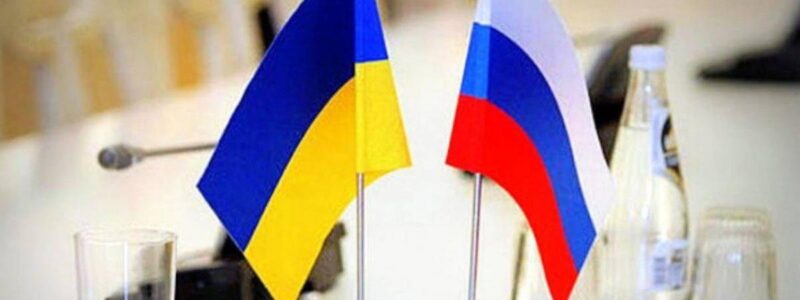
An overwhelming majority (72%) of Ukrainians support peace talks with Russia, however, about half of citizens are open to territorial compromises to end the war, while an absolute majority considers any reduction or limitation of the Armed Forces of Ukraine’s strength unacceptable, according to the results of a public opinion poll conducted by the Future Research Foundation and presented during a press conference at the “Interfax-Ukraine” news agency on Thursday.
“The dynamics of public sentiment demonstrate a strong desire to find diplomatic avenues for a ceasefire. Specifically, 72.2% of respondents tend to support peace talks with Russia. Opposition to this stands at 20.8% of those surveyed,” said Svitlana Kushnir, project manager at the Foundation for Future Studies, during the presentation of the survey results.
Among the possible ways to end the war, 48.5% favor compromises and ceasefire negotiations, even if they involve territorial or political concessions; 24.6% support a temporary “freeze” of the front lines without officially acknowledging the loss of territory, while 18.6% of respondents favor continuing the war to restore the 1991 borders without compromise.
At the same time, 51.7% of citizens are open to territorial compromises to end the war (29.4% – “yes, if it leads to the end of the war,” 22.3% – “probably yes”), while 41.3% of respondents oppose territorial compromises. (20.4% – “no, under no circumstances,” 20.9% – “rather no”).
“This negotiation track is closely linked to security red lines, which society considers unacceptable to cross. In particular, 76.3% of respondents consider reducing or limiting the size of the Armed Forces of Ukraine at the request of the other side to be unacceptable even if it ensures security (for 55.2% of respondents, this is categorically unacceptable),” Kushnir reported.
According to her, 58.7% of respondents believe that the situation in Ukraine is moving in the wrong direction (30.9%—definitely, 27.8%—somewhat). At the same time, 32.5% of respondents assess the direction of development as correct (8.6%—definitely, 23.9%—somewhat), while 8.8% were unable to answer.
At the same time, a number of acute socioeconomic problems are dampening the willingness to compromise, particularly bribery and corruption within government structures (51%) and rising food prices (39.6%). In addition, there is a certain level of concern regarding the winter season: 56.1% of households are fully or partially prepared for possible prolonged power and heating outages, while 43.2% rate their preparedness as insufficient.
According to the survey results, 84.5% of respondents consider the current mobilization process to be unfair, with 59.6% deeming it absolutely unfair.
Ihor Zhdanov, a political expert, former Minister of Youth and Sports of Ukraine (2014–2019), and head of the “Information Defense” project at the Open Policy Foundation, notes that these survey results indicate that Ukraine and its politicians are ready for negotiations, but “they want negotiations with substantive content, not just negotiations about surrender.”
“It is clear that there can be no question of any kind of surrender in Ukrainian society. The point is to hold negotiations, find some kind of compromise, and this society is ready for a compromise. So why isn’t peace being achieved? Why aren’t substantive peace consultations and negotiations already taking place, and why hasn’t some kind of ceasefire been declared for this purpose? And the Russian dictator Putin isn’t ready to hold peace negotiations; he doesn’t want to. Because there, in Russia, the circumstances haven’t yet arisen that would force him or push him toward peace,” he noted during a press conference.
Commenting on the fact that 76% of Ukrainian citizens consider reducing the size of the Armed Forces of Ukraine unacceptable, the expert noted that this indicates that Ukrainian society relies solely on itself and its own Armed Forces. “We rely on ourselves and on our Armed Forces; we also need to develop our own defense-industrial complex so that the situation remains predictable and so that there are level playing fields for Ukrainian and foreign companies,” Zhdanov said.
He also pointed out that more than half of Ukrainians consider corruption in government to be a particularly pressing problem—even more serious than rising prices and low wages.
“Bribery and corruption in government are not just a matter of public opinion but also a problem related to receiving funds from the European Union. We were told in no uncertain terms: you must carry out judicial reform; there is the Kachka-Kosa plan related to anti-corruption efforts, such as adopting an anti-corruption strategy, competitive selection of prosecutors, and implementing judicial reform. Unfortunately, of the 10 points, none have been implemented. All of these bills will benefit the country. None of them are controversial, unlike bills in the socioeconomic sphere. They need to be adopted, but for some reason they aren’t being adopted, and this simply means that we aren’t receiving the corresponding funds from the EU,” Zhdanov noted.
The survey was conducted from September 19 to 22 using the Computer-Assisted Telephone Interviewing (CATI) method with a random sample of mobile phone numbers among 1,203 respondents aged 18 and older in all government-controlled territories of Ukraine. The maximum theoretical margin of error does not exceed 2.9% with a 95% confidence level.
Armed Forces of Ukraine, mobilization, NEGOTIATIONS, POLL, UKRAINE