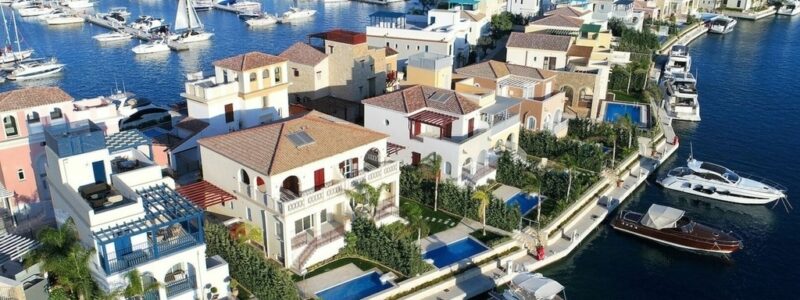
Cyprus’s residential real estate market continued to grow in the first half of 2026 amid steady demand from foreigners, rising construction costs, and active construction in coastal cities.
According to a study by Ask Wire, the average price of an apartment sold in Limassol from January to June was approximately 363,000 euros. In Paphos, this figure was estimated at 262,000 euros; in Nicosia, 183,000 euros; in Larnaca, 171,000 euros; and in the Famagusta area, 150,000 euros.
Data from the Central Bank of Cyprus confirms that the upward trend continues. In the first quarter of 2026, apartment prices rose by 10.8% compared to the same period last year, prices for single-family homes rose by 3%, and the overall residential real estate index rose by 7.5%. The regulator attributes the price increases primarily to sustained demand from foreign buyers, rising construction costs, and the currently limited supply of housing. The report was published on June 23, 2026.
Limassol remains the most expensive market, where a significant portion of the supply consists of luxury coastal complexes, high-rise residential buildings, and properties targeted at international investors. Paphos ranks second in terms of average apartment prices.
Larnaca showed the most notable growth. According to Ask Wire’s estimates, apartment prices in the city rose by nearly 8.9% over the year, and 1,521,000 apartment transactions were recorded in the first half of the year. Demand is driven by prices that are lower than in Limassol, the development of urban infrastructure, proximity to the airport, and foreign buyers’ interest in new seaside properties.
In the first quarter of 2026, foreign buyers accounted for approximately 43.4% of all registered real estate purchase agreements in Cyprus, compared to 40.1% for the full year of 2025. Buyers from countries outside the EU accounted for 29.1% of the market. Official statistics from the Cyprus Land Department are published with a breakdown by EU and third-country buyers but do not include a complete, up-to-date ranking by nationality.
Who Is Buying Real Estate in Cyprus
The main foreign buyer groups include citizens of the United Kingdom, Russia, Israel, Lebanon, and Greece; however, their presence varies significantly by region.
In Paphos, demand from British, Russian, and Israeli buyers is particularly noticeable. At certain times, foreign buyers account for up to three-quarters of local transactions. British buyers tend to purchase properties for relocation, vacation, or long-term residence, while Russian and Israeli demand is largely linked to the relocation of capital, businesses, and families.
Larnaca primarily attracts buyers from Israel and Lebanon. For them, the city is appealing due to its transportation accessibility, relatively low entry barrier, and geographical proximity to the countries of the Eastern Mediterranean.
In Limassol, citizens of Russia, Israel, and Greece remain among the most prominent foreign buyers. Nicosia relies more heavily on domestic demand, while Greeks, Britons, and Australians stand out among foreign buyers there. In the Famagusta region, buyers from the United Kingdom, Greece, and Lebanon play a significant role.
Chinese investors, who were actively present in the Cypriot market from 2020 to 2024, have become less prominent in recent regional rankings. However, official statistics may underestimate the share of foreign capital, as purchases made through companies registered in Cyprus or other EU countries may be counted as domestic transactions.
The market is also being supported by the recovery of mortgage lending: the volume of mortgage loans issued rose by 24.5%, while the average interest rate fell to approximately 3.15%. New, energy-efficient one- and two-bedroom apartments located near the coast are in the highest demand.
Ask Wire expects that by the end of 2026, real estate prices in Cyprus will rise by an additional 3–5% on average, and prices for new energy-efficient apartments will increase by 4–6%. Larnaca is likely to continue growing faster than the national average. The main limiting factors will remain the declining affordability of housing for local residents, a shortage of new supply, and geopolitical uncertainty in the Eastern Mediterranean.