

On Sunday, November 9, light to moderate rain is expected at night in Zakarpattia, Prykarpattia, and Odesa regions, and during the day on the right bank. The rest of the country will see no precipitation, according to the Ukrainian Hydrometeorological Center.
On the Left Bank, in the Carpathians, and in the Carpathian region, there will be fog at night and in the morning. The wind will be mainly southerly, 3-8 m/s. The temperature at night will be 2-7°, in the south up to 10° above zero, during the day 7-12°, in the south of the country up to 15°.
In Kyiv, there will be no precipitation on the night of November 9, with light rain during the day. The wind will be from the south, 3-8 m/s. The temperature at night will be 5-7°C, and during the day 9-11°C.
According to data from the Boris Sreznevsky Central Geophysical Observatory, the highest daytime temperature in Kyiv on November 9 was 17.8°C in 2010, and the lowest nighttime temperature was -15.0°C in 1888.
On Monday, November 10, there will be light rain (in some places in the west and north of the country). At night and in the morning, there will be fog in some places in Ukraine. The wind will be mainly westerly, 3-8 m/s.
The temperature at night will be 5-10°, in the Carpathians 0-5° above zero, during the day 9-14°; in the south of the country at night 7-12°, during the day 12-17°.
In Kyiv on November 10, there will be light rain in some places, with a westerly wind of 3-8 m/s, nighttime temperatures of 7-9°C, and daytime temperatures of 11-13°C.

The shareholders of Kyivmiskbud Holding Company PJSC plan to initiate a preventive restructuring procedure and develop a corresponding plan of measures and conditions for debt repayment, according to the agenda of the general meeting of shareholders.
According to the PJSC’s report in the information disclosure system of the National Securities and Stock Market Commission (NSSMC), a remote general meeting of shareholders is scheduled for November 15.
“To initiate the procedure for the preventive restructuring of the private joint-stock company Holding Company Kyivmiskbud in accordance with the procedure established by the Code of Ukraine on Bankruptcy Procedures,” is stated in the draft decision of the shareholders on the agenda.
In addition, it is planned to authorize the acting chair of the board of Kyivmiskbud, Svetlana Samsonova, to take all necessary actions related to the restructuring process, including negotiations with creditors and approval of a debt repayment plan, as well as the submission of a corresponding application to open proceedings in court.
As reported, Kyivmiskbud has 24 construction sites on its balance sheet, where more than 120 residential buildings of varying degrees of completion have been built. The total area of unfinished construction exceeds 548,000 square meters.
In October 2024, the Kyiv City Council supported the decision to increase the authorized capital of PJSC HC Kyivmiskbud to stabilize the company’s financial position through an additional issue and acquisition of shares worth up to UAH 2.56 billion. The placement of shares will last from October 1 to November 28, 2025.
HC Kyivmiskbud was established on the basis of the assets of the state-owned municipal construction corporation Kyivmiskbud in 1994 by combining controlling stakes in 28 enterprises and other assets in its authorized capital. It comprises 40 joint-stock companies in which the company owns shares, as well as six subsidiaries and 51 enterprises with associate member rights.
According to the National Securities and Stock Market Commission, the main shareholder of PJSC Kyivmiskbud is the Kyiv City Council (80%).

According to Serbian Economist, Chinese automaker Chery is discussing with the Serbian government the possibility of opening a production plant in Serbia. In Shanghai, Serbian Deputy Prime Minister and Economy Minister Adriana Mesarovic held talks with Chery Chairman Yin Tongyue, the parties discussed the conditions of potential localization and further steps, Serbian publication Telegraf reported, citing Mesarovic’s statement.
According to the minister, Serbia’s status as a “gateway to Europe” and the free trade agreement with China create additional opportunities for investors, including access to a number of trade agreements when localizing more than 51% of the value added of products. Mesarovic also said that she expects Chery’s head to visit Belgrade to continue negotiations.
Specific parameters of the investment project, terms and location were not disclosed.
In 2025, Serbia has already announced a project for the construction of an electric car plant of Chinese JMEV in Sremska Mitrovica with export orientation to the EU market. Against the backdrop of the expanding presence of Chinese carmakers in the region, Chery is developing its European sales network and localization initiatives in parallel.
https://t.me/relocationrs/1699
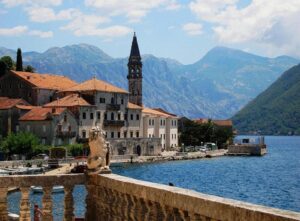
As reported by the Serbian Economist, the Government of Montenegro at a meeting of the Council of National Security approved a package of measures to tighten migration policy, including a proposal to fix in the Law on Foreigners the minimum value of real estate € 200 thousand as a basis for granting temporary residence. This is stated in the official message of the Cabinet of Ministers.
Among other decisions of the Council is the instruction to the Ministry of Foreign Affairs to prepare amendments to the decree on visa regime, which will reduce the period of visa-free stay for citizens of countries not aligned with the EU visa policy from 90 to 30 days. The Council also ordered that data on dormant and inactive foreign-owned companies be handed over to the police for verification and possible revocation of previously issued residence permits.
The government notes that the “company for the sake of a residence permit” ground is planned to be replaced by the requirement of full employment with a registered employer or an established company. At the same time, local media specify that the Parliament has introduced amendments, according to which the extension of residence permit for the founder of the company will be possible if there are at least three full-time employees, of which at least one Montenegrin citizen, and the extension of residence permit for real estate will depend on its value and size. These norms are to be detailed in bylaws.
Podgorica emphasizes that the measures are aimed at aligning the rules with EU approaches and strengthening control over migration flows. The final changes will require the adoption of amendments to the law and bylaws.
https://t.me/relocationrs/1698

The war hit the Ukrainian agricultural sector hard not only with missiles but also with a shortage of people. Thousands of specialists have gone abroad, while others have been mobilized or changed their profession. Elevators and grain processing plants are increasingly staffed by people without sufficient training. And while in the field you can still rely on the experience of senior agronomists, post-harvest handling and storage of grain requires precise knowledge, technological discipline and responsibility. A mistake at this stage can cost the farmer the entire harvest, SEEDS writes.
That is why the free online courses of the educational platform for agribusiness AgriAcademy.org are now becoming an effective tool for Ukrainian farmers. Established at the initiative of the EBRD, this educational platform of certified free courses for agribusiness has proven its effectiveness in wartime, when access to education is limited and the need for advanced training is greater than ever. AgriAcademy does not just teach – it preserves the professional potential of the agricultural sector, helping businesses operate steadily and professionals develop.
A new course has been added to the platform: “Post-harvest handling and storage of grain”. It is aimed specifically at those who want to deepen their knowledge in grain processing, improve the quality and safety of crop storage, avoid losses and ensure stable operation of the enterprise.
The curriculum covers all key stages of post-harvest grain preparation: from the organization of acceptance to storage, ventilation, pest control, and quality control.
Take the course at AgriAcademy.org
The students will gain a systematic understanding of the technological process at elevators and grain receiving facilities, learn about the physical and physiological properties of grain masses, self-heating and post-harvest ripening processes, and methods of preventing storage losses.
The course consists of 11 thematic modules, including:
The program also includes a module on visiting a working enterprise, a practical component that allows you to see the technologies in action.
Who teaches the course
The course was prepared by leading experts from Ukrainian universities:
Who is this course for?
For technologists, elevator operators, farmers, students of agricultural specialties – anyone who wants to understand how to preserve grain without loss and make the post-harvest processing process as efficient as possible.
Terms of participation
The course is free, available online at a convenient time, and you will receive a certificate upon completion.
Today, when the agricultural sector holds the economic frontline of the country, knowledge is becoming no less a strategic resource than fuel or seeds. AgriAcademy provides this knowledge openly, free of charge, and most importantly, practically.
So if you work with grain, this course is an opportunity to strengthen not only your business but also the food security of Ukraine.
You can register and take the course on the website: AgriAcademy.org.
Today, the platform offers 30+ online courses – more than 300 hours of practical training in agronomy, management, technology, processing, storage, etc. Each course includes a knowledge test.
The creation and management of the platform (including course development, study tours, etc.) is supported and funded by the EBRD, as well as the

The National Bank of Ukraine for violation of legal requirements in the sphere of prevention and counteraction to legalization of proceeds of crime and currency legislation in October 2025 applied to seven banks measures of influence, including fines for the total amount of UAH 205.8 million. According to the publication on the regulator’s website, the largest fines received banks Alliance – UAH 83.5 million, MTB – UAH 78.2 million, Universal, on the basis of which operates mono, – UAH 27.3 million and Ukrsibbank – UAH 11.5 million.
As noted by the National Bank, Alliance Bank was fined UAH 67.6 million for improper organization and conduct of primary financial monitoring (internal documents and procedures, risk management, application of risk-oriented approach, verification of clients, provision of reliable information to NBU requests). Separately, a fine of UAH 15.9 million was imposed for violations of customer due diligence, enhanced measures against high-risk customers, documentation of AML/CFT activities and work with customers related to politically exposed persons.
In addition, the bank received a written warning for failing to include in customer questionnaires data confirmed by available documents.
MTB Bank was fined UAH 75.0 million for failure to comply with the risk-oriented approach, risk management (including remote technologies and new products) and customer due diligence. A separate fine of UAH 3.2 mln was imposed for violation of currency supervision requirements, in particular, untimely identification of currency transactions indicator and shortcomings in analyzing and verifying documents on currency transactions. At the same time, the bank received a written warning for shortcomings in the development and updating of internal documents on AML/CFT issues.
According to the release, Universal Bank was fined UAH 27.3 million for improper customer due diligence, deficiencies in risk management procedures and violation of the procedure for informing the specially authorized body about transactions of customers with frozen assets. In addition, the bank received a written warning for shortcomings in fixing events in the automation system.
As reported by the National Bank, Ukrsibbank must pay UAH 11.0 million for improper customer due diligence and shortcomings in risk-oriented approach, as well as UAH 0.5 million for violation of requirements for notification of the specially authorized body on threshold financial transactions. At the same time, the bank received a written warning for shortcomings in the development of internal documents on AML/CFT issues.
RVS Bank, which the National Bank this week recognized as insolvent, was fined UAH 3.8 mln for violation of risk-oriented approach requirements.
Cominbank was fined UAH 1.1 mln for untimely notification of threshold financial transactions and improper establishment of high risk level in relation to clients.
Idea Bank has to pay UAH 0.5 million fine for untimely execution of the decision on suspension of operations and untimely notification of the specially authorized body about the balance of funds on the client’s account.
In addition to banks, the penalties were also applied to four non-banking financial institutions.
NovaPay Credit LLC from NovaPay Group was fined UAH 255 thousand for improper customer verification and deficiencies in risk-oriented approach. At the same time, the company received a written warning for shortcomings in the development of internal documents on AML/CFT issues.
LLC “FC ”Mustang Finance”, which the National Bank in early November revoked the license, was fined for UAH 731 thousand for shortcomings in internal documents on AML/CFT issues, failure to provide reliable information on the requests of the NBU and violation of the procedure for the formation of statistical reporting.
LLC FC Abecor should pay UAH 595 thousand for improper risk management, violation of requirements for identification and verification of clients, monitoring of financial transactions and submission of reliable information to the regulator.
Alliance Capital Group FC LLC must pay a UAH 17 thousand fine for making material errors in statistical reporting on currency transactions.



