

Ukraine is participating for the first time in the 48th session of the General Fisheries Commission for the Mediterranean (GFCM) in Malaga on November 3-9, 2025, as a full member. The updated list on the FAO website states that Ukraine became a contracting party on September 11, 2025.
The Commission consists of 24 contracting parties: Albania, Algeria, Bulgaria, Croatia, Cyprus, Egypt, the European Union, France, Greece, Israel, Italy, Lebanon, Libya, Malta, Monaco, Montenegro, Morocco, Romania, Slovenia, Spain, Syria, Tunisia, Turkey, and Ukraine. Five cooperating non-contracting parties are also involved in the work: Bosnia and Herzegovina, Georgia, Jordan, Moldova, and Saudi Arabia.
The official program of the session will take place from November 3 to 9, 2025. The decisions will be published by the FAO after the session closes. FAOHome

Over the past month, Ethereum (ETH) rose to the $4,000+ zone with multiple “defenses” of the $4,000 level at the end of October, after which it entered a correction amid mixed flows in crypto ETFs and a pause in regulatory decisions in the US. As of Wednesday morning, the price was hovering around $3,300, below last week’s highs.
What drove the market last month?
After several rebounds from $4,000 at the end of October, activity rose above average, but momentum faded at the $4,050–4,200 support levels.
The decisions on new crypto ETFs expected in October were postponed due to the government shutdown in the US; however, some products still entered the exchange under a simplified procedure, which shifted the “main” catalysts to November.
In September, the SEC approved unified listing standards for commodity ETPs on leading US exchanges, which simplified the launch of new crypto ETFs and supported expectations for the expansion of product lines (including multi-crypto funds). I
Now let’s analyze the main factors for November–December (base scenarios).
1) Moderately positive. The launch of new ETFs/updated prospectuses and the resumption of institutional inflows to ETH are strengthening demand; technically, a return above $3,800–4,000 opens the way for a retest of the autumn highs.
2) Neutral. Overestimated expectations for ETFs and subdued on-chain indicators keep ETH in a wide range of $3,000–3,800 without a trend; local rallies are quickly fixed. (Benchmark: recent “sell zones” of $4,050–4,200).
3) Risky. Increased macro volatility or new outflows from ETH ETFs could trigger a decline to $2,800–3,100; in this case, the market will focus on medium-term support, and decisive drivers will be postponed until 2026. (Examples of data on outflows/capital flows into altcoins appeared this week).
Interestingly, Citi in September cited a base case estimate of $4,300 at the end of the year with a bullish scenario of $6,400 under favorable macro conditions and the use of Ethereum applications; the bearish case is $2,200.
After the spring network updates, the industry is discussing the next steps in the Ethereum roadmap; industry reviews mention the following UX and scalability improvements, but the key issue for the market in the coming weeks remains the regulatory block on ETFs in the US.
Note: forecasts are probabilistic and depend on macro conditions, ETF news, and fund inflows/outflows; investment decisions should be made with risk in mind.
https://www.fixygen.ua/news/20251105/efir-prosiv-pislya-testu-4-tis-prognozi-na-listopad-gruden.html
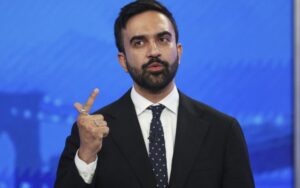
34-year-old New York State Assemblyman Zohran Mamdani has won the New York City mayoral election, becoming the first Muslim to lead the city and the youngest mayor in more than a century. The victory has been confirmed by leading media outlets and agencies; His opponents were independent candidate Andrew Cuomo and Republican Curtis Slyva.
In his first speech after the results were announced, Mamdani said he would make New York a city for immigrants and vulnerable groups, naming affordable housing, transport and raising the minimum wage as his priorities.
He also publicly addressed Donald Trump. Donald Trump had previously called for a vote against Mamdani, supporting Cuomo, and threatened to limit federal funding for New York in the event of a victory for the democratic socialist; after the results were announced, he sharply criticised the mayor on social media.
Political analysts note that the victory of the left-wing candidate in the largest city in the United States and the response of the Republicans will indicate a further intensification of the confrontation between the two main parties at the federal and municipal levels in the run-up to the next electoral cycle.
Ukraine’s Ministry of Energy and Japan’s international cooperation agency JICA plan to strengthen cooperation in the supply of equipment for rapid repairs and mobile solutions to strengthen the energy resilience of frontline regions. This was discussed during a meeting between Ukrainian Energy Minister Svetlana Grinchuk and JICA Chief Representative in Ukraine Osamu Hattori on Wednesday.
‘I am pleased to welcome Osamu Hattori, Chief Representative of the JICA Office in Ukraine, to the ministry. This is Mr. Osamu’s first visit since his appointment. Therefore, we updated the current areas of cooperation with JICA and identified priorities,’ Hrynchuk wrote on her Facebook page.
She informed her colleague about the agreements reached with Kenji Yamada, Japan’s Minister of Economy, Trade and Industry, during her participation in the G7 Energy Ministers’ Summit in Toronto.
‘We discussed vectors for joint work with JICA in this context,’ she noted.
The possibilities for cooperation with Japanese energy companies and Ukraine’s use of Japanese technologies for the development of the energy sector were also discussed.
The minister thanked Japan in particular for supporting Ukraine’s energy sector with equipment, specialised machinery and gabions.

The business confidence indicator in the Ukrainian construction market rose by 3.8 percentage points (pp) in the fourth quarter of 2025 compared to the third quarter, to minus 28.6%, according to the State Statistics Service (Gosstat).
According to a survey of construction companies conducted by the agency, the assessment of the shortage of current orders improved by 5.6 p.p. to ‘minus’ 41.4%. Thus, 48.5% of the companies surveyed assessed their current order volume as normal for the season, while 47% assessed it as insufficient.
Forty-eight per cent of respondents expect prices for their services to increase in the fourth quarter of this year. Only 5% of respondents predict a decrease in the cost of construction work, while 47% do not expect any changes in pricing policy.
According to State Statistics Service data, the companies participating in the survey have an average of six months’ worth of orders, which corresponds to the pre-war figure at the beginning of 2022.
The statistics agency notes that in the fourth quarter of 2025, the construction industry will be negatively affected by labour shortages (55.2%), financial constraints (43.8%), insufficient demand (20.7%) and other factors (41.5%).
A third of the companies surveyed expect a reduction in the number of employees in October-December, while 54% believe that their number will remain unchanged, and 13% predict an expansion of staff.
According to the State Statistics Service, 35% of respondents noted an increase in the volume of construction work completed in the last quarter, while 24% reported a decrease in volumes.
The survey showed that 99% of Ukrainian construction companies find it quite difficult to predict future business developments.
The statistics do not include territories temporarily occupied by the Russian Federation and parts of territories where hostilities are (were) ongoing.
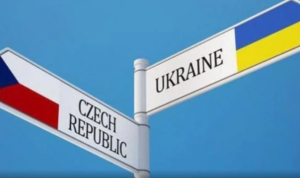
The new Czech government is working on changes to the rules on temporary protection and social support for Ukrainian citizens: assistance will focus on those who are objectively unable to support themselves (the elderly, people with disabilities, parents with young children), while payments for those who are able to work but are unemployed may be reduced or cancelled, according to Czech media reports. The Ukrainian publication ZN.ua, citing Novinky.cz, reports that the government is also preparing to adjust the conditions for temporary protection status. The specific parameters of the reform have not yet been made public.
According to Novinky.cz and previous EU decisions, temporary protection for Ukrainians in the Czech Republic will remain in effect until at least March 2027. In previous years, the government has already adjusted humanitarian payments (through Lex Ukrajina) and announced a transition to a more ‘activating’ model of support that encourages employment.
In June, the European Union agreed to extend the temporary protection mechanism until March 2027; Czech ministers had previously confirmed their commitment to longer-term protection with gradually increasing integration requirements (work, education, housing). Against the backdrop of these changes, the government is preparing further technical amendments to the national package of laws known as Lex Ukrajina.
After the publication of the government draft (expected in autumn-winter), the document must undergo interdepartmental approval and parliament. Details of the amounts and criteria for payments will be known from the text of the draft law and accompanying methodological materials from the Ministry of Labour.
Under temporary protection: there are currently approximately 395-400 thousand people in the Czech Republic (current estimates by the Czech media based on data from the Ministry of the Interior; in February 2025, the UNHCR recorded about 390 thousand).
The total number of Ukrainian citizens with various types of residence (officially registered foreigners) is approximately 560-581 thousand (data from the Czech Ministry of the Interior for Q1-Q2 2025). Informal/incomplete records may vary due to seasonal migration and repeated departures and arrivals; the total estimate in public sources is approximately 600 thousand.



